
Was Shakespeare a Real Person? Exploring the Authorship Debate
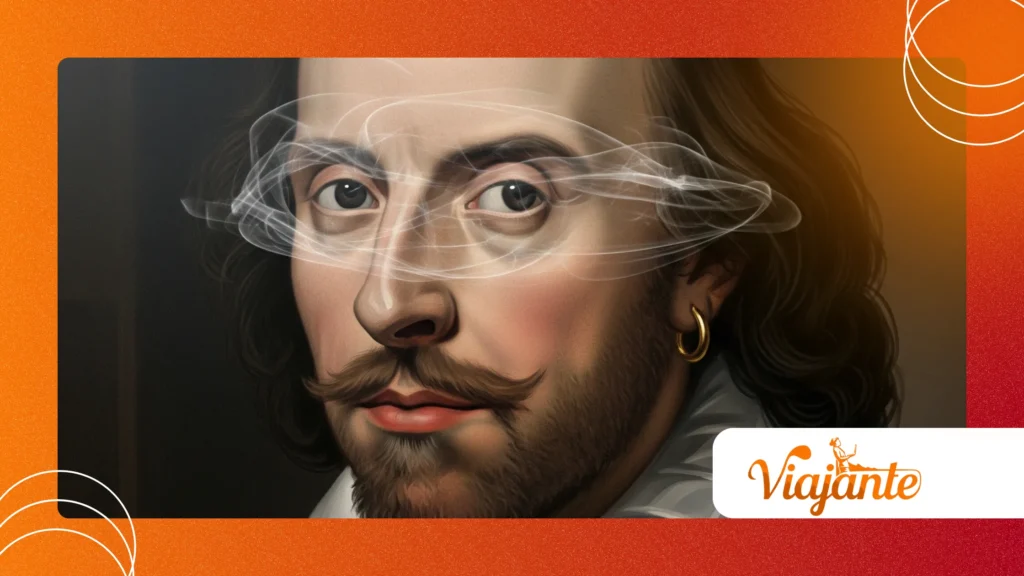
The enduring question, was Shakespeare a real person, has fascinated scholars and enthusiasts for centuries.
Anúncios
This comprehensive article delves into the fascinating authorship debate, exploring the main contenders and arguments surrounding William Shakespeare of Stratford-upon-Avon’s identity.
We will examine the evidence for and against his authorship, discuss the historical context, and shed light on why this controversy continues to spark debate today.
The debate is fueled by a romanticized notion of genius and a lingering skepticism about the man from Stratford.
This deep dive will explore the evidence, a relevant statistic, and an analogy to help you understand the core of this complex and captivating literary mystery.
The Man from Stratford: The Historical Record
William Shakespeare was a man from Stratford-upon-Avon. Historical records confirm his birth in 1564, his baptism, his marriage to Anne Hathaway, and his death in 1616.
He was known in London as a successful playwright and actor, a key player in the theatrical world.
The historical record for him is extensive, with numerous documents tracing his life and professional activities.
He was a shareholder in the Lord Chamberlain’s Men, a prominent acting company.
His career as a playwright flourished in London, and he invested his earnings wisely. He purchased a significant home in Stratford, New Place, and retired a wealthy and respected man.
His contemporaries, including fellow writers like Ben Jonson, and actors who worked with him, all publicly praised him as the author of his plays and poems.
He was a man of his time and his social standing. The lack of an autobiography or personal letters is not unusual for a writer of his era; such documents were rarely kept or preserved.
+ Lights in the Sky Over Phoenix: The Urban Legend Behind the Phenomenon
The Spark of Doubt: Origins of the Debate
The anti-Stratfordian movement grew out of a skepticism that began long after Shakespeare’s death.
Critics questioned how a man of humble origins, with only a grammar school education, could create such profound and intellectually rich works.
They argued he lacked the formal education, the aristocratic experience, and the worldly knowledge to write plays filled with intricate classical allusions, legal terminology, and detailed insights into courtly life.
They point to the fact that his family members were largely illiterate, and there is no record of him traveling extensively abroad.
Furthermore, no letters or original manuscripts in his handwriting have been found, unlike many of his contemporaries.
This lack of personal documentation fuels the doubt about his identity and allows for the suggestion that someone else, someone more “qualified,” was the true author.
The belief is that the real author, an aristocrat perhaps, used a pseudonym.
Also Read: The Curious Case of the Georgia Guidestones
The Leading Candidates: A Look at the Alternatives

One of the most prominent alternative candidates is Edward de Vere, the 17th Earl of Oxford. Proponents, known as Oxfordians, believe he is the true author.
They cite his aristocratic background, his education at Cambridge, and his extensive travels throughout Europe, which they argue align with the settings and themes of many of Shakespeare’s plays.
His life, filled with intrigue, scandal, and courtly drama, seems to parallel many of the events and characters in the works.
Oxfordians believe de Vere used a pseudonym to protect his reputation, as writing for the public stage was considered a low pursuit for a nobleman.
He wrote poetry and was known for his literary skills. Another popular alternative is Francis Bacon. Bacon was a philosopher, statesman, and writer.
His supporters, known as Baconians, argue that his immense intellect and breadth of knowledge match the scope and scientific accuracy found in Shakespeare’s works.
Baconians suggest he used the pseudonym to protect his political career from the controversies of the stage. Another popular candidate is Christopher Marlowe.
Marlowe, a contemporary playwright, was supposedly killed in a tavern brawl in 1593. Some believe his death was faked, and he continued to write under the name of Shakespeare to escape political trouble.
His work shows a similar style and complexity to early Shakespearean plays, making him a plausible, albeit speculative, contender.
+ The Roswell Incident: Was It Really a UFO Crash?
The Overwhelming Case for Shakespeare
The evidence for Shakespeare as the true author is substantial and, for most scholars, conclusive.
His name appears on the title pages of published plays and poems during his lifetime. In 1598, Francis Meres named him as one of England’s greatest playwrights.
His fellow writers and actors recognized and celebrated him as the author. The First Folio, a collection of his plays, was published in 1623.
It contains tributes from his contemporaries, including the famous poem by Ben Jonson, which explicitly refers to him as “Sweet Swan of Avon” and praises his genius.
The historical record supports his life as a writer and actor. He was a known entity in the London theater scene.
The sheer volume of contemporary references, legal documents, and published works points to the man from Stratford.
There is no comparable body of evidence for any of the other candidates.
For example, Francis Bacon’s own massive body of work shows a completely different style and intellectual preoccupation, one more focused on scientific inquiry than on human emotion.
The Scientific Evidence: Stylometric Analysis
A compelling argument for Shakespeare’s authorship comes from linguistic and computational analysis.
Digital tools can analyze vocabulary, syntax, and writing patterns—the unique “fingerprint” of an author.
This field, known as stylometry, has been applied to Shakespeare’s works and those of his contemporaries.
A 2017 study by the University of Manchester, using sophisticated stylometric analysis, found a remarkable consistency in his writing across the entire body of his work.
The analysis was able to distinguish his writing from that of his contemporaries, including Marlowe and Jonson, with a high degree of certainty.
The results strongly supported Shakespeare’s authorship and refuted claims that his works were written by multiple people or by any of the other known candidates.
The findings from this kind of objective, data-driven research are a powerful counterpoint to the more subjective arguments of the anti-Stratfordians.
Why the Debate Persists: A Human Question
The debate over Shakespeare’s authorship is more than just an academic exercise. It speaks to our romanticized notions of genius.
The idea that a humble glover’s son could create such masterpieces seems almost too good to be true. The debate also reflects a certain cultural snobbery.
The anti-Stratfordians often assume that genius and profound literary talent are a privilege of the elite, something that can only come from a high-born, highly-educated individual.
This attitude, however, underestimates the potential for talent to emerge from any social class and ignores the reality of human ingenuity.
The persistence of the debate shows our desire for a perfect, singular genius, a figure who fits neatly into our preconceived notions.
The man from Stratford, with his quiet life and modest background, doesn’t fit the mold of a dramatic, world-traveling noble.
So, we invent a story that makes more sense to us, seeking a more “fitting” hero for the literary world. Is it possible we are just searching for a more dramatic narrative than the truth provides?
The Analogy and the Legacy
The was Shakespeare a real person question is like a puzzle with missing pieces. We have the finished picture—the plays, the sonnets, the poetry—but not every single piece of the story of its creation.
We have the completed work, but not a day-to-day diary of its composition. The play scripts are the picture; the historical documents are the pieces.
Some pieces are missing, but the core of the picture remains. You can still see the whole image and appreciate its beauty.
The plays and sonnets stand on their own as works of art, a testament to the author’s genius. The real genius is in the work itself.
Shakespeare’s works have influenced countless artists and writers for centuries. His plays are performed all over the world, from Broadway to local theaters.
His language has shaped the English language as we know it today, introducing thousands of words and phrases into our everyday lexicon.
The question was Shakespeare a real person does not diminish the value or impact of his work. The plays and poems are the true legacy, and their power lies in their emotional depth and their timeless exploration of the human condition.
They capture what it means to be human in a way few other works can, and that is what truly matters.
Also Read: The Shakespeare Authorship Question
Conclusion
The debate surrounding the authorship of Shakespeare’s works is a compelling one, and it is easy to get lost in the intriguing arguments of the alternative theories.
However, the overwhelming historical, literary, and now scientific evidence points to William Shakespeare of Stratford-upon-Avon as the true and sole author.
The persistence of the question, was Shakespeare a real person, is a testament to the enduring fascination with genius and the mystique of a literary giant who, despite a wealth of evidence, still manages to spark debate.
His works have shaped culture and language, and their impact far outweighs the mystery of their creator’s identity.
To dive deeper into the historical context and evidence, you can visit the Folger Shakespeare Library’s resources.
For a look at the linguistic analysis that supports his authorship, consider exploring this article on stylometry by the Shakespeare Birthplace Trust.
Frequently Asked Questions
Q: Why do some people believe Shakespeare did not write his plays?
A: Skeptics argue that a man of Shakespeare’s humble background lacked the formal education, aristocratic experience, and worldly knowledge to write such sophisticated and historically accurate works. They believe an aristocrat or a highly educated individual must be the real author.
Q: Is there any concrete evidence of Shakespeare’s original writing?
A: While no original manuscripts in his own handwriting exist, his name appears on the title pages of published works. Furthermore, legal documents and contemporary accounts from his peers confirm his status as both an author and playwright.
Q: Are any of the alternative candidates taken seriously by mainstream scholars?
A: While the authorship debate is a popular topic for public discussion, the vast majority of academic scholars and literary historians do not support the alternative theories. The evidence for Shakespeare’s authorship is considered conclusive by most in the field.
Q: What is the main evidence for William Shakespeare’s authorship?
A: The main evidence includes his name on the title pages of works published during his lifetime, tributes from his contemporaries in the 1623 First Folio, and a robust historical record that places him firmly in London’s theatrical world and confirms his status as a playwright.
\