
Slender Man: How an Internet Myth Became a Real-Life Obsession
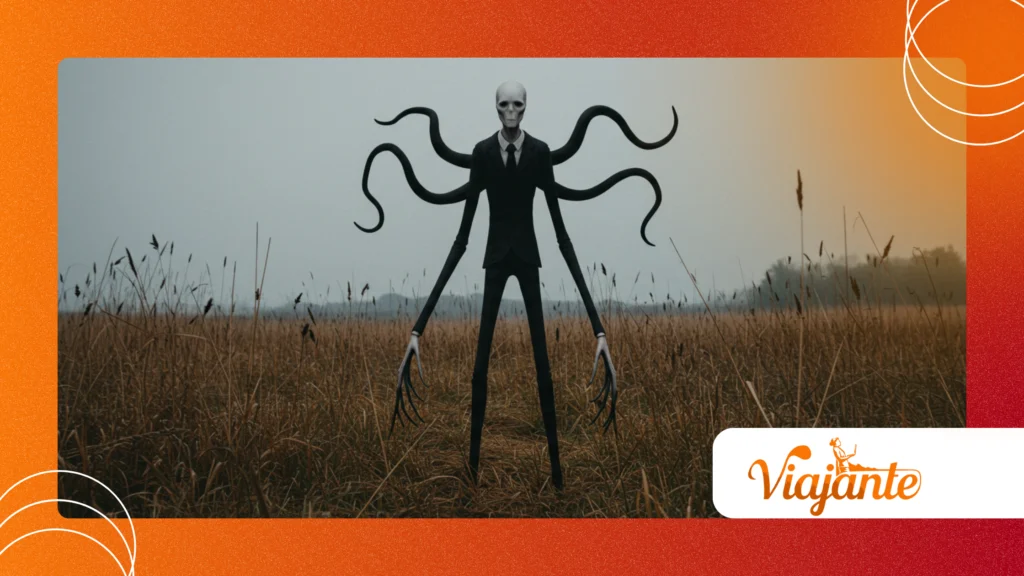
In 2009, a simple photo manipulation circulated on the internet. A tall, faceless figure with long, spindly limbs loomed ominously in the background of a children’s playground.
Anúncios
This eerie, unsettling image was the birth of Slender Man, an internet myth that would go on to capture the minds of millions, blurring the line between fiction and reality.
What started as a creepypasta (a short horror story shared online) would quickly spiral into something far darker, leading to real-life consequences that shocked the world.
The Slender Man myth grew from a seemingly harmless online tale into a dangerous obsession for some. In this article, we’ll dive into the history of Slender Man, how the internet myth evolved, and the tragic events that followed.
We’ll explore the psychological factors that fueled the legend and its lasting impact on pop culture.
The Origins of Slender Man
The story of Slender Man began in 2009 on the website Something Awful, where users were invited to create paranormal images for a photoshop contest.
One of the submissions, created by Eric Knudsen (also known as “Victor Surge”), depicted a tall, thin figure with tentacle-like appendages lurking near a group of children.
The image was accompanied by a caption that described strange disappearances and mysterious deaths, creating an eerie atmosphere that captivated the website’s users.
Though initially just an internet creation, Slender Man quickly gained traction. It became a popular subject for “creepypasta” stories, short horror tales that spread rapidly across the web.
The character was described as a faceless, unnervingly tall figure who stalked, abducted, and sometimes killed children.
His eerie and sinister appearance, along with his unnerving presence, made Slender Man an instant internet sensation.
The Rise of the Slender Man Myth
The myth of Slender Man spread quickly across the internet, becoming part of the larger “creepypasta” culture that thrived on various online forums and social media platforms.
Stories, fan art, and videos depicting Slender Man were shared widely, and soon, people began to create their own interpretations of the character.
As the myth grew, so did the obsession. Slender Man was no longer confined to internet stories; he became a figure of urban legend. The allure of the figure’s mystery and malevolence captivated young people, especially teenagers.
His ability to be molded into different narratives allowed him to take on various forms, from a ghostly presence to a malicious force. This fluidity contributed to his widespread popularity and growing presence in internet culture.
Many saw Slender Man as more than just a creepy character—they believed in his power. He became a symbol of fear, fascination, and the darker side of the internet.
Fans created games, forums, and even fan fiction centered around Slender Man’s character, bringing him deeper into popular culture.
Read also: Fascinating Curiosities: Explore the Unexpected
The Real-Life Tragedy: The Stabbing of Payton Leutner
While Slender Man’s story was purely fictional, his influence would eventually take a dark and disturbing turn. In May 2014, two 12-year-old girls from Waukesha, Wisconsin, lured their friend, Payton Leutner, into the woods and stabbed her 19 times.
After the attack, the two girls, Morgan Geyser and Anissa Weier, told police they had committed the crime in an effort to appease Slender Man.
They believed that by killing Payton, they would prove their loyalty to Slender Man and earn his favor.
The incident shocked the world and brought the myth of Slender Man into the mainstream media. The two girls claimed they were afraid that Slender Man would harm their families if they didn’t follow through with the crime.
The stabbing left Payton Leutner critically injured, but fortunately, she survived after being found by a passerby. The case became a media sensation, sparking debates about the role of internet culture in real-life violence.
The Aftermath and Legal Consequences
The crime raised significant questions about the influence of internet myths on young minds. Both Morgan Geyser and Anissa Weier were charged with attempted murder and later underwent psychological evaluations.
In 2018, Geyser was sentenced to 40 years in a psychiatric facility, while Weier received a 25-year sentence in a mental health institution.
The case of the Slender Man stabbing highlighted the potential dangers of internet culture, especially for vulnerable individuals like children and teenagers.
While Slender Man was never real, the obsession with him was. For the two girls, their belief in the myth drove them to commit an unthinkable crime.
The Psychological Impact of Slender Man
The Slender Man myth didn’t just capture the imaginations of teens—it also spoke to deeper psychological and cultural issues.
Experts have since suggested that the incident in Waukesha was not simply the result of a belief in a fictional character but was influenced by a combination of mental health issues, peer pressure, and the immersive nature of internet communities.
In the case of Geyser and Weier, their fixation on Slender Man was linked to their fragile mental states. Geyser, in particular, was diagnosed with early-onset schizophrenia, which likely contributed to her delusions.
The internet’s vast, often unregulated nature provided a space for young people to latch onto disturbing myths like Slender Man, reinforcing their beliefs and isolating them from reality.
Psychologists have noted that, in an increasingly digital world, online myths can take on a life of their own, affecting vulnerable individuals in dangerous ways.
The Slender Man case underscores the importance of monitoring online activity, especially for young people, and addressing mental health issues before they lead to tragic outcomes.
The Legacy of Slender Man
Despite the tragic stabbing incident, Slender Man has remained a significant figure in internet culture. His story has been adapted into movies, TV shows, and video games, solidifying his place in pop culture.
However, the events in Waukesha have forever altered how people view the influence of online myths and their potential real-world consequences.
The Slender Man case also sparked a wider conversation about the responsibility of online platforms and communities in managing harmful content.
The incident served as a stark reminder that myths and stories can have a lasting impact when they are consumed without critical thinking.
While Slender Man may have started as a fictional figure, the way he evolved from internet lore to real-world tragedy is a cautionary tale of how internet culture can shape the minds of the impressionable.
His story is a reminder of the power of storytelling and the importance of protecting young minds from harmful influences.
Conclusion
The rise of Slender Man from an internet myth to a real-life obsession is a chilling example of the dark side of internet culture.
While it started as a simple creepypasta, the legend grew into something far more dangerous, influencing young minds and, in the case of the Waukesha stabbing, leading to real-world violence.
The story of Slender Man raises important questions about the power of internet myths and their potential impact on vulnerable individuals.
In the end, we must ask ourselves: How much influence do fictional internet stories have on our behavior? And how can we better protect ourselves and others from harmful online content?
FAQ
1. What is Slender Man?
Slender Man is a fictional internet character created in 2009 as part of a creepypasta story. He is depicted as a tall, faceless figure with tentacle-like appendages who stalks and abducts children.
2. How did the Slender Man myth become a real-life tragedy?
In 2014, two 12-year-old girls from Wisconsin stabbed their friend, believing they needed to kill her to please Slender Man. This tragic event brought the myth into the public spotlight.
3. Is Slender Man real?
No, Slender Man is a fictional character created on the internet. However, his myth has had real-world consequences due to its impact on some individuals’ beliefs and actions.
4. What happened to the girls involved in the Slender Man stabbing?
The two girls, Morgan Geyser and Anissa Weier, were charged with attempted murder. They were both sentenced to time in psychiatric institutions after undergoing psychological evaluations.
5. What does the Slender Man case teach us?
The case highlights the potential dangers of internet myths and their influence on vulnerable individuals, especially children. It also emphasizes the need for better mental health support and online content regulation.
