
The Secret Life of Basking Sharks Beyond Shark Week
Every summer, television networks churn out high-drama aquatic spectacles, relying on heavy brass scores and ominous voiceovers to sell us ocean predators.
Pengumuman
But turn off the screen and look into temperate coastal waters, and you’ll find a far more interesting reality. Out there, the ocean’s real giants operate without the theatrical aggression.
Mengamati Basking Sharks (Cetorhinus maximus) forces a reset in how we think about marine megafauna. These creatures are masterclasses in metabolic efficiency and quiet persistence.
While mainstream media fixates on razor-sharp teeth, marine biologists track these leviathans to decode deep-sea migrations, filter-feeding mechanics, and how climate shifts ripple through the open ocean.
Inside This Guide:
- What Is a Basking Shark and How Does It Feed?
- Why Do Basking Sharks Surface Near Coastal Waters?
- How Does Deep Diving Support Their Energy Budget?
- Key Biological Facts of Cetorhinus Maximus
- Pertanyaan yang Sering Diajukan (FAQ)
What Is a Basking Shark and How Does It Feed?

Stretching up to thirty feet, these passive giants are the second-largest fish on Earth—a fact easily overlooked until you see one looming beneath the surface. They don’t hunt; they glide, filtering thousands of tons of seawater every hour with an almost robotic serenity.
Instead of chasing down prey, specialized gill rakers strain microscopic zooplankton straight from the water column. There is something mesmerizing about how Basking Sharks build and maintain massive body mass through sheer, unbroken momentum.
Cruising along with cavernous mouths wide open creates a continuous intake, trapping tiny crustaceans against their elongated gill slits. It’s an evolutionary bet on low-energy consistency over explosive exertion—and it has paid off for millions of years.
Why Do Basking Sharks Surface Near Coastal Waters?
Spring sunlight triggers massive plankton blooms along the continental shelf, drawing these massive fish out of deep offshore waters. What looks like leisurely surface cruising to a casual observer is actually intense, targeted foraging along thermal fronts.
Pop-culture documentaries often frame their sudden surface appearances as mysterious or erratic. The reality is far more pragmatic: they go where the food accumulates, using shallow, sun-warmed layers to feed while conserving core body heat.
Watching them work a plankton slick is a lesson in patience. In biological ecosystems—and perhaps elsewhere—steady, unhurried routines regularly beat out frantic bursts of energy when it comes to long-term survival.
How Does Deep Diving Support Their Energy Budget?
When winter strikes and surface plankton disappears, these sharks don’t hibernate in muddy ocean floors as scientists once believed.
Satellite tagging data reveals they embark on epic, multi-thousand-mile journeys toward equatorial depths, sometimes dropping past three thousand feet.
Sinking into the mesopelagic zone allows them to target overwintering copepod populations while riding deep ocean currents with minimal effort. It’s a stark reminder of their adaptability when primary food sources collapse.
Navigating these dark, high-pressure environments requires extreme metabolic discipline. By stripping away unnecessary movement during lean seasons, they preserve vital energy reserves until coastal waters warm up again.
++ Mengapa Hiu Hantu Termasuk di Antara Makhluk Laut Paling Langka?
Key Biological Facts of Cetorhinus Maximus
| Biological Parameter | Research Data & Specifications | Ecological Significance |
| Maximum Adult Length | 26 to 33 feet (8 to 10 meters) | Second-largest living fish species |
| Diet Utama | Microscopic Zooplankton (Copepods) | Passive filter feeder maintaining lower food web balance |
| Water Filtration Volume | Up to 2,000 tons per hour | High-efficiency feeding with low metabolic demand |
| Masa Kehamilan | Estimated 12 to 36 months | Low reproductive yield requiring strong ocean conservation |
Surviving shifts in global ocean currents requires precise resource management over long lifespans.
Conservation groups and researchers actively track these population shifts via NOAA Fisheries, working to safeguard critical migration corridors from industrial shipping and habitat disruption.
Look past the sensationalized headlines, and you find a species engineered for endurance, balance, and understated power. The quiet life of the basking shark proves that the most successful creatures in the ocean rarely need to make a scene.
What Threatens Basking Sharks in Modern Oceans?
Centuries of intensive commercial whaling drastically reduced global populations, targeting their massive, oil-rich livers for industrial lamps and cosmetics. Modern ocean threats have shifted from direct hunting to accidental industrial hazards.
Today, while international protections prevent targeted commercial fisheries, these slow-moving giants face rising threats from accidental vessel strikes in busy shipping lanes.
Plastic pollution further complicates their survival, as continuous ram filtration forces massive quantities of microplastics directly into their digestive systems.
Entanglement in commercial fishing gear also poses a severe hazard to migrating individuals traversing coastal shelves.
Marine conservationists stress that protecting critical migration corridors is essential, as their remarkably low reproductive rates make population recovery an exceptionally slow process.
++ Hewan-Hewan yang Mengubah Arah Sejarah Manusia
How Do Scientists Track Basking Shark Migrations
Satellite tagging has revolutionized our understanding of these mysterious wanderers, replacing old assumptions with precise geospatial data. Researchers deploy non-invasive electronic tags that store environmental measurements in real time.
Miniaturized archival tags attached near the dorsal fin continuously log water depth, ambient temperature, and ambient light levels over several months.
This high-resolution data allows oceanographers to reconstruct three-dimensional movement profiles across thousands of miles of open ocean.
When the tag automatically detaches and floats to the surface, it transmits accumulated data to orbital satellites. Mapping complex underwater corridors spans entire ocean basins, revealing critical overwintering zones previously unknown to marine biology.
Which Global Ecosystems Rely Most on Basking Sharks?
As high-volume filter feeders, these massive fish play a vital, overlooked role in regulating lower trophic levels across temperate marine ecosystems. Their feeding activity actively shapes the structure of coastal plankton communities.
By consuming thousands of pounds of zooplankton daily, they help control copepod density and prevent localized planktonic imbalances.
This massive consumption facilitates nutrient cycling across distinct marine layers through their biological waste products.
Their presence serves as a key bioindicator of overall marine health, signaling robust food webs and balanced primary productivity. Protecting these creatures safeguards the broader ecological integrity of temperate coastal shelf waters.
How Does Climate Change Impact Basking Shark Feeding Routes?
Rising sea surface temperatures are shifting the seasonal timing and geographical locations of plankton blooms across the North Atlantic. Rapidly warming waters force marine species to adjust their spatial distribution patterns continuously.
These ocean giants must adapt by altering long-established migration routes, venturing further poleward to locate sufficient food concentrations. Historical feeding grounds may become barren if local water temperatures exceed optimal thresholds for plankton survival.
Changes in major ocean currents also disrupt thermal fronts where copepods dense up near coastal shelves. When these micro-environments dissipate, filter feeders spend extra energy searching for food, straining their delicate metabolic budgets.
When Do Basking Sharks Reproduce and Raise Their Young?
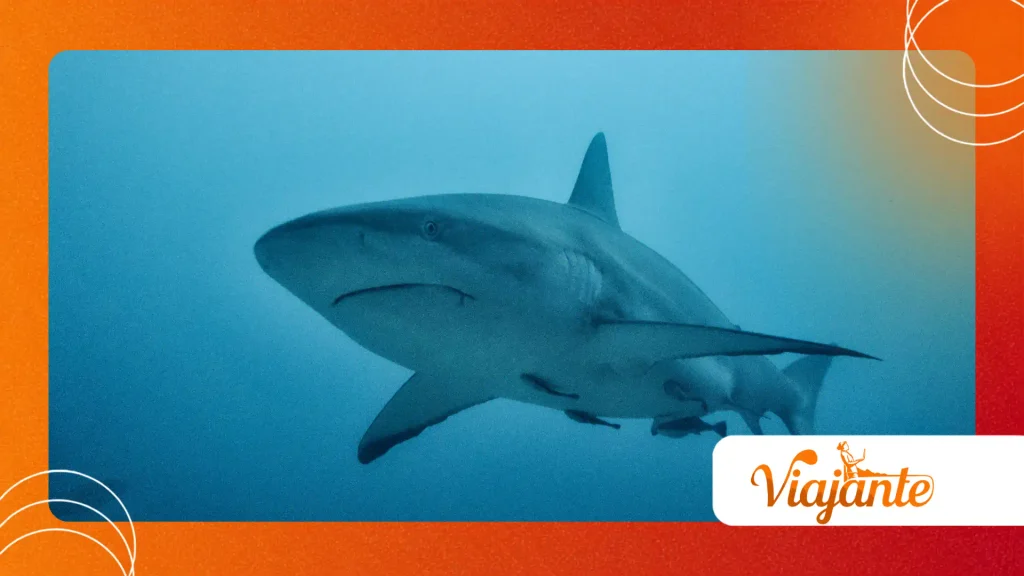
Mating rituals remain largely enigmatic, though researchers often observe courting groups swimming in tight, synchronized circles near coastal surfaces. These courtship wheels allow individuals to interact before descending into deeper ocean layers.
Deliberate physical displays allow potential mates to assess size and endurance before mating occurs in offshore waters. The entire process requires significant energy, making successful reproduction dependent on optimal feeding seasons.
Females endure an extraordinary gestation period estimated between twelve and thirty-six months, one of the longest in the animal kingdom. They give birth to live, fully formed young in remote offshore nurseries, offering pups immediate independence in deep-water habitats.
What Distinguishes Basking Sharks From Other Filter-Feeding Giants?
Whale sharks and megamouth sharks use active suction to draw prey into their mouths, allowing them to feed while remaining stationary. Physical adaptations vary significantly among the world’s three largest filter-feeding shark species.
Basking sharks rely exclusively on passive ram filtration, requiring continuous forward motion to force water through their gill slits. Stopping their forward progress halts the filtration process entirely, driving their perpetual swimming behavior.
Additionally, while whale sharks favor warm tropical basins, basking sharks dominate temperate and subpolar shelf ecosystems. Their physiological adaptations permit thriving in cold, nutrient-rich seas where zooplankton densities reach peak abundance.
++ Bahasa Rahasia yang Digunakan Lumba-lumba untuk Saling Mengenali
Pertanyaan yang Sering Diajukan (FAQ)
Are these large sharks dangerous to human swimmers or divers?
Not in the slightest. They feed strictly on microscopic plankton and lack the predatory teeth or aggressive instincts to pose a threat to humans.
Why do they swim with their mouths open wide near the surface?
Forward motion pushes seawater through their cavernous mouths and out their gill slits, where specialized rakers trap millions of tiny organisms effortlessly.
Where can researchers observe these species during summer months?
Cooler temperate coastal waters across the North Atlantic, North Pacific, and parts of the Mediterranean offer prime viewing conditions during peak plankton blooms.
\