
Pourquoi le comportement de chasse coopérative des orques évolue-t-il si rapidement ?

Les prédateurs les plus redoutables des océans subissent un profond changement de comportement que les scientifiques commencent à peine à décrypter.
Annonces
Ces prédateurs de haut niveau font preuve d'une intelligence sans pareille grâce à un travail d'équipe stratégique et à un apprentissage culturel.
Cet article explore les facteurs biologiques, les pressions environnementales et les structures sociales à l'origine de ces changements. Nous analysons comment les variations climatiques et la raréfaction des proies contraignent ces mammifères à adapter leurs stratégies de survie.
Vous trouverez ci-dessous une analyse détaillée des mécanismes de chasse, une comparaison des stratégies régionales des groupes et des points de vue d'experts sur l'avenir des écosystèmes marins et l'évolution des prédateurs spécialisés.
Qu’est-ce que le comportement de chasse coopérative des orques ?
Ce phénomène représente, au fond, l'apogée de la coordination sociale chez les mammifères marins. Les orques ne se contentent pas de chasser en groupe ; elles exécutent des manœuvres hautement synchronisées, adaptées à des proies spécifiques.
Chaque groupe fonctionne comme une unité culturelle unique, transmettant des techniques spécialisées de génération en génération. Cette transmission verticale des connaissances garantit que les jeunes orques maîtrisent des tâches complexes dès leur plus jeune âge.
Des observations récentes montrent que comportement de chasse coopérative des orques devient plus agressif et créatif.
Ces baleines ciblent désormais des proies plus grandes, notamment les baleines bleues, en utilisant une précision quasi militaire et des mouvements de contournement.
Les scientifiques qualifient ces comportements de « culturels » car ils sont acquis et non innés. Cette distinction est essentielle pour comprendre pourquoi certains groupes prospèrent tandis que d'autres peinent à s'adapter à des environnements changeants.
Comment les changements environnementaux stimulent-ils l'innovation dans le domaine de la chasse ?
Le réchauffement rapide des régions polaires est le principal catalyseur des changements de comportement actuels. La disparition de la banquise entraîne celle des zones de chasse traditionnelles, obligeant les groupes d'animaux à adapter leurs stratégies à la vie en eaux libres.
En Antarctique, les techniques de chasse par vagues sont perfectionnées à mesure que les phoques perdent leurs refuges glacés. Les orques doivent désormais calculer la force exacte nécessaire pour projeter leurs proies à la mer sans gaspiller d'énergie.
La compétition pour les ressources joue également un rôle important dans cette évolution. À mesure que la pêche humaine épuise les stocks communs, les orques sont contraintes d'innover ou de se tourner vers des cibles de chasse plus dangereuses, plus risquées, mais aussi plus lucratives.
Cette capacité d'adaptation témoigne de leur flexibilité cognitive, une caractéristique rarement observée chez les autres espèces non humaines. Ils réinventent en quelque sorte leurs stratégies de survie en temps réel pour s'adapter à l'évolution du climat mondial.
Pourquoi ce comportement évolue-t-il plus rapidement maintenant ?
La connectivité mondiale entre les groupes pourrait s'accroître en raison de l'évolution des schémas migratoires. Lorsque différentes populations interagissent, elles échangent vraisemblablement des vocalisations et des tactiques, accélérant ainsi la diffusion de nouvelles techniques de chasse efficaces.
La rapidité même de la dégradation environnementale exerce une pression sélective. Seules les capsules capables de se développer rapidement peuvent survivre. comportement de chasse coopérative des orques Ces ajustements permettent de traverser les périodes de vaches maigres, accélérant ainsi l'évolution de ces compétences.
De plus, l'intelligence des matriarches qui dirigent ces groupes est inestimable. Ces femelles âgées détiennent la « mémoire écologique » du groupe, orientant ses déplacements grâce à des décennies d'observation de l'environnement.
Selon les principaux résultats de la recherche, Administration nationale des océans et de l'atmosphère (NOAA)Ces liens sociaux constituent l'épine dorsale de leur résilience évolutive et de leur succès prédateur.
Quelles équipes régionales font preuve des tactiques les plus avancées ?
Les différents écotypes adoptent des stratégies très différentes selon leur environnement géographique. Par exemple, les orques « de passage » du Pacifique Nord-Ouest privilégient la discrétion, tandis que les groupes « résidents » se concentrent sur la chasse rapide aux saumons.
Dans le détroit de Gibraltar, une sous-population particulière a récemment attiré l'attention internationale. Elle a mis au point une méthode sophistiquée pour neutraliser les voiliers, que certains experts considèrent comme une forme de jeu social ou de défense.
Parallèlement, au large des côtes australiennes, des orques ont été filmées en train de s'attaquer méthodiquement à des grands requins blancs. Elles ciblent spécifiquement le foie, démontrant ainsi une connaissance anatomique de leurs proies jusqu'alors inconnue.
+ Des tortues qui se souviennent des visages : une mémoire animale surprenante
| Région | Cible principale | Tactique spécialisée | Taux de réussite |
| Antarctique (Type B) | Sceaux Weddell | Déferlement des vagues / Basculement de la glace | Haut |
| Atlantique Nord | Hareng de l'Atlantique | Nourrissage en carrousel / Coups de queue | Très élevé |
| Afrique du Sud | Grands requins blancs | Extraction hépatique de précision | Modéré |
| Nord-Ouest Pacifique | marsouins communs | Foudroyage à grande vitesse / Noyade | Haut |
Quelles sont les implications pour les écosystèmes marins ?
L'essor de groupes d'orques superprédatrices pourrait déstabiliser les réseaux trophiques locaux. Si les orques concentrent toute leur attention sur une seule espèce menacée, elles risquent, sans le vouloir, de la mener à l'extinction.
Cependant, leur présence contribue également à l'équilibre en régulant les populations de petits prédateurs. Cette régulation « descendante » est essentielle à la santé des forêts de varech et des récifs coralliens dans tous les océans du globe.
Compréhension comportement de chasse coopérative des orques Elle permet aux spécialistes de la conservation de prédire comment la vie marine réagira aux futurs facteurs de stress. Elle sert de baromètre biologique de la santé globale du monde sous-marin.
À mesure que ces baleines se spécialisent, elles deviennent plus vulnérables à certains changements. Si leurs proies de prédilection disparaissent, leurs compétences très pointues pourraient devenir inutiles, entraînant potentiellement l'effondrement des groupes.
Comment les orques communiquent-elles pendant la chasse ?
La signalisation acoustique est le principal outil de coordination. Chaque groupe utilise un dialecte distinct de clics, de sifflements et d'appels pulsés pour transmettre les positions et le rythme lors d'une embuscade complexe.
Lors de la technique de chasse en « carrousel » utilisée en Norvège, les orques utilisent des bulles et leur ventre blanc pour rabattre les poissons. Elles coordonnent leurs mouvements avec une précision milliseconde afin qu'aucun poisson ne s'échappe du cercle qui se resserre.
Il est intéressant de noter que certains groupes restent totalement silencieux lorsqu'ils chassent des proies sensibles à l'ouïe, comme les dauphins. Ce « mode furtif » prouve qu'ils comprennent les capacités sensorielles de leurs cibles, signe d'une intelligence supérieure.
Ce silence tactique est suivi d'une salve de vocalisations une fois la proie capturée. Ces sons servent probablement à la fois à célébrer le succès et à coordonner le partage du repas.
L'interaction humaine peut-elle influencer les changements de comportement de chasse ?
Par nos activités maritimes, nous apprenons involontairement de nouvelles habitudes aux orques. Ces dernières ont appris à suivre les chalutiers, récupérant les prises rejetées ou volant directement le poisson dans les palangres et les filets.
Cette « déprédation » est un apprentissage comportement de chasse coopérative des orques Ce phénomène se répand à l'échelle mondiale. Il réduit le coût énergétique de la chasse, mais augmente le risque d'enchevêtrement ou d'interactions hostiles avec les pêcheurs.
La pollution sonore marine oblige également les orques à s'adapter. L'augmentation du trafic maritime perturbe leur sonar naturel, les forçant à chasser plus près ou à développer des cris plus forts et plus distincts.
Cette adaptation forcée révèle le côté sombre de leur intelligence. Ils sont incroyablement ingénieux, mais ils réagissent souvent à des menaces d'origine humaine plutôt qu'à des pressions évolutives ou à des pulsions biologiques purement naturelles.
Quel avenir attend ces superprédateurs ?
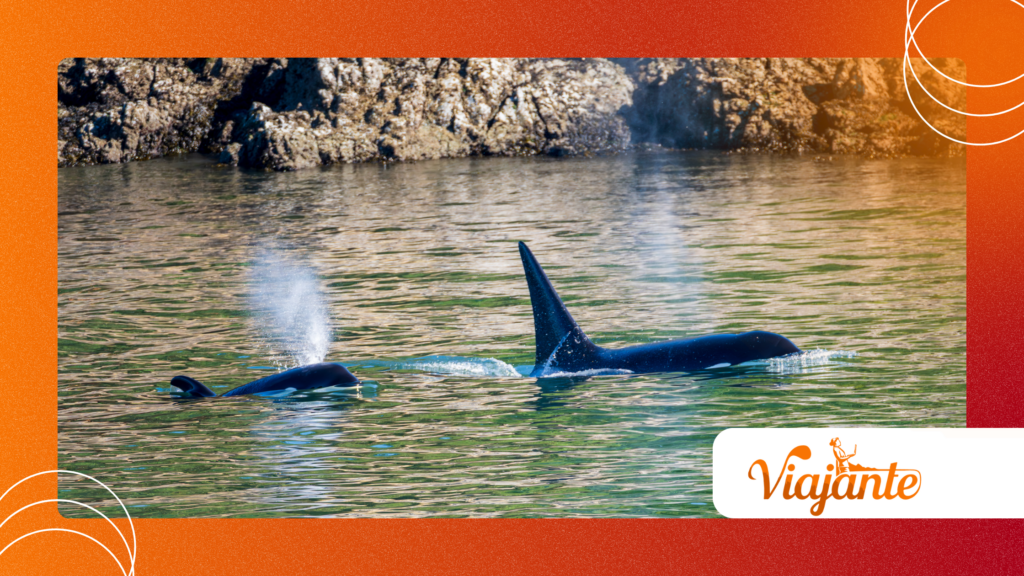
La prochaine décennie verra probablement une augmentation des conflits interspécifiques à mesure que les orques étendront leur territoire. Nous pourrions assister à l'émergence d'écotypes entièrement nouveaux, les populations se diversifiant par spécialisation culturelle.
Des études génétiques suggèrent que ces barrières culturelles sont aussi importantes que les barrières physiques. Les groupes qui chassent différemment se reproduisent rarement entre eux, ce qui pourrait à terme mener à la formation de sous-espèces entièrement nouvelles.
Le suivi de ces transitions fournit des données inestimables aux biologistes et écologistes marins. L'orque n'est pas qu'un prédateur ; c'est un être sensible capable d'une évolution sociale complexe et d'une adaptation rapide à son environnement.
Pour en savoir plus sur le statut de conservation et les efforts de protection de ces animaux, consultez le site web suivant : Commission des mammifères marins pour des rapports actualisés et des cadres juridiques.
Perspective de clôture
L'évolution des stratégies de chasse chez les orques témoigne de leurs profondes capacités cognitives. Ce ne sont pas des créatures figées ; ce sont des êtres qui apprennent en permanence et s'adaptent à un monde en perpétuelle mutation.
À l'approche de 2026, les données indiquent une divergence encore plus marquée entre les cultures de copépodes. Leur capacité à coopérer, communiquer et innover demeure l'un des sujets les plus fascinants de la biologie.
Protéger ces animaux exige de respecter autant leurs structures sociales que leurs habitats physiques. En comprenant leur comportement, nous apprécions davantage l'équilibre complexe de nos océans.
+ Les oiseaux qui « sèment » les forêts : leur rôle dans la dispersion des graines
FAQ : Comprendre le comportement des orques
Les orques sont-elles en réalité des baleines ou des dauphins ?
Les orques sont les plus grands membres de la famille des Delphinidés, ce qui les classe parmi les dauphins. Cependant, en raison de leur taille et de leur nature prédatrice, elles sont communément appelées « épaulards ».
Tous les groupes d'orques chassent-ils de la même manière ?
Non, les techniques de chasse varient énormément selon les groupes et les régions. Certains se spécialisent dans la pêche, tandis que d'autres chassent exclusivement les mammifères marins, leurs tactiques spécifiques se recoupant rarement, voire jamais.
Est-il dangereux de nager avec des orques en liberté ?
Bien qu'aucune attaque mortelle contre des humains n'ait été recensée dans la nature, les orques sont des prédateurs massifs et puissants. Les approcher peut perturber leur chasse et est généralement déconseillé par les experts.
Pourquoi les appelle-t-on « orques » ?
Le nom provient des anciens marins qui les ont vus attaquer et tuer des espèces de baleines bien plus grandes. Avec le temps, l'appellation s'est transformée de « tueurs de baleines » en « orques ».
Les orques peuvent-elles apprendre des autres espèces ?
Il n'existe aucune preuve définitive que les orques apprennent les techniques de chasse d'autres espèces. Elles s'appuient plutôt sur l'apprentissage social au sein de leur propre groupe et sur les interactions avec d'autres écotypes d'orques.
\