
Pourquoi les crayons de couleur sentent-ils si bon ? Nostalgie chimique
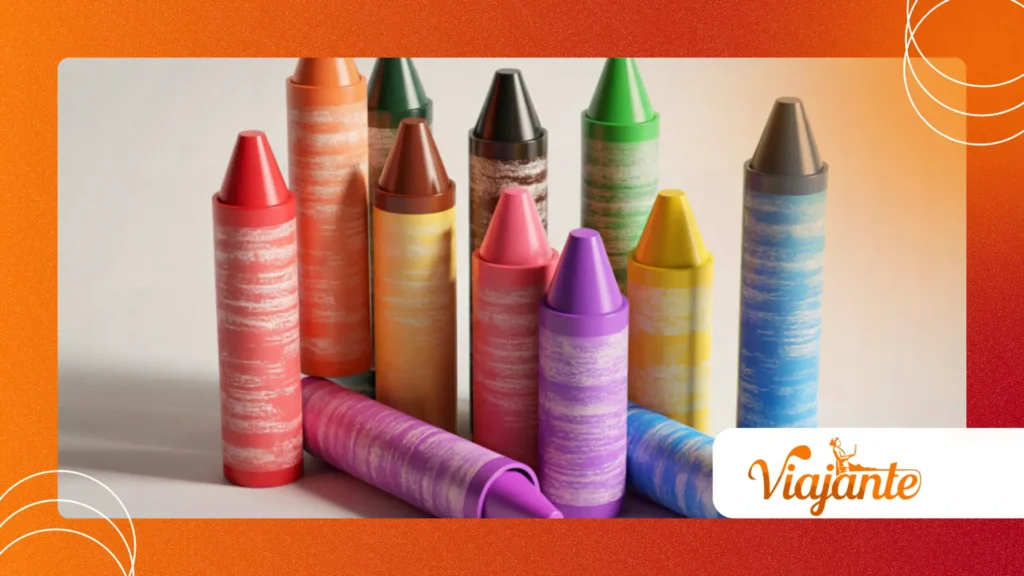
L'odeur d'une boîte de crayons de couleur fraîchement ouverte agit comme une machine à remonter le temps olfactive. Pour nombre de professionnels travaillant d'arrache-pied dans des environnements numériques ou créatifs, cet arôme particulier déclenche instantanément des souvenirs précis d'une époque plus simple. C'est une véritable décharge sensorielle qui nous libère de notre cynisme d'adulte.
Annonces
Décrypter le code de ce parfum révèle une intersection complexe et fascinante entre la chimie industrielle et une psychologie profonde.
Nous ne sentons pas seulement de la cire ; nous sommes confrontés à un sous-produit délibéré de la fabrication qui est devenu par hasard un pilier de notre mémoire collective.
Cette exploration se penche sur les acides gras cachés dans la cire, sur « l’effet Proustien » qui régit notre humeur au travail, et sur les raisons pour lesquelles certains déclencheurs sensoriels sont essentiels au maintien d’une bonne santé mentale professionnelle et d’une capacité de mémorisation cognitive à long terme en 2026.
Quelle est l'explication scientifique du parfum des crayons de couleur ?
Cet arôme caractéristique, légèrement capiteux, provient principalement d'un ingrédient spécifique et peu glamour : acide stéarique.
Cet acide gras, souvent issu du suif de bœuf, joue un rôle essentiel en tant qu'agent durcisseur pour la base de cire de paraffine standard.
Quand vous vous demandez, «Les crayons sentent-ils si bon ? « À cause d’un parfum secret, cultivé en laboratoire ? », la réalité est bien plus industrielle.
Ce parfum n'est pas un additif ; c'est l'odeur brute et authentique des ingrédients qui réagissent à la chaleur lors du processus de moulage.
Lorsque la cire et les pigments fondent, l'acide stéarique libère une odeur caractéristique, cireuse et légèrement animale. Ce profil chimique est resté inchangé depuis des décennies, ce qui explique précisément pourquoi l'expérience reste si étrangement constante d'une génération d'utilisateurs à l'autre.
Pourquoi cet arôme ravive-t-il des souvenirs d'enfance ?
Notre odorat est directement lié au système limbique, le centre émotionnel du cerveau. Ce raccourci neurologique explique pourquoi une odeur peut court-circuiter la logique et provoquer une réaction viscérale intense avant même que nous ayons analysé ce que nous sentons.
Le « phénomène proustien » décrit comment ces odeurs agissent comme des clés pour accéder à des souvenirs autobiographiques enfouis.
Pour un travailleur indépendant, ce petit mot cireux pourrait évoquer une phase de pure création, une époque où le poids des indicateurs de performance, des chartes graphiques ou des échéances fiscales n'existait pas encore.
Comme le bulbe olfactif se situe juste à côté de l'amygdale et de l'hippocampe, l'odeur du crayon devient un point d'ancrage permanent pour les premiers apprentissages.
Cela crée un pont entre votre bureau actuel, soumis à une forte pression, et vos années les plus formatrices de jeu cognitif.
+ La physique derrière « l'endroit le plus silencieux du monde »
Comparaison des profils olfactifs dans les matériaux créatifs
| Matériel | Source chimique primaire | Profil olfactif | Association de psychologie |
| Crayons | Acide stéarique | Cireux, gras, terreux | Sécurité, éducation préscolaire |
| Marqueurs | Xylène ou alcool | Aigu, semblable à un solvant | Modernité, Intensité |
| Pastels à l'huile | Huile minérale | Neutre, lourd | Art professionnel |
| Crayons de couleur | Bois de cèdre | Boisé, frais | Concentration, traditionalisme |
Comment la nostalgie olfactive affecte-t-elle la productivité au travail ?
Introduire des senteurs familières dans un bureau à domicile n'est pas qu'une question d'esthétique ; c'est aussi une question de gestion des ressources mentales.
La nostalgie procure un sentiment de « continuité personnelle », un ancrage psychologique qui nous permet de nous sentir plus stables et plus utiles pendant les semaines de travail chaotiques.
S'appuyer sur la raison Les crayons sentent-ils si bon ? Cela peut en réalité contribuer à réguler votre système nerveux. En abaissant le taux de cortisol, vous favorisez un état d'esprit plus fluide, propice aux meilleures idées et à la résolution de problèmes.
Recherche partagée par le Association américaine de psychologie suggère que la nostalgie positive peut renforcer la confiance créative.
S’entourer de ces subtils déclencheurs sensoriels contribue à maintenir un état d’esprit professionnel inspiré, vous protégeant de la froideur stérile des environnements exclusivement numériques.
Quels sont les composants qui rendent ce parfum si reconnaissable ?
Au-delà des acides gras, l'association de la cire de paraffine et des pigments secs crée une note de fond « industrielle propre » caractéristique. La paraffine, un dérivé du pétrole, offre cette base neutre que beaucoup trouvent étrangement réconfortante et stable.
L'absence de composés organiques volatils (COV) agressifs dans les crayons de haute qualité préserve la douceur de leur parfum.
Cette retenue est cruciale ; elle permet au cerveau d'enregistrer l'odeur comme un confort de fond plutôt que comme une présence chimique distrayante ou envahissante.
Il y a là une remarquable constance, peut-être fortuite. Les grands fabricants ont jalousement gardé leurs formules car ce parfum fait office de logo invisible. C'est une forme de marketing sensoriel qui fidélise la clientèle par l'odorat plutôt que par un écran.
+ Pourquoi avons-nous des fossettes ? Explications génétiques
Quand ce parfum est-il devenu une icône culturelle ?
La signature chimique que nous connaissons aujourd'hui a été en grande partie finalisée au début du XXe siècle. Depuis, elle s'est imposée comme l'une des odeurs les plus identifiables de la planète, apparaissant fréquemment dans les études mondiales sur la reconnaissance des odeurs.
Une célèbre étude de l'université de Yale a un jour noté que l'odeur des crayons de couleur se classait au 18e rang des odeurs les plus reconnaissables pour les adultes.
Cette incroyable endurance explique pourquoi la question de Les crayons sentent-ils si bon ? elle persiste malgré chaque évolution technologique.
Pour le professionnel moderne, cette icône représente un lien tangible avec un passé concret. À une époque où notre travail est souvent invisible – stocké dans le cloud et sur des serveurs – la présence tangible et massive de la cire apporte un sentiment de gravité bienvenu.
Pourquoi associons-nous les odeurs cireuses à la sécurité ?
Psychologiquement, nous associons les odeurs de notre environnement d'enfance à la protection des personnes qui s'occupaient de nous. La salle de classe, malgré ses imperfections, était un espace structuré où notre seule véritable responsabilité était de nous concentrer sur la page que nous avions devant nous.
Cette association perdure bien après l'âge adulte. Lorsque nous percevons cet arôme cireux, notre subconscient évoque un état de « flux » où nous étions encouragés à expérimenter et à rester dans les limites – ou à les franchir intentionnellement.
Pour celles et ceux qui doivent composer avec la complexité du télétravail, puiser dans ce sentiment de sécurité est une question de survie. Cela permet une « réinitialisation mentale » rapide, faisant sortir le cerveau d’un état défensif pour le ramener à un état proactif.
Quels sont les avantages de l'utilisation des parfums dans un espace de travail à distance ?

L’« immersion olfactive » devient un outil reconnu pour les professionnels du numérique. En associant des odeurs spécifiques à différents types de tâches (analytiques, créatives ou administratives), on peut en quelque sorte entraîner son cerveau à passer d’un mode de fonctionnement à l’autre à volonté.
Vous n'avez pas forcément besoin de garder une boîte de 64 crayons de couleur sur votre bureau en acajou, mais savoir pourquoi Les crayons sentent-ils si bon ? Vous aide à choisir des éléments de base plus adaptés à votre espace de travail. Les tons naturels et cirés favorisent une impression de durabilité.
Pour progresser durablement dans sa carrière, il ne suffit pas d'avoir des compétences techniques ; il faut aussi préserver sa santé sensorielle. On oublie souvent l'air qu'on respire au travail, pourtant il joue un rôle essentiel, bien que discret, sur notre endurance à long terme.
+ Pourquoi les zèbres ont-ils des rayures ? Décryptage des hypothèses
Créer un environnement de travail adapté aux personnes ayant des besoins sensoriels particuliers
Votre espace de travail devrait être un écosystème soigneusement agencé, et non un simple lieu pour poser votre ordinateur portable. Il doit favoriser l'innovation tout en préservant activement votre santé mentale des effets néfastes d'une connectivité permanente et de la lumière bleue.
L'intégration d'éléments tactiles, comme les fournitures artistiques traditionnelles, rompt la monotonie étouffante des tâches numériques.
Cette variété prévient le « brouillard cérébral » associé à la fatigue visuelle et maintient la flexibilité des fonctions cognitives en sollicitant plusieurs sens simultanément.
Le secret du pourquoi Les crayons sentent-ils si bon ? Elle se situe au croisement de la chimie fondamentale et des sentiments humains.
S'adonner à ces petits plaisirs physiques peut mener à une existence professionnelle plus durable, plus humaine et, au final, plus réussie.
Pour mieux comprendre comment notre environnement détermine nos limites cognitives, explorez le Instituts nationaux de la santé pour des analyses évaluées par des pairs sur la façon dont la perception sensorielle influence les performances humaines.
Réflexion finale
Le magnétisme du parfum de crayon n'est pas un hasard de l'industrie du parfum ; c'est un sous-produit d'ingrédients simples qui ont capturé par hasard notre enfance collective.
L'acide stéarique et la cire de paraffine ont créé un parfum désormais indissociable de nos premiers instants de découverte.
Pour les professionnels d'aujourd'hui, ces parfums sont bien plus que de simples souvenirs : ce sont des outils d'ancrage et de résilience créative.
En respectant notre « nostalgie chimique », nous pouvons concevoir des vies et des espaces de travail aussi riches et vivants qu'une boîte de couleurs neuves.
FAQ (Foire aux questions)
1. L'odeur des crayons de couleur est-elle toxique ou nocive à inhaler sur le long terme ?
Non. Les crayons de couleur modernes de fabricants réputés sont strictement non toxiques. Leur parfum provient de l'acide stéarique et de la cire de paraffine de qualité alimentaire ou cosmétique, ce qui les rend parfaitement sûrs pour un usage domestique ou au bureau.
2. Puis-je réellement utiliser l'odeur des crayons de couleur pour améliorer ma mémoire ?
Oui. C’est ce qu’on appelle la « mémoire contextuelle ». Si vous êtes exposé à une odeur spécifique pendant l’apprentissage de nouveaux concepts, la réintroduire plus tard peut aider votre cerveau à « déverrouiller » et à récupérer ces informations spécifiques plus rapidement.
3. Pourquoi certaines marques de crayons de couleur génériques ont-elles une odeur différente, voire pire ?
Les versions de moindre qualité remplacent souvent l'acide stéarique de haute qualité par des huiles industrielles bon marché ou des agents de remplissage synthétiques. Cela modifie la réaction chimique à la chaleur, ce qui donne souvent une odeur qui évoque davantage le « plastique brûlé » que la « nostalgie de l'enfance ».
4. L'odeur classique des crayons de couleur finit-elle par disparaître ?
Bien que la cire soit remarquablement stable, elle peut s'oxyder sur plusieurs décennies. Cependant, conservée dans un endroit frais et sec, une boîte de crayons de couleur peut conserver sa composition chimique unique pendant toute une vie grâce à la faible volatilité de ses composants.
\