
Bloody Mary in the Mirror: The Origins of a Schoolyard Dare
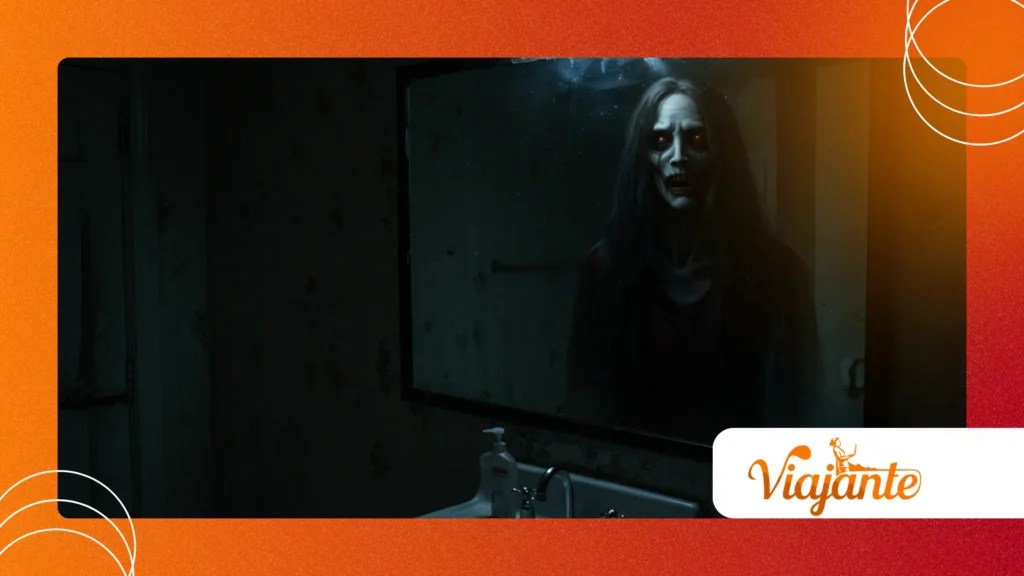
“Bloody Mary in the Mirror” is a phrase that many of us recall from our childhood, often accompanied by a sense of thrill and fear. The dare, which typically involves standing in front of a mirror in a dark room, repeating the name “Bloody Mary” three times, has been a rite of passage for generations of children.
Anúncios
But what is the truth behind this mysterious and eerie legend? Is it simply a spooky game, or is there a deeper, more sinister history tied to the name “Bloody Mary”?
In this article, we’ll explore the origins of the Bloody Mary in the Mirror legend, its connection to folklore and history, and how it became one of the most enduring and terrifying schoolyard dares.
The Legend of Bloody Mary
The Bloody Mary legend has taken many forms over the years, but the basic premise remains the same: an individual stands before a mirror, often in a dark room, and chants “Bloody Mary” three times.
According to the myth, the apparition of a woman—sometimes said to be a ghost, witch, or vengeful spirit—will appear in the mirror.
Some versions of the story claim that Bloody Mary will reveal her face, while others suggest she might even reach out and grab the person who summoned her.
The legend is often accompanied by stories of eerie occurrences, such as the lights flickering, the air growing colder, or strange noises emanating from the mirror. Many children dare one another to perform the ritual, making it a popular game in schoolyards, slumber parties, and among friends.
But where did this eerie game come from, and how did it become such a widespread part of childhood folklore?
The Origins of the Bloody Mary Legend
While the precise origins of the Bloody Mary in the Mirror legend are difficult to pin down, there are several theories about how it came to be. Some trace it back to ancient rituals and superstitions, while others suggest that it was inspired by historical figures and events.
1. The Historical Figure of Mary I of England
One of the most widely believed origins of the Bloody Mary legend is the connection to Mary I of England, often referred to as “Bloody Mary.” Mary I, who ruled England from 1553 to 1558, earned the nickname due to her brutal persecution of Protestants.
During her reign, she ordered the execution of hundreds of Protestants in what became known as the Marian Persecutions. Her violent actions and the bloodshed associated with her reign have led to the association between the name “Bloody Mary” and death.
While there is no direct evidence that the legend of Bloody Mary as a spirit is linked to Mary I, her nickname may have inspired the eerie tale.
Some versions of the story even claim that the spirit of Bloody Mary is a vengeful woman who was wronged or murdered, mirroring the themes of betrayal and revenge seen in the historical figure’s life.
Read also: The Midnight Game: Ritual, Legend, or Psychological Experiment?
2. The Superstition of Mirrors and Spirits
Another possible origin for the Bloody Mary legend comes from the superstition surrounding mirrors. Throughout history, mirrors have been believed to have mystical properties, often thought to be portals to another world or a way to communicate with spirits.
In some cultures, mirrors were considered a way for the soul to be trapped or even for spirits to be summoned.
The idea of seeing something supernatural in a mirror, especially after performing a ritual or chant, may have evolved from these ancient superstitions.
The practice of summoning spirits through mirrors, especially in dark or unsettling circumstances, is rooted in the belief that mirrors act as gateways between the living and the dead. This could explain why the Bloody Mary in the Mirror legend has taken hold over time.
3. The Development of the Urban Legend
The Bloody Mary in the Mirror dare likely became popular as part of the larger tradition of urban legends. These types of stories often emerge as a way for people—particularly children—to challenge each other with mysterious and sometimes frightening tasks.
The game was passed down through word of mouth, evolving along the way, with each version becoming more vivid and elaborate.
As urban legends go, the Bloody Mary myth became a rite of passage, especially in the 20th century when children began performing the dare at slumber parties or late-night gatherings.
This evolution has led to the many variations of the story, with different cultures adding their own twists, such as Bloody Mary being a young woman who died tragically, a witch seeking revenge, or a girl who was punished for vanity. Regardless of the interpretation, the fear and excitement of performing the ritual remain central to the dare.
The Psychology Behind the Bloody Mary Game
While the Bloody Mary in the Mirror game is primarily based on superstition and folklore, there is a psychological aspect to it that makes it so enduring.
The ritual itself taps into our natural fear of the unknown, and the idea of summoning a spirit is both thrilling and terrifying.
The darkness and isolation of being alone in front of a mirror heighten this sense of fear, making the experience more intense.
Additionally, the power of suggestion plays a significant role in the game. When participants chant “Bloody Mary” multiple times, they are primed to see or feel something supernatural.
This phenomenon, known as the “anticipation effect,” is a psychological response that occurs when the brain is primed to expect something to happen.
In this case, the fear and excitement surrounding the game cause people to interpret ambiguous sensations or shadows as part of the “Bloody Mary” experience.
Moreover, mirrors themselves have an eerie quality, as they reflect our own image but also seem to distort reality, making them an ideal setting for supernatural stories.
The combination of fear, psychological suggestion, and the mysterious nature of mirrors is what makes the Bloody Mary game so compelling and memorable.
The Enduring Popularity of the Bloody Mary Legend
Despite the advances in technology and the increasing availability of entertainment, the Bloody Mary in the Mirror game remains a popular rite of passage for children and teens.
The legend is often told at slumber parties, Halloween events, and even in schoolyards, where children dare each other to perform the ritual and face the consequences. It’s a simple, inexpensive thrill that plays on our fascination with the supernatural.
The popularity of the game has also led to appearances in various media, including movies, television shows, and books, further cementing Bloody Mary as a part of modern folklore.
These portrayals often take the legend to new extremes, presenting Bloody Mary as a malevolent ghost or a more complex figure with a tragic backstory.
In the age of the internet and social media, the Bloody Mary dare has also made its way online, where users post their experiences, discuss variations of the story, and even create viral challenges. The game’s ability to adapt and evolve ensures its continued relevance in contemporary culture.
Conclusion
The Bloody Mary in the Mirror legend is a fascinating example of how folklore and superstition can evolve into something much more than just a spooky story.
While it may have originated from historical events and ancient superstitions, the game has become an enduring part of modern folklore, captivating generations with its mystery and thrill.
Whether you see it as a harmless schoolyard dare or as something with deeper, darker roots, Bloody Mary continues to intrigue and terrify those brave enough to face the mirror. So, next time you hear someone dare you to say her name three times in front of the mirror, will you take the challenge?
FAQ
1. What is the Bloody Mary game?
The Bloody Mary game involves chanting her name three times in front of a mirror in a dark room. Legend has it that she will appear in the mirror, often with frightening results.
2. Who is Bloody Mary?
There are many versions of Bloody Mary, but most commonly, she is said to be a vengeful spirit, often linked to the historical figure of Mary I of England, known for her violent persecution of Protestants.
3. Is the Bloody Mary legend real?
There is no evidence to suggest that the Bloody Mary myth is real. It is part of folklore and superstition, often fueled by fear and anticipation.
4. Why is Bloody Mary so popular?
The Bloody Mary game taps into natural human fears of the supernatural and the unknown. It’s a simple yet thrilling dare, often played during childhood or teenage years.
5. Can you summon Bloody Mary by accident?
While the legend suggests that performing the ritual can summon Bloody Mary, it’s likely that the experiences reported are psychological in nature, stemming from fear and suggestion.
