
Why Mars Colonization Hoax Theory Is Growing Fast
Public interest in space travel remains high, yet online skepticism regarding interplanetary travel plans has expanded rapidly across digital platforms.
廣告
A growing movement around the Mars Colonization Hoax Theory reflects deeper public fatigue toward unrealized technological timelines and corporate PR hype.
Understanding this narrative requires analyzing real-world economic pressures, missed launch schedules, and technical hurdles.
Readers seeking clarity will discover how public skepticism evolved, what data supports these doubts, and how remote workers can analyze tech trends critically.
This detailed guide breaks down the core mechanics driving online skepticism, examines real aerospace budget data, answers key audience questions, and provides practical insights for modern digital professionals.
What Is the Mars Colonization Hoax Theory?
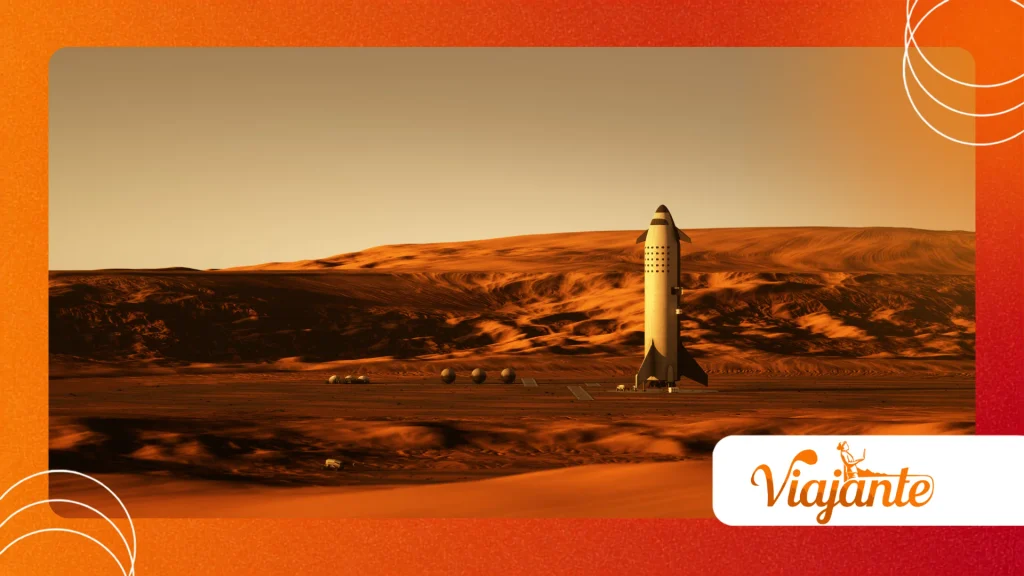
Public skepticism regarding interplanetary settlement has evolved from fringe forum posts into a widely discussed internet topic known as the Mars Colonization Hoax Theory.
Rather than claiming Mars does not exist, modern adherents argue that public statements about near-term human settlement are engineered marketing campaigns designed to secure venture funding, raise valuations, and maintain investor interest.
Skeptics argue that private aerospace companies leverage promotional renderings and aggressive deadlines to attract engineering talent and government contracts without facing real accountability for delayed timelines.
This theory gains traction whenever high-profile launch dates shift outward by decades or when life-support experiments face budget cuts.
Digital professionals and technology creators observe this trend closely because it mirrors patterns seen across early-stage tech sectors, where public relations frequently outpaces actual engineering capacity.
Why Is Public Skepticism Around Mars Settlement Accelerating?
Repeated delays in crewed deep-space missions have created a widespread credibility gap between aerospace promises and measurable outcomes.
When tech executives promise self-sustaining cities within a decade, only to push those targets back repeatedly, audiences naturally develop healthy skepticism.
Financial realignments within major space programs also fuel consumer skepticism. Government audits reveal that complex endeavors like the Mars Sample Return mission face cost projections exceeding $7.5 billion alongside extended operational delays.
These escalating price tags lead taxpayers and tech workers to question the feasibility of multi-billion-dollar planetary colonization schemes.
Algorithmic amplification across social media platforms further drives the spread of the Mars Colonization Hoax Theory by rewarding contrarian commentary and investigative video essays.
Content creators routinely dissect promotional CGI videos against actual engineering progress, fostering widespread doubt among young, tech-savvy audiences.
Which Technical Realities Drive Sceptical Arguments?
Deep-space biological hazards present insurmountable barriers that commercial marketing campaigns often downplay or completely ignore during promotional presentations.
Prolonged exposure to cosmic radiation, microgravity-induced bone density loss, and closed-loop life support failures remain unresolved problems for multi-year human spaceflight.
Economically, the logistical burden of transporting basic life support materials, heavy machinery, and radiation shielding across tens of millions of miles presents unprecedented costs.
Industry estimates confirm that sustaining human life on another planet requires trillions of dollars in continuous supply runs from Earth.
++ 隨時隨地聆聽聖經
| Mission Parameter | Public Corporate Claims | Technical & Economic Reality |
| Estimated Human Arrival | Mid-2020s to early 2030s | Pushed to late 2030s or 2040s |
| Mission Cost Estimates | $10 Billion (Private Estimate) | $500+ Billion (Independent Audits) |
| Primary Industry Focus | Immediate Mars Settlement | Pivot to Lunar Bases & Satellites |
| Life Support Readiness | Fully Solved by In-Situ Tech | Unresolved Deep-Space Bio-Hazards |
Detailed updates on federal space expenditures and project evaluations are documented directly by NASA’s Official Budget and Project Reports.
How Does Online Space Hype Impact Digital Professionals?
Remote workers, content writers, and digital marketers often fall into the trap of repeating viral tech hype without critically evaluating underlying data.
Uncritical amplification of corporate claims undermines editorial integrity and damages personal audience trust over long-term career horizons.
Evaluating speculative technology trends requires digital creators to build robust research habits, cross-reference government audits, and identify PR-driven sensationalism.
Distinguishing between genuine technological breakthroughs and promotional narratives helps professionals deliver accurate analysis to their respective client networks.
Cultivating a healthy sense of skepticism toward theories like the Mars Colonization Hoax Theory helps tech-focused freelancers avoid dedicating time to dead-end projects, hyped software trends, or misleading marketing campaigns.
Analyzing aerospace trends provides a valuable case study in separating speculative claims from actual engineering feasibility.
How Can Content Creators Analyze Technology Trends Responsibly?

Creators must verify primary source materials, such as technical whitepapers and institutional audits, before publishing commentary on complex tech subjects.
Fact-checking timeline adjustments against independent scientific consensus prevents the unintentional spread of corporate misinformation.
Maintaining strict editorial standards ensures that digital articles offer balanced perspectives rather than sensationalized headlines or unquestioning corporate praise.
Transparency regarding technical risks, financial constraints, and missing infrastructure builds long-term authority with readers.
Developing critical evaluation skills allows freelancers to produce high-value content that stands out in saturated digital channels. Readers consistently reward creators who present objective, well-researched analyses over hyped market speculation.
結論
The rapid growth of the Mars Colonization Hoax Theory highlights a broader cultural pivot toward technological realism and corporate accountability.
Rather than rejecting space science, public audiences are demanding verifiable progress, honest financial accounting, and realistic mission timelines from public and private space leaders.
For digital professionals and online creators, this shift underscores the importance of critical thinking, research integrity, and clear communication.
By prioritizing verified facts over viral hype, freelancers can establish lasting authority in an evolving digital landscape.
Comprehensive data regarding global space economic indicators and commercial satellite metrics can be found through the Space Foundation Space Report.
常見問題 (FAQ)
What is the core argument behind the Mars Colonization Hoax Theory?
The core argument behind the Mars Colonization Hoax Theory claims that corporate promises regarding near-term Mars settlement are overstated PR efforts designed to generate funding rather than achievable short-term goals.
Why do aerospace companies set optimistic mission timelines?
Companies use ambitious timelines to motivate internal development, attract top engineering talent, secure venture investment, and maintain public interest in their long-term projects.
Is human travel to Mars actually possible with current technology?
While crewed transit is theoretically possible, unresolved biological risks from cosmic radiation, long-term life support issues, and extreme financial costs delay safe execution.
How do budget adjustments affect deep-space mission goals?
Federal budget cuts and institutional audit delays force space agencies to deprioritize costly planetary missions in favor of lunar bases and commercial satellite networks.
Why should remote workers care about space industry trends?
Space industry trends reflect broader patterns in venture capital funding, corporate PR strategies, and speculative technology cycles that impact tech sector employment and digital media.
\