
Etçil sünger türleri neden bu kadar sıra dışı?
For centuries, naturalists couldn’t even agree on whether sea sponges were plants or animals. Once science settled on animals, we filed them away as the ocean’s quietest minimalists—stationary filters sitting on rocks, endlessly straining bacteria from passing water.
Anúncios
Deep below the sunlit surface, though, Carnivorous Sponge Species Are So Unusual because they tore up that entire evolutionary contract. Instead of sipping microscopic soup through porous channels, these strange invertebrates wait in the dark and snatch live crustaceans.
They have no mouth, no stomach, and no brain to speak of. When a tiny shrimp brushes past, microscopic Velcro-like hooks lock onto its shell, and the sponge’s own outer cells slowly crawl over the victim to digest it alive.
What follows isn’t just a tour of bizarre deep-sea anatomy. We will look at why starvation in the abyss pushed a passive filter feeder into active predation.
We’ll also examine how species like the harp sponge and the newly filmed “death-ball” sponge actually hunt, and what recent 2024–2026 expeditions tell us about life on the ocean floor.
What Makes Carnivorous Sponge Anatomy So Different From Normal Sponges?
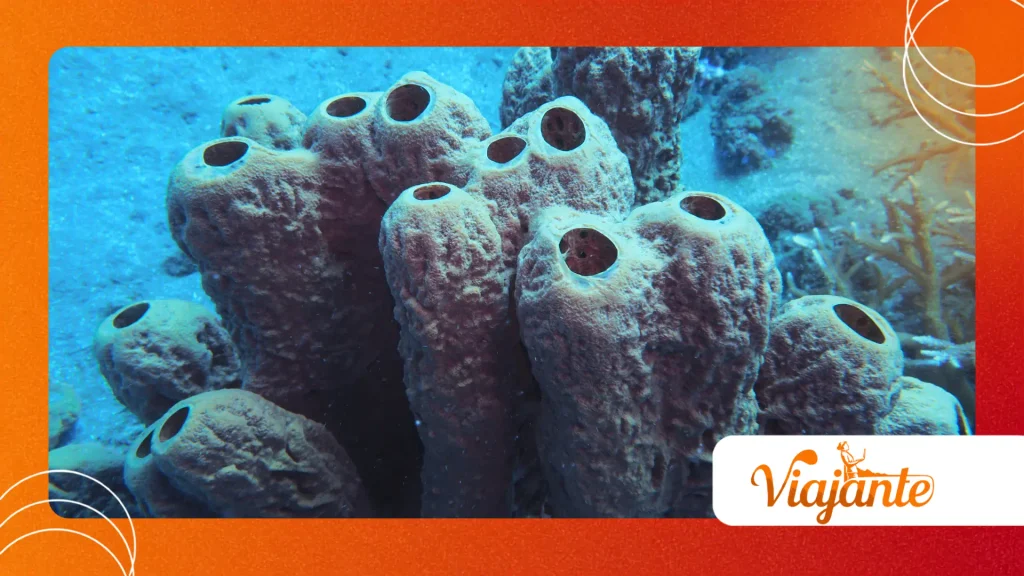
Most sponges you might recognize from a reef or a biology textbook are built around plumbing. Their bodies form living sieves lined with choanocytes—tiny, whip-tailed cells that beat in unison to pull seawater through internal canals and trap bacteria.
Predatory sponges in the family Cladorhizidae largely threw that plumbing away. There is something almost unsettling about how thoroughly they dismantled their own internal architecture.
Without water-pumping chambers, a digestive tract, or a nervous system, the outer skin itself becomes the stomach. Instead of soft, absorbent tissue, their bodies rely on rigid silica needles called spicules.
Along their slender filaments, those spicules sprout microscopic hooks that act like barbed fishing line left hanging in a current. A passing amphipod doesn’t get bitten—it simply gets snagged, and its own panicked thrashing pulls more hooks into its joints.
How Do Carnivorous Sponges Hunt Without Brains or Muscles?
People often misunderstand how an organism with zero neurons can “hunt” at all. We tend to equate predation with intent, speed, or at least a twitch of muscle, yet cladorhizid sponges operate more like living spiderwebs anchored in slow-motion currents.
When a copepod or larval crustacean drifts into those hooked branches, capture is instantaneous and purely mechanical. Over the next several hours, mobile sponge cells migrate toward the struggle, pooling around the immobilized animal like a slow, translucent tide until a thin membrane seals it in.
Within days, only a hollow exoskeleton remains. Seeing that quiet efficiency up close is why Carnivorous Sponge Species Are So Unusual to marine biologists—they prove that complex predation doesn’t require eyes, nerves, or even a gut.
Some species take this passive engineering even further. Researchers at NOAA Ocean Explorationpoint out that ping-pong tree sponges (Chondrocladia) still use a remnant of their ancestral water-pumping ability.
Instead of filtering food, they use that pressure to inflate translucent spheres on long stalks—turning simple geometric balloons into broader, deadlier traps.
Why Did Some Sponges Evolve Into Deep-Sea Predators?
To understand why a sponge would give up peaceful filter feeding, you have to picture the abyssal seafloor.
Far beneath the ocean’s sunlit zone, the steady drizzle of organic debris slows to a trickle, and suspended bacteria become far too scarce to pay back the energy cost of pumping thousands of liters of water a day.
In that kind of biological desert, waiting for a single crustacean makes far better metabolic sense than running a full-time water pump for crumbs.
One trapped shrimp delivers a dense burst of protein and lipids that can sustain a slow-metabolizing sponge for weeks.
Depth isn’t even the only trigger, though it took until 1995 for scientists to realize it.
When French researchers investigated a cold, food-poor Mediterranean cave near La Ciotat, they discovered Asbestopluma hypogea quietly snagging crustaceans in just 17 meters of water—shattering a century of assumptions that all sponges were harmless filter feeders.
++ Memelilerde Yeraltı Oksijen Adaptasyonları Hakkındaki Gerçekler
Which Carnivorous Sponge Species Have the Strangest Shapes?
Once evolution freed cladorhizid sponges from needing compact, water-pumping bodies, their silhouettes went wild.
Looking at them side by side, you start to see how Carnivorous Sponge Species Are So Unusual—every strange geometry is a tailored solution to catching scarce prey in three dimensions of dark water.
Take Chondrocladia lyra, the harp sponge described off northern California in 2012. Growing up to six horizontal vanes lined with upright, hook-covered branches, it looks less like an animal and more like an abandoned brass candelabrum.
Swollen tips at the top of those branches even release sperm packets into the current to fertilize neighbors downstream.
| Tür Adı | Ortak Ad | Family / Genus | Typical Depth | Notable Adaptation or Discovery |
| Asbestopluma hypogea | Cave carnivorous sponge | Cladorhizidae (Asbestopluma) | 17–22 m (caves); also deeper | First sponge proven carnivorous (1995, France); uses slender filaments |
| Chondrocladia lyra | Harp sponge | Cladorhizidae (Chondrocladia) | 3,300–3,500 m | Candelabra-like vanes (up to 6) with Velcro-like hooks and sperm balls |
| Chondrocladia lampadiglobus | Ping-pong tree sponge | Cladorhizidae (Chondrocladia) | Deep sea (~2,600–3,000+ m) | Inflates translucent spheres on stalks covered in predatory hooks |
| Abyssocladia johnhooperi | Deep-sea carnivorous sponge | Cladorhizidae (Abyssocladia) | 2,914 m | Collected off Western Australia; formally described in 2024 |
| Chondrocladia sp. nov. | “Death-ball” sponge | Cladorhizidae (Chondrocladia) | 3,601 m | Spherical hook-covered predator confirmed in 2025 Southern Ocean surveys |
Look closely at the depth column and a quiet pattern emerges. From shallow Mediterranean caves to abyssal plains more than four kilometers down, family Cladorhizidae keeps reinventing the same basic trap wherever food runs thin.
++ Çöllerdeki Antik Yağmur Ormanı Fosillerinin Gizemi
What Recent Discoveries Reveal About Carnivorous Sponges in 2025 and 2026?
For decades, deep-sea sponges were mostly studied as mangled specimens dragged up in trawl nets, which shredded their delicate filaments before anyone could see how they stood upright.
High-definition remotely operated vehicles changed that entirely, letting biologists watch these predators intact on the seafloor.
Between 2024 and 2026, that technological shift produced a wave of new species. Formal descriptions published in 2024 from expeditions off Western Australia added abyssal predators like Abyssocladia aurora at 4,186 meters and Axoniderma challengeri at 4,514 meters to the catalog.
Then, during 2025 cruises in the Southern Ocean aboard R/V Falkor (too), researchers filmed a striking spherical Chondrocladia species at 3,601 meters near Montagu Island.
Nicknamed the “death-ball” sponge for its round, hook-studded frame, it joined earlier MBARI findings of bioluminescent cladorhizids.
Together, those sightings remind us that Carnivorous Sponge Species Are So Unusual partly because we are still catching up to how many tricks they actually have.
When Do Carnivorous Sponges Rely on Symbiotic Bacteria Too?
Hunting crustaceans isn’t always the whole story. Around deep-sea cold seeps and hydrothermal vents, several cladorhizid species hedge their bets by housing methane-oxidizing bacteria directly inside their tissues.
Those microscopic partners convert dissolved methane gas into usable carbon, giving the sponge a steady chemical baseline when swimming prey fails to drift by. Pairing bacterial farming with crustacean ambush creates a quiet, dual-fuel survival strategy.
That microbial partnership may even explain how ancient sponges survived the risky evolutionary leap away from filter feeding in the first place.
Are Carnivorous Sponges Dangerous to Humans or Divers?
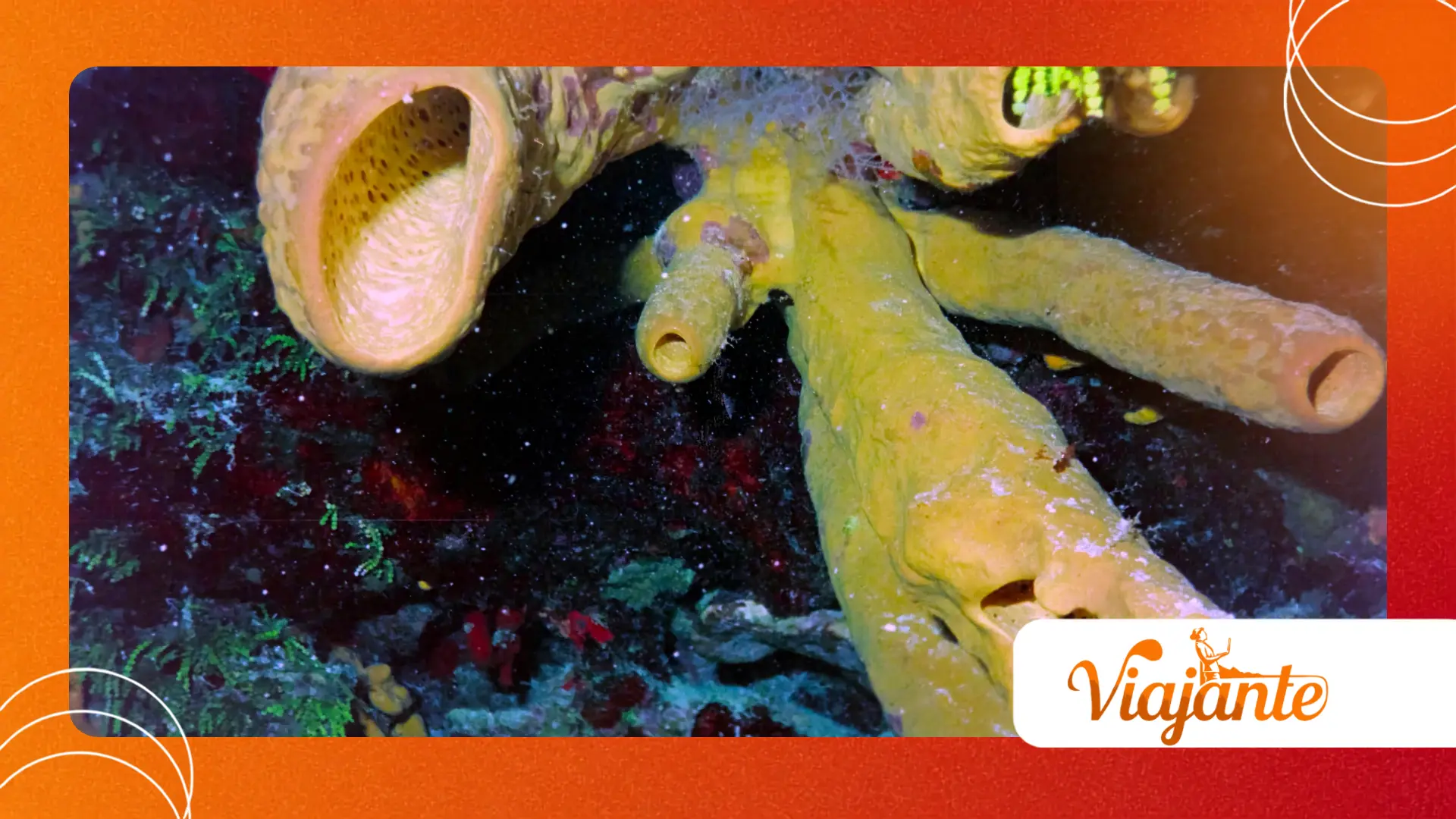
A nickname like “death-ball” sponge makes great headlines, yet it easily misleads casual readers. Most predatory sponges stand only a few centimeters tall, and their silica hooks are calibrated for animals roughly the size of a sesame seed.
If a diver brushed bare fingers against a shallow-water Asbestopluma colony, it would feel faintly tacky at worst. The real vulnerability runs entirely in the opposite direction.
Slow-growing deep-sea sponges face mounting pressure from bottom trawling and prospective seabed mining, a conservation gap underscored by The Nippon Foundation-Nekton Ocean Census.
Why These Quiet Predators Change How We See the Ocean
Science textbooks love neat categories, and for generations sponges sat comfortably at the bottom of the animal complexity ladder as passive sieves.
By trading internal pumps for barbed hooks and cellular digestion, Carnivorous Sponge Species Are So Unusual that they force us to rethink what an animal without a brain or gut can pull off.
Every recent dive—from Western Australia’s abyssal plains to the icy trenches of the Southern Ocean—suggests we have barely scratched the surface.
Out in the pitch-black cold where energy is scarce, life doesn’t follow our tidy rules; it improvises, quietly turning even the simplest body plan into an ambush predator.
++ Okyanuslardaki Bilinmeyen Türler Nasıl Hala Keşfediliyor?
Sıkça Sorulan Sorular (SSS)
What do carnivorous sponges eat?
They feed mainly on tiny crustaceans—copepods, amphipods, and small mysid shrimp—along with drifting invertebrate larvae.
Most prey items measure only a few millimeters across, though the sponge’s migrating cells break down nearly every soft tissue inside the shell.
How fast does a carnivorous sponge digest its prey?
Slowly, by any standard we’re used to. Without stomach acids or digestive muscles, cellular engulfment and breakdown typically take anywhere from several days to more than a week before the empty husk falls away.
Where do most carnivorous sponge species live?
The vast majority inhabit cold, food-poor deep-sea habitats between 1,000 and 5,000 meters down.
A handful of species, notably Asbestopluma hypogea, also persist in dark, nutrient-scarce Mediterranean and North Atlantic caves accessible to scuba divers.
Do all carnivorous sponges belong to the same family?
Nearly every confirmed predatory sponge belongs to family Cladorhizidae within class Demospongiae.
Ongoing DNA barcoding and taxonomic workshops in 2025 and 2026 continue sorting out how newly filmed deep-sea specimens fit within those lineages.
How can a sponge catch prey without eyes or nerves?
It doesn’t need to aim or react. By fanning hook-lined filaments into steady currents, the sponge turns its own body into a passive net where physics and barbed silica do all the work.
\