
The Hidden Skills of Secretary Birds Hunting Venomous Snakes
African savannahs showcase remarkable evolutionary adaptations, but few predators match the specialized hunting abilities of apex avian hunters.
Anúncios
These majestic raptors combine terrestrial agility with lethal precision to subdue dangerous reptiles daily.
Nasıl olduğunu anlamak Secretary Birds navigate deadly encounters provides fascinating insights into evolutionary biomechanics.
From powerful stomping forces to protective physical adaptations, these unique birds demonstrate unmatched ecological efficiency across grassland environments.
This comprehensive guide explores the specialized adaptations, predatory mechanics, force metrics, visual tracking systems, and defensive capabilities that make these iconic African raptors such extraordinarily effective snake hunters.
What Are the Specialized Physical Adaptations of Secretary Birds?
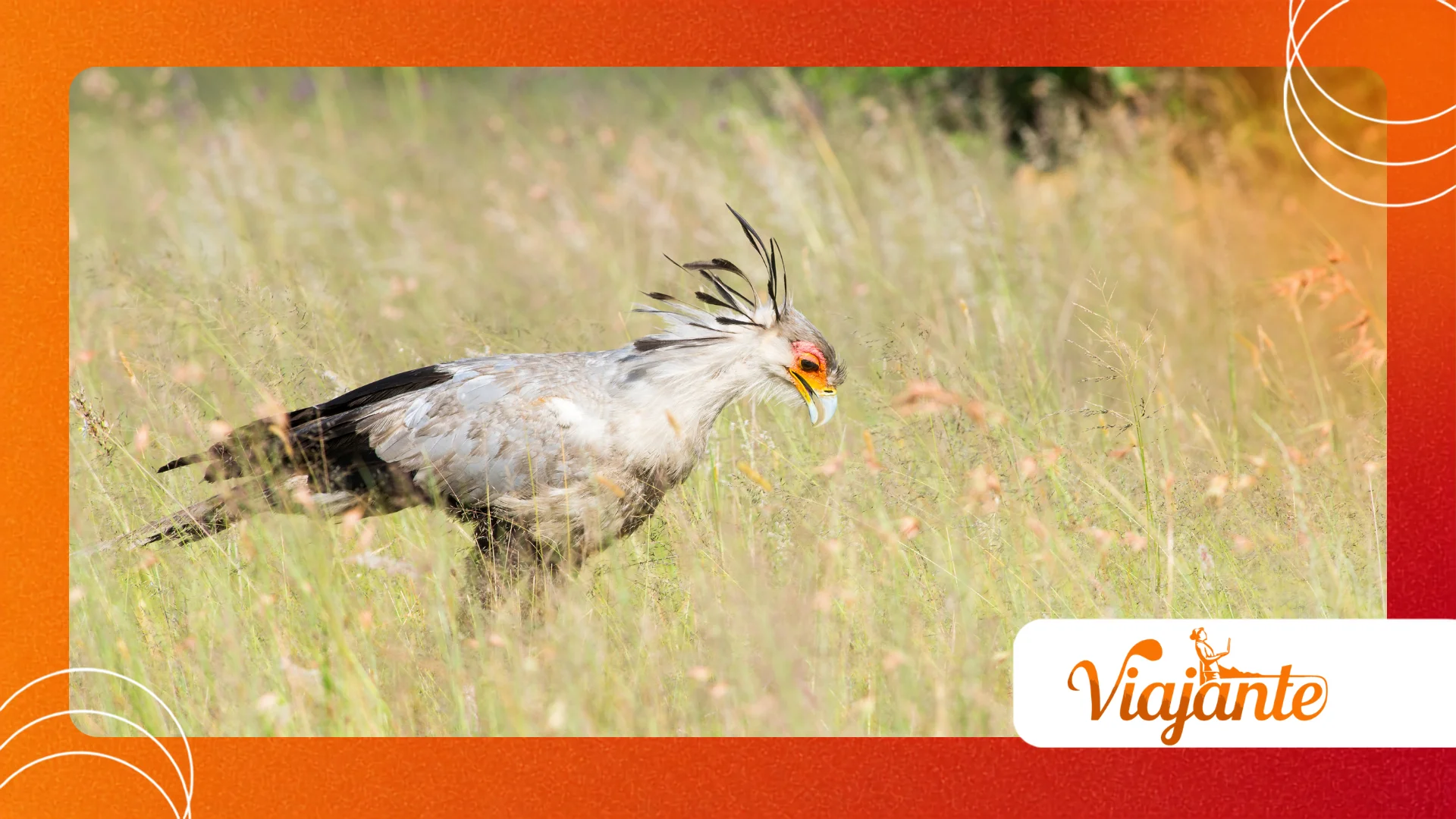
Long, crane-like legs covered in thick, heavy scales provide primary protection against venomous strikes. These specialized limbs effectively elevate vital body organs safely above the strike zone of deadly African adders.
Prominent facial skin and dense feather plumes act as dynamic visual distractions during high-stakes confrontations. Biologists note that expanded wings spread wide to absorb misguided strikes away from vulnerable body sections.
Exceptional binocular vision allows sharp distance perception while calculating swift terrestrial attacks. High visual acuity ensures precise targeting of fast-moving reptiles hiding within dense savannah grasses across sub-Saharan regions.
Unusually short, blunt toes paired with sturdy talons generate massive impact force upon landing strikes. Unlike typical eagles, these specialized feet act as heavy blunt instruments rather than gripping tools.
Why Is the Stomping Force of Secretary Birds So Lethal?
Scientific biomechanical measurements reveal that stomping impacts exceed five times the bird’s total body weight. Biologists measured peak contact forces reaching roughly 195 Newtons during rapid experimental laboratory strike tests.
Biomechanical studies published in Güncel Biyoloji demonstrate that these lightning-fast kicks occur within a tiny fraction of a second. The contact duration lasts merely twenty milliseconds on average.
Such extreme kinetic force instantly shatters delicate reptilian skulls, causing immediate neurological incapacitation. Rapid physical destruction eliminates the necessity of enduring prolonged, risky grappling encounters with highly venomous prey.
How Does a Secretary Bird Hunt Venomous Snakes?
Hunting begins with methodical walking across extensive open grasslands to flush hidden prey from cover. These large raptors cover up to thirty kilometers daily, actively searching for puff adders and cobras.
Upon spotting a dangerous reptile, the raptor rapidly deploys broad wings to maintain perfect balance. Flashing flight feathers creates visual confusion, forcing the cornered reptile to strike blindly at harmless feather tips.
Delivering swift, crushing kicks directly to the reptile’s head remains the primary attack mechanism. The striking force lands in less than fifteen milliseconds, giving target vipers virtually no time to react.
Continuous, rapid repositioning prevents counterattacks while maintaining relentless pressure on the disoriented reptile. Precision footwork keeps the predator at maximum kicking distance throughout the brief yet intense physical engagement.
++ Pangolinler Dünyanın En Çok Kaçakçılığı Yapılan Memelileri Nasıl Oldu?
Key Biomechanical Metrics of Avian Hunters
The structured data below outlines specific physiological parameters, impact metrics, and functional adaptations that enable these raptors to consistently overpower dangerous venomous reptiles in their natural habitats.
++ Köpekbalığı Haftası'nın Ötesinde Dev Köpekbalıklarının Gizli Yaşamı
| Biomechanical Parameter | Measured Value / Characteristic | Functional Advantage in Hunting |
| Average Strike Duration | 15 to 20 milliseconds | Outpaces snake reaction speed dramatically |
| Peak Impact Force | Up to 195 Newtons | Delivers instantaneous skull fractures |
| Relative Strike Force | $5\times$ total body mass | Maximizes damage without bodily injury |
| Leg Scale Coverage | Dense tarsometatarsal scutes | Prevents venomous fangs from puncturing |
| Wingspan Spread | 1.2 to 2.1 meters | Creates balance and visual shields |
How Do Secretary Birds Avoid Venomous Bites During Attacks?
Heavy keratinized scutes wrapping around lower leg joints form an exceptionally tough physical barrier. Venomous fangs frequently slide off these hardened, curved surfaces without penetrating underlying blood vessels or muscles.
Strategic spatial awareness ensures the hunter stays at the absolute perimeter of a viper’s striking range. Maintaining optimal distance allows immediate backward leaps whenever a defensive strike initiates unexpectedly.
Broadly outstretched wing feathers serve as effective dummy targets during active combat sequences. Pit vipers frequently misjudge distance, striking harmless outer primaries instead of the bird’s solid muscular body.
Instinctive head tilting lifts delicate eyes away from rising strike trajectories during downward kicks. Protective nictitating membranes snap across ocular surfaces, shielding delicate eyes from airborne dust or defensive venom spittle.
Which Venomous Snake Species Are Primary Targets?
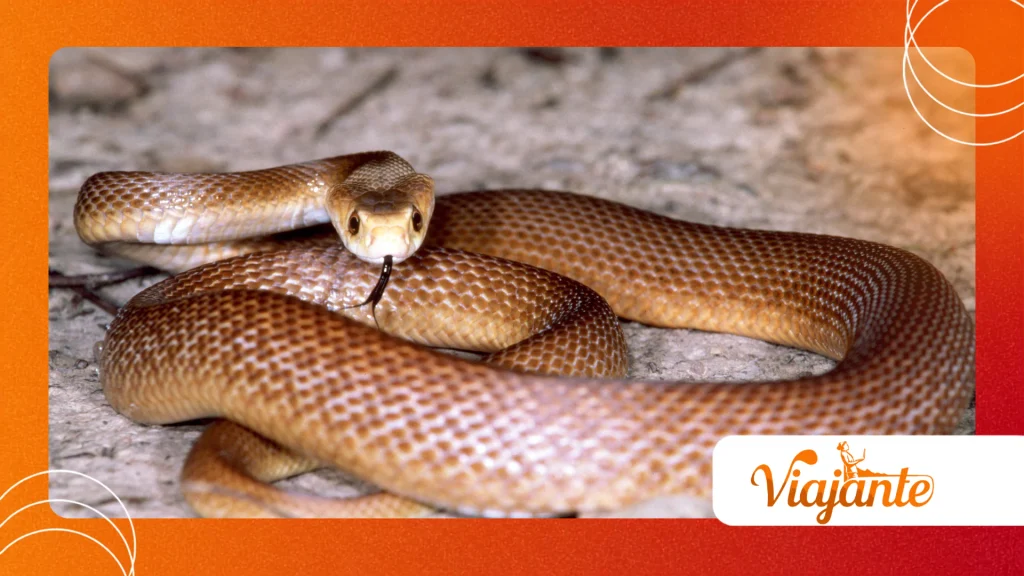
Puff adders represent frequent prey due to their sluggish movements and habit of basking on open paths. Their slow escape speed allows precise positioning before delivering fatal crushing kicks.
Cape cobras and rinkhals are also actively targeted despite their potent neurotoxic venom and aggressive defensive hoods. Raptors utilize wing shields to neutralize forward lunges before crushing the cobra’s spinal column.
Boomslangs occasionally fall victim when moving across low bushes or descending to open ground surfaces. Unmatched agility allows quick interception before these agile arboreal snakes regain protective tree canopy access.
Smaller venomous species like night adders provide easy foraging opportunities for growing juvenile birds. Consistent hunting of diverse reptiles demonstrates remarkable behavioral adaptability across varied terrestrial African ecosystems.
++ Kar Leoparları Dağlarda Hayatta Kalmada Neden Ustadır?
When Do Young Raptors Master Venomous Snake Hunting Skills?
Instinctive kicking behaviors manifest early in juvenile nestlings long before they venture onto open ground. Young fledglings practice stomping motions on inanimate sticks and small non-venomous prey items.
Parental guidance plays a critical role as adults bring live, stunned prey to active nests. Fledglings observe specialized kicking techniques directly, learning exact timing from experienced adult hunters.
Mastering precise spatial judgment requires several months of dedicated practice across native savannah grounds. Independent sub-adults gradually tackle larger, more dangerous reptiles as their muscular coordination reaches peak efficiency.
Refined hunting strategies ensure long-term survival, turning young raptors into highly efficient ecological regulators.
Further research on raptor conservation and field biology can be explored through the Peregrine Fund, dedicated to protecting global bird populations.
Summary of Specialized Snake Hunting Mechanics
Mastering terrestrial hunting requires exceptional physical adaptations, rapid strike mechanics, and strategic spatial awareness.
The combination of protective leg scales, lightning-fast kicking force, and dynamic wing shielding allows these birds to routinely defeat dangerous venomous snakes without risking fatal bites.
Sıkça Sorulan Sorular
Are Secretary Birds Immune to Snake Venom?
No, these raptors possess no natural physiological immunity to snake venom. They rely entirely on physical agility, thick protective scales, distance management, and precision kicking to avoid receiving bites.
How Fast Is the Strike of a Secretary Bird?
The kicking strike takes approximately 15 to 20 milliseconds from initiation to impact. This lightning speed completely outpaces the reaction time of most venomous snake species.
Do Secretary Birds Fly While Hunting Snakes?
While fully capable of flight, they hunt almost exclusively on foot. They walk extensively across savannah grasslands to locate prey, utilizing wings primarily for balance and visual defense during attacks.
What Do These Birds Eat Besides Snakes?
Their varied diet includes small mammals, lizards, large insects, tortoises, amphibians, and young ground-nesting birds. They remain opportunistic predators across their native African grassland habitats.
Why Do They Spread Their Wings During a Fight?
Spreading wings creates balance during rapid kicks while acting as a large distraction shield. Snakes often strike at loose feathers rather than the bird’s main body sections.=
\