
The Vanishing Hotel Roommate: University Urban Legend and the Fear of Erasure
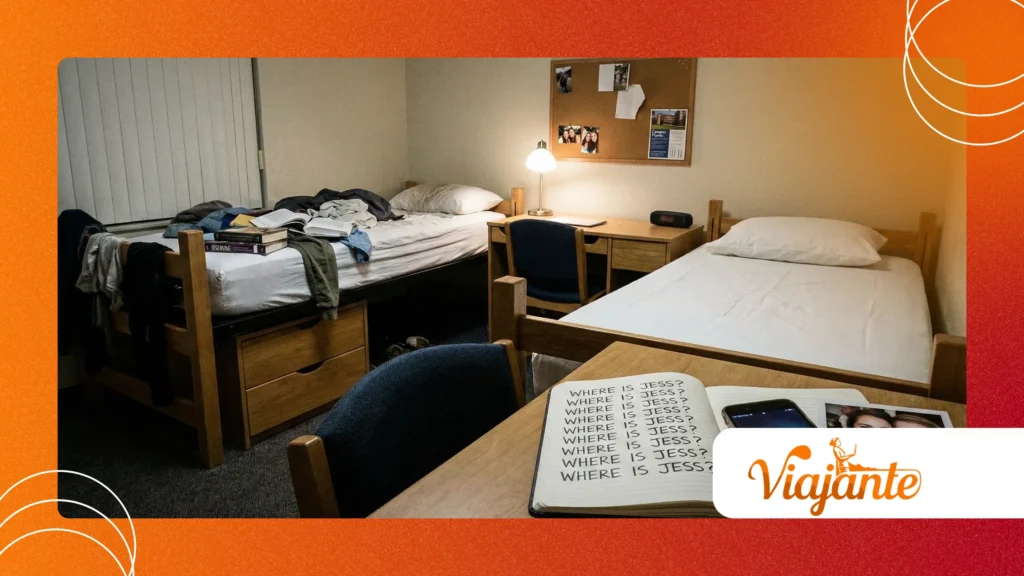
Exploring The Vanishing Hotel Roommate: University Urban Legend offers a chilling glimpse into our collective fear of isolation and institutional gaslighting.
Anúncios
This narrative remains one of the most enduring tales in modern folklore.
Stories about travelers disappearing from hotel rooms have circulated for over a century. They evolve with each generation, adapting to current anxieties about disease, foreign travel, and bureaucratic conspiracies.
We will dissect the origins, psychological underpinnings, and modern relevance of this myth. By understanding the structure of this legend, we gain insight into why it persists in university dorms today.
Table of Contents
- Origins: From Paris to the Dorm Room
- Psychology: The Terror of Gaslighting
- Modern Era: Digital Footprints and Vanishing
- Fact vs. Fiction: Analyzing the Narrative
- FAQ: Common Questions
What is the Historical Origin of the Vanishing Lady?
Folklore historians generally trace this narrative back to the late 19th century. It famously coincided with the Paris Exposition of 1889, a time of immense global travel and heightened cross-cultural anxiety.
In the classic version, a mother and daughter check into a luxury hotel. The mother falls ill, and a doctor sends the daughter across the city for a specific, rare medicine.
Upon the daughter’s return, the hotel staff claims they never arrived. The room is different, the register is altered, and the mother is gone. The protagonist is left questioning her own sanity.
Alexander Woollcott popularized this story in the 1930s as “The Vanishing Lady.” His retelling cemented the core trope: a conspiracy to hide a deadly plague to protect the city’s tourism revenue.
+ The Lost Town That Appears Only at Night
How Does the Psychology of Gaslighting Fuel This Legend?
The true horror of this tale lies not in ghosts, but in gaslighting. The protagonist knows the truth, yet every external authority figure coordinates to deny her lived reality.
University students find this particularly resonant. Many are experiencing independence for the first time in unfamiliar environments. The fear of being powerless against a monolithic institution is a tangible, relatable anxiety.
Psychologists suggest this legend manifests the fear of losing one’s identity. If no one acknowledges your existence or your history, do you truly exist? It attacks our social reliance on validation.
Trust is weaponized in this narrative. The doctor, the hotel manager, and the police—figures meant to offer safety—become the architects of the protagonist’s absolute psychological destruction.
Why Do Universities Remain a Hotspot for This Myth?
Campuses act as perfect incubators for urban legends. Students from diverse backgrounds converge, sharing cautionary tales that mutate and spread rapidly through dormitories and study halls.
The Vanishing Hotel Roommate: University Urban Legend often morphs to fit study abroad programs. The victim becomes a roommate, and the setting shifts to a hostel in a remote location.
Isolation is a key component here. A student in a foreign country lacks their usual support network. This vulnerability makes the concept of a “cover-up” seem terrifyingly plausible.
Oral tradition thrives in academic settings. Upperclassmen pass these stories to freshmen as “secret history,” lending the tale a veneer of unearned credibility and perpetuating the cycle of fear.
+ The Legend of the Green Children: Visitors From Another World?
Which Variations Exist Between Eras?
Folklore is fluid, adapting to the technology and fears of the time. While the core structure remains, the details shift to maintain suspension of disbelief for contemporary audiences.
Below is a comparison of how the legend has evolved from its Victorian roots to the digital age.
| Feature | Classic Version (1889-1940) | Modern/University Version (2000-2025) |
| Protagonists | Mother and Daughter | Roommates or Backpacking Friends |
| Reason for Exit | Obtaining Medicine | Lost Passport or Party Separation |
| The Cover-Up | Bubonic Plague/Cholera | Organ Harvesting or Government Spy |
| Evidence | Physical Logbook | Deleted Social Media/Digital Photos |
| Resolution | Tragic Insanity | Conspiracy Revealed via Technology |
How Has Technology Impacted the Plausibility in 2025?
Modern technology presents a paradox for this legend. Smartphones and cloud storage theoretically make it impossible for a person or a room to vanish without a digital trace.
However, current iterations of the myth simply adapt. The horror now focuses on digital erasure: photos disappearing from the cloud, blocked numbers, and scrubbed social media profiles.
This reflects a modern anxiety about digital control. We fear that tech giants or governments have the power to edit history in real-time, deleting people as easily as files.
Technological gaslighting is the new plague. Instead of fearing a biological contagion, we fear the manipulation of data. The monster is no longer disease; it is the algorithm.
Note: Skeptics argue that digital footprints make the classic “total erasure” impossible, forcing storytellers to invent increasingly elaborate conspiracies to explain the lack of evidence.
What Are the Real-World Parallels to This Folklore?

While no documented case exists of a hotel completely remodeling a room in hours to hide a plague, the legend taps into real historical distrust of public health officials.
Events like the 1918 Flu Pandemic or more recent global health crises fuel these stories. Governments have historically downplayed outbreaks to prevent panic, lending a grain of truth to the fiction.
Conspiracy theories often thrive in the gaps of official narratives. When authorities lack transparency, folklore rushes in to fill the void with worst-case scenarios and paranoid fiction.
This legend serves as a cultural coping mechanism. It allows people to process the terrifying idea that society prioritizes economic stability over individual human lives.
+ The Spider Bite Marathon Runner: Fact or Fiction?
Why Is This Story Categorized as a “Friend of a Friend” Tale?
Urban legends rely on the “FOAF” (Friend of a Friend) credibility factor. The storyteller rarely claims to be the victim; it always happened to a roommate’s cousin or a distant friend.
This distancing technique protects the narrator from scrutiny. If questioned on details, they can simply plead ignorance, as they were not the primary witness to the event.
It also adds a layer of intimacy. The story didn’t happen to a stranger in the news; it happened to someone within the extended social circle, making it feel immediate.
Credibility is borrowed rather than earned. By citing a specific university or a specific year, the narrator anchors the impossible events in a recognizable reality.
Conclusion
The enduring power of The Vanishing Hotel Roommate: University Urban Legend lies in its ability to evolve. It speaks to our deepest fears of powerlessness, erasure, and authority.
Whether set in a Victorian hotel or a modern hostel, the core message remains. We are terrified that our existence depends entirely on the recognition of others.
As we move further into the digital age, these stories will continue to mutate. They remind us to hold onto our own truths, even when the world denies them.
Frequently Asked Questions (FAQ)
Is the story of the Vanishing Hotel Roommate true?
No, there is no historical evidence supporting this specific legend. While it appears in various forms, it is considered a piece of folklore rather than a documented event.
What is the earliest version of this legend?
The earliest print variations appeared in late 19th-century newspapers. The story gained significant traction during the 1889 Paris Exposition, linked to fears of foreign diseases.
Why do people believe this urban legend?
It taps into primal fears of isolation and conspiracy. The story is structured to be plausible enough to cause doubt, utilizing authoritative figures to validate the horror.
Are there movies based on this story?
Yes, several films utilize this plot. Notable examples include So Long at the Fair (1950) and the thriller Flightplan (2005), which adapts the setting to an airplane.
Does this legend exist in other cultures?
Yes, variations exist globally. The setting changes to fit local anxieties, but the core theme of a loved one vanishing and authorities denying their existence remains consistent.
\