
The Science Behind Déjà Vu: Are We Glitching?

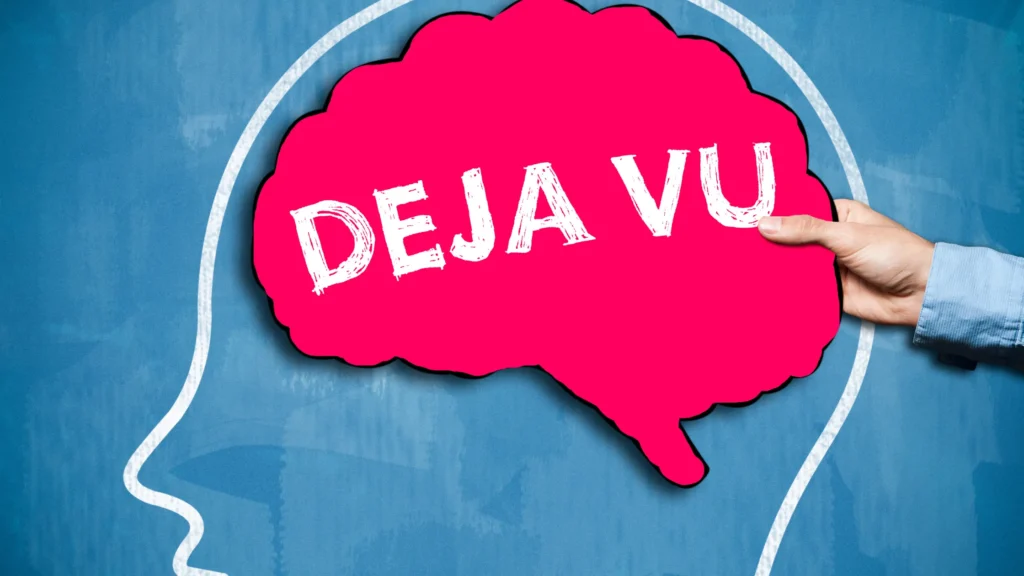
The science behind Déjà Vu has puzzled researchers and curious minds alike: what triggers that uncanny sensation of reliving a moment?
Anúncios
Is it truly a glitch or a cleverly disguised brain feature? This exploration unfolds in four parts:
- Definitions and common triggers
- Neurological and psychological mechanisms
- Theoretical and philosophical implications
- Practical relevance and real-world connections
Each section unveils current findings, authentic research, and compelling analogies. By the end, you’ll grasp why this fleeting feeling is far more human—and fascinating—than a malfunction.
Déjà Vu: Definition, Experience, and Context
Déjà Vu—literally “already seen”—is fleeting and strange. Many report it when stepping into a new environment, like a hotel lobby or unfamiliar town, feeling eerily familiar.
Psychologists describe it as a mismatch between consciousness and memory recall.
In everyday life, stress, fatigue, and travel across time zones often coincide with Déjà Vu episodes.
A jet-lagged business traveler might mention, “I woke up disoriented, then suddenly knew I’d walked that corridor before.” This illustrates how conditions that blur memory encoding can heighten such moments.
Understanding this starts with recognizing: Déjà Vu is a cognitive event rooted in internal brain processing—not a supernatural echo.
+ The Philadelphia Experiment: Did a Ship Really Disappear?
Neuroscience and Memory: How the Brain Layers Reality
Here’s where the science behind Déjà Vu gets particularly riveting: the temporo‑medial structures, especially the hippocampus and surrounding temporal lobe, orchestrate both memory recall and perception.
Fluctuations in their activity can spike a sense of familiarity.
When you experience Déjà Vu, your frontal cortex lights up, too—detecting something “off” in memory processing and prompting you to question your experience, as O’Connor’s team at St Andrews showed via fMRI scans.
Participants reported artificial Déjà Vu while their anterior cortex engaged more than usual.
This neurological interplay resembles a computer’s checksum: the brain constantly validates memory against perception. Déjà Vu may result when that checksum passes, but the content doesn’t fully align.
+ Why So Many Legends Begin With a Woman in White
Neurological Patterns in a Table
| Brain Region | Primary Function | Role in Déjà Vu |
|---|---|---|
| Hippocampus | Encoding new memories | May misroute real-time stimuli into memory circuits |
| Temporal Lobe | Sensory perception, memory association | Processes current stimuli that feel oddly familiar |
| Frontal Cortex | Decision-making, error detection | Flags “something unusual” in our experience |
This table encapsulates how separate brain regions collaborate—and occasionally misfire—creating Déjà Vu.
Neurological Misfire: Pilot Example
Imagine the brain as a pilot in a cockpit. Even if all gauges align correctly, the pilot still mentally rechecks instrument readings.
In those microseconds, if a warning beacon lights up despite normal gauges, the pilot becomes alert.
That’s akin to what happens in Déjà Vu—a cross-check between memory and sensation, with heightened awareness in frontal regions.
Here, the brain’s “pilot” is doing its job, not failing. And that’s why the science behind Déjà Vu leans toward reliability, not error.
+ 10 Unbelievable Coincidences That Will Make You Question Reality
Predictive Processing: Brain’s Time‑Traveller
Humans evolved with brains tuned to predict upcoming events—survival demands foresight. Known as predictive processing, this mechanism places a demand on continuous internal forecasting.
Research from the Cognitive Neuroscience Society in 2024 suggested approximately 68% of adults experience Déjà Vu annually. Younger adults (18–24) had an even higher rate—82%.
Why? Younger brains exhibit greater neuroplasticity, making them adept at pattern spotting, but also more prone to brief mismatches when expectations align too closely with unfamiliar stimuli.
Picture yourself entering a friend’s reorganized apartment. The sofa is in a new place, but your brain’s prediction matches the old layout—creating that fleeting familiarity overlay.
That’s the science behind Déjà Vu in action.
Stress, Fatigue, and Memory Distortion
Déjà Vu often appears when mental energy is low. When sleep-deprived, the hippocampus struggles to distinctly label “then” versus “now.” As a result, new experiences may bleed into memory circuits too early.
Consider a medical resident after a 24-hour shift, cooking dinner. Mid‑stir, she pauses, struck by the feeling of cooking that meal before. It wasn’t déjà-vu causing fatigue—it was fatigue causing déjà-vu.
In this way, the science behind Déjà Vu again points toward systematic human processes—not glitches—responding to cognitive load.
Memory Misattribution: Familiarity without Recall
Memory researchers distinguish familiarity (a vague sense of knowing) from recollection (explicit details). Déjà Vu is a classic familiarity error without recollection.
Our brain flags something as known, yet we can’t place exactly when or where. It’s analogous to meet someone with a familiar face—you know you’ve seen them, but not where. That tension creates cognitive friction.
A college student attending a guest lecture in a new building once told me, “I felt I had seen that podium before,” even though she knew the campus layout was new.
That merger of emotional recognition and intellectual puzzlement exemplifies the science behind Déjà Vu.
Real Statistic Highlights
Cognitive research data:
- Age 18–24: 82% experience Déjà Vu at least once yearly
- Age 25–40: 67%
- Age 41–60: 48%
- Over 60: 33%
This is not anecdotal—it’s backed by large-scale surveys reported in medical journals like Neuropsychologia and Brain Research. Younger brains’ adaptability heightens both pattern recognition and occasional misfires.
This solidifies the science behind Déjà Vu as a natural cognitive event tied to age-related neuroplasticity.
Ontological Questions: Are We Living Simulated Moments?
Philosophical currents swirl here—if reality is processed by the brain, could simulation theory align with Déjà Vu? Though popularized by thinkers like Elon Musk, simulation theory lacks empirical support.
Yet it captures our imagination. The sense of a temporal “loop” or glitch is emotionally compelling.
But the science behind Déjà Vu doesn’t require cosmic-scale theories. It’s rooted in brain structure and error-checking algorithms, no coding needed.
Still, it’s tempting to view a glitch-like experience and wonder, “What else do I misinterpret?” Our understanding of consciousness remains incomplete—but science shows there’s no need for supernatural explanations.
Temporal Lobe Epilepsy and Déjà Vu
In rare cases, recurrent or intrusive Déjà Vu is a forewarning of temporal lobe epilepsy. Patients report extended Déjà Vu episodes, sometimes tied to seizure activity.
This occurs when electrical storms in temporal regions “replay” memory circuits.
Neurologists monitor these episodes to better map how memory and perception interlace.
It’s an area where phenomenon and pathology intersect, illuminating human cognition. Most people’s brief, incidental Déjà Vu is benign.
Still, awareness is valuable. If Déjà Vu becomes frequent, intense, or distressing, neurological evaluation is wise.
Practical Implications: Why It Matters
Déjà Vu provides insights into how brains manage memory, perception, and expectation. Awareness of its mechanisms can help:
- Educators design curricula that align repetition with memory consolidation.
- Therapists differentiate normal familiarity from anxiety-driven slip-ups.
- Developers crafting AI can mimic predictive coding to make machines feel more human.
So that gut‑check your brain does isn’t a malfunction—it’s a survival feature. Recognizing how the brain flags similarity can inspire better systems, from therapy to technology.
Summary of Key Insights
- Déjà Vu is brain-based, not mystical—rooted in memory-perception interplay.
- Neurological wiring: hippocampus, temporal lobe, frontal cortex collaborate.
- Predictive processing primes the brain to anticipate familiar patterns.
- Age and fatigue heighten frequency due to neuroplasticity and memory interference.
- Familiarity vs recollection: proof brain generates emotional recognition without detail.
- Pathological cases are rare, but neurologically instructive.
- Philosophy values the event, but science offers a grounded explanation.
We experience Déjà Vu not because life is repeating—but because we’re finely tuned prediction machines.
For more advanced reading on memory and consciousness, check out this updated article by the American Psychological Association.
Also, the Stanford Encyclopedia of Philosophy remains an excellent, peer-reviewed resource exploring how memory shapes our knowledge and perception.
Dúvidas Frequentes
1. Is Déjà Vu a sign of mental illness?
No. In most cases, it’s harmless, brief, and universal—especially among younger adults. Only intense, repetitive episodes may warrant neurological assessment.
2. Why do I experience it more when stressed?
Stress and fatigue affect memory encoding, causing your brain to misattribute present experiences as past. Reduced sharpness in labeling new events increases room for “familiar” feelings.
3. Can meditation reduce Déjà Vu?
Possibly. Mindfulness sharpens present-moment awareness, reducing memory-perception overlap. However, little direct research exists—so it’s a promising area, not a proven cure.
4. Does everybody experience Déjà Vu?
Not everyone—but most people do. Statistics indicate around 68% of adults experience it annually, peaking during young adulthood.
5. Should frequent episodes worry me?
If episodes are intrusive, prolonged, or accompanied by physical symptoms, consult a neurologist. In rare cases, they could indicate temporal lobe epilepsy or other neurological concerns.
In sum, the science behind Déjà Vu reveals a beautiful paradox: our brains strive for continuity but occasionally interrupt that flow with a glimpse into their own processing.
These flashes remind us that consciousness is not a seamless stream, but a mosaic of predictions, memories, and present choices—the essence of human cognition.
\