
Tardigrades: What Makes the Toughest Animal Tick?
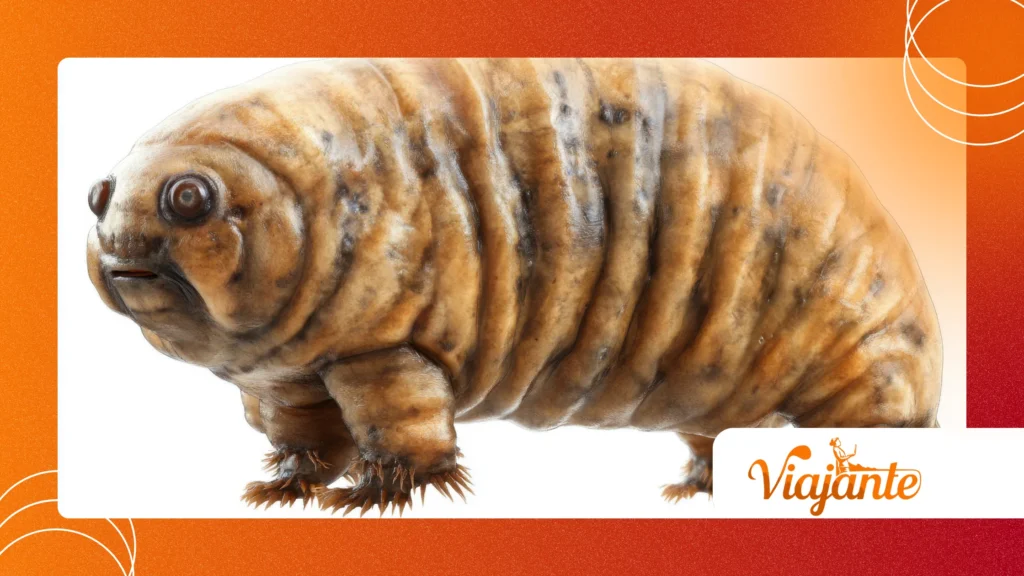
Microscopic tardigrades might look like chubby, eight-legged bears, but these tiny invertebrates are actually the toughest creatures on Earth.
Anúncios
Scientists constantly study their biology to understand resilience.
Nature rarely designs a creature capable of surviving the vacuum of space or the crushing pressure of the deep ocean. Yet, these water bears defy almost every biological rule we know.
Understanding their survival mechanisms offers humanity incredible potential breakthroughs in medicine, space travel, and genetic engineering. Research in 2026 continues to unlock secrets hidden within their durable DNA.
Below, we explore the fascinating world of these micro-animals, detailing exactly how they survive conditions that would instantly kill a human.
Table of Contents
- What Are Tardigrades and Why Are They Called Water Bears?
- How Does Cryptobiosis Allow Them to Cheat Death?
- What Extreme Conditions Can Tardigrades Actually Survive?
- Comparison: Human Resilience vs. Water Bear Durability
- Why Are Scientists Studying Their DNA for Human Medicine?
- Where Can You Find These Microscopic Survivors?
- Which Common Myths About Them Are False?
- Conclusion
- FAQ
What Are Tardigrades and Why Are They Called Water Bears?
Zoologist Johann August Ephraim Goeze first described these micro-animals in 1773, affectionately calling them “little water bears” due to their gait. Their movement resembles a lumbering bear, despite their microscopic size.
You can usually find them in aquatic environments, but they are technically invertebrates belonging to the phylum Tardigrada. Over 1,300 distinct species currently exist across the entire globe.
Most species grow no larger than 0.5 millimeters, making them barely visible to the naked human eye. Viewing them clearly requires a low-power microscope or a strong magnifying glass.
Their bodies consist of four segments, each possessing a pair of legs specifically designed for grasping moss or lichen. Sharp claws help them cling to plant matter during feeding.
Despite their cute appearance, they are voracious predators in the microscopic world, feeding on fluids from plant cells. Some larger species even prey on smaller microorganisms or nematodes.
+ The Toxic Defense of Pufferfish: Survival Strategy
How Does Cryptobiosis Allow Them to Cheat Death?
Survival for tardigrades relies heavily on a unique physiological state known scientifically as cryptobiosis. This process essentially hits the pause button on their metabolism when environmental conditions become lethal.
Upon sensing danger, such as extreme dryness, the animal curls its body into a tight, dry ball called a “tun.” This shape minimizes surface area and protects internal organs.
During this transformation, they expel nearly all the water from their bodies, replacing it with a protective sugar. This specific molecule, called trehalose, prevents their cells from collapsing.
Recent research suggests that disordered proteins also vitrify the cell contents, turning the cytoplasm into a glass-like state. This prevents ice crystals from forming and rupturing delicate membranes.
In this tun state, their metabolism drops to less than 0.01% of normal activity. They can remain in this suspended animation for decades until conditions improve significantly.
Rehydration triggers a rapid reboot of their biological systems, often bringing them back to full activity within minutes. This resurrection capability remains one of nature’s greatest marvels.
What Extreme Conditions Can Tardigrades Actually Survive?
Few environments on Earth—or off it—can successfully destroy a dormant water bear. Their resistance to temperature extremes is perhaps their most documented and shocking attribute.
Experiments have shown they can withstand temperatures as low as -272°C, which is just above absolute zero. Heat is also manageable, with survival recorded at 150°C.
Pressure resistance is equally impressive, as they survive pressures six times greater than those found in the deepest ocean trenches. The Mariana Trench would feel comfortable to a tun.
Radiation usually shreds DNA, but tardigrades produce a unique protein called Dsup (Damage suppressor). This protein wraps around their DNA, shielding it from ionizing radiation and breaks.
Space remains the ultimate test, and these creatures passed it with flying colors during low-Earth orbit experiments. They survived the vacuum and intense solar radiation without protective suits.
+ What Animal Fossils Tell Us About Climate Change
Comparison: Human Resilience vs. Water Bear Durability

To truly appreciate their toughness, we must compare their biological limits directly against human tolerances. The data highlights just how fragile we are compared to these micro-animals.
| Survival Metric | Humans | Tardigrades (in Tun State) |
| Temperature (Heat) | Fatal above 42°C (internal) | Survives up to 151°C |
| Temperature (Cold) | Fatal below 21°C (internal) | Survives down to -272°C |
| Radiation | 5-10 Grays is lethal | Survives up to 5,000 Grays |
| Pressure | Crushed at >100 atm | Survives >6,000 atm |
| Vacuum of Space | Unconscious in 15 seconds | Survives 10+ days exposed |
| Starvation | ~3 weeks without food | ~30 years without food/water |
| Dehydration | Fatal at 15-20% loss | Survives 99% water loss |
Why Are Scientists Studying Their DNA for Human Medicine?
Medical researchers in 2026 are aggressively investigating how Dsup proteins can apply to human physiology. The goal is not to create super-soldiers, but to treat fragile conditions.
Integrating these proteins into human cell cultures has shown promising results in reducing DNA damage from X-rays. This could revolutionize safety protocols for cancer patients undergoing radiation therapy.
Another major area of interest is the preservation of biological materials without refrigeration. Utilizing the “glassy state” mechanism could allow vaccines to travel to remote areas without coolers.
Organ transplants currently face a race against time, as organs degrade quickly outside the body. Tardigrades teach us how to stabilize tissue for longer periods using dry preservation.
Synthetic biology companies are attempting to synthesize bio-materials that mimic the water bear’s structural integrity. These materials could eventually lead to stronger, self-repairing protective gear for hazardous environments.
+ Electric Eels: Real-Life Superheroes of the Amazon
Where Can You Find These Microscopic Survivors?
You do not need a laboratory expedition to find a water bear in the wild. They likely live in your backyard, specifically in damp patches of moss or lichen.
Collecting them involves soaking a piece of moss in spring water for a few hours. This rehydrates the sediment and wakes up any dormant tuns hiding within the plant.
After soaking, squeezing the water from the moss into a petri dish usually yields results. A simple microscope will reveal them thrashing about near debris or plant matter.
They also inhabit diverse ecosystems ranging from tropical rainforests to the freezing Antarctic coast. Even the highest peaks of the Himalayas host thriving populations of these resilient wanderers.
Sand dunes and leaf litter also provide suitable homes, provided there is occasional moisture. Their distribution is truly global, proving that durability leads to evolutionary success.
Which Myths About Them Are False?
Internet fame has led to several exaggerations regarding the capabilities of these animals. One common myth is that they are immortal, which is scientifically incorrect.
Active tardigrades have a relatively short lifespan, living only a few months to two years. Their longevity is only possible if they spend most of that time dormant.
Another misconception is that they are “extremophiles” who love harsh environments. In reality, they are “extremotolerant,” meaning they tolerate bad conditions but prefer mild, wet environments.
They also cannot survive indefinitely in the tun state. While they can last decades, their energy reserves eventually deplete, leading to cellular death if rehydration never occurs.
Finally, they are not immune to physical threats like predators or simple squishing. Snails, mites, and larger insect larvae frequently consume them as part of the food chain.
Conclusion
Water bears represent a pinnacle of evolutionary engineering, solving biological problems that humans are only beginning to understand. Their existence challenges our definition of what life can endure.
Studying tardigrades forces us to rethink the possibilities of life on other planets. If an animal here can survive space, perhaps life elsewhere is tougher than we think.
As biotechnology advances, the secrets of the water bear may one day save human lives. From stabilizing vaccines to protecting DNA, their impact extends far beyond the microscope.
FAQ (Frequently Asked Questions)
Can tardigrades survive on the sun?
No, they cannot survive the sun. While they withstand high heat, the sun’s surface temperature is thousands of degrees, which would instantly vaporize any organic matter, including them.
Do tardigrades bite humans?
No, they do not bite humans. Their mouths contain stylets designed to pierce plant cells or microscopic invertebrates, but they are too small to penetrate human skin.
How long can a tardigrade sleep?
They can remain in the tun state for decades. Documented cases show survival after 30 years, though some scientists theorize they could potentially last up to a century.
Are there tardigrades on the Moon?
Likely yes, in a dormant state. The crashed Israeli lander Beresheet carried thousands of them in 2019, and they are presumed to be preserved on the lunar surface.
Can I keep them as pets?
Yes, you can keep them. They require a moist environment with moss or algae, but viewing them requires magnification, making them less interactive than traditional household pets.
\