
How Ancient Asteroid Brine Could Change Space Science
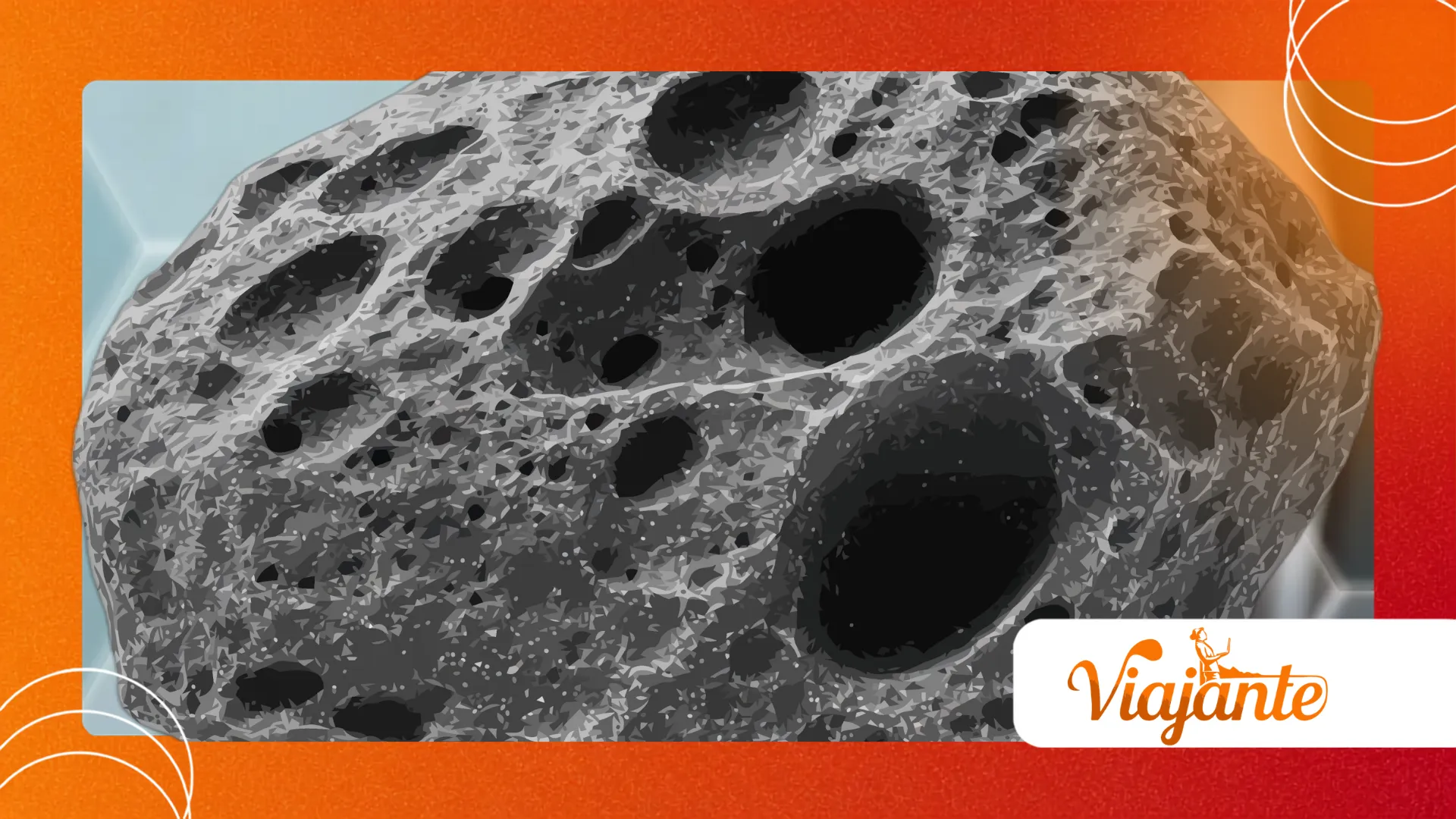
How ancient asteroid brine could change space science is a question currently forcing a complete rewrite of cosmic chemistry. For decades, we treated space as a bone-dry void, but pristine celestial samples returned to Earth are turning that assumption upside down.
Anúncios
These rocks hold traces of prehistoric, highly concentrated salt water that once flowed deep inside alien worlds. It is an unsettling realization for anyone used to the old textbooks: the ingredients for oceans were brewing before planets even existed.
When Did Ancient Asteroid Brine Flow Through the Early Solar System?
Pinpointing exactly when ancient asteroid brine was active requires looking at the radioactive clocks ticking inside the recovered minerals.
Breakthrough laboratory dating of the salt crystals shows these fluids were churning merely four million years after the solar system formed.
This incredibly tight timeline shatters the old theory that liquid water was a late addition brought by chaotic planetary collisions.
Instead, these highly reactive, saline fluids were already modifying celestial matter while Earth was still an unformed, molten ball of rock.
What Is Ancient Asteroid Brine and How Was It Discovered?
The discovery of ancient asteroid brine exploded into the scientific community when laboratory teams unsealed the pristine material from NASA’s OSIRIS-REx mission.
Looking at asteroid Bennu, researchers expected to find dry cosmic dust, but instead found microscopic, evaporated salt crusts trapped inside the rock matrix.
Using high-resolution transmission electron microscopy, teams identified delicate needles of hydrated sodium carbonate embedded within the dark, carbon-rich gravel.
This tells us liquid water was not a fluke or a temporary surface frost, but a persistent, churning subterranean network.
Radioactive decay inside the asteroid’s massive parent body acted as a thermal engine, keeping these highly alkaline fluids liquid for millions of years.
Why Does This Primordial Fluid Rewrite the Timeline of Solar System Evolution?
The realization that ancient asteroid brine existed so early forces a radical rethink of how fast planetary systems mature. We used to assume that complex chemistry required a fully formed planet with stable oceans and billions of years of calm geological activity.
Instead, this volatile fluid was actively altering rocks within the first few million years of our solar system’s birth. The chemistry of life didn’t wait for Earth to freeze over; it started in the chaotic, fragmented debris of the cosmic dawn.
This rapid chemical processing means that the window for generating life-supporting compounds across the galaxy is significantly wider than previously calculated.
If a simple, un-formed space rock can host a thriving, mineral-rich soup, then early planetary systems are likely bursting with organic activity much sooner than we ever dreamed.
How Does Ancient Asteroid Brine Guide the Search for Extraterrestrial Mining?
Beyond the theoretical hunt for alien life, analyzing ancient asteroid brine provides a highly practical roadmap for the future of space resource utilization.
Digital professionals, aerospace engineers, and asteroid miners are looking at these dry salt crusts as geological maps for locating vital subsurface hydration zones.
Knowing exactly how these saline fluids moved and evaporated allows companies to predict where valuable, easily extractable water reserves are hiding within carbonaceous chondrites.
Water is the fuel of future space exploration, and these ancient chemical pathways show us exactly where to dig.
By tracking the specific mineral pathways left behind by the brine, autonomous mining probes can target rich deposits without wasting energy drilling blindly.
The ancient history of space water is fast becoming the commercial blueprint for sustainable industrial infrastructure across the inner solar system.
Why Is This Salt Water Broth Crucial for the Origin of Life?
This cosmic brine changes everything because salt water behaves like a hyper-active chemical reactor when it evaporates in a vacuum.
As the fluids vanished, they left behind an incredibly dense concentrate of sodium, reactive phosphorus, and basic organic elements.
It is easy to misinterpret this as a simple chemistry trick, but these tiny mineral pockets actually forced primitive molecules to collide and bond.
When teams analyzed the residue, they found fourteen different amino acids alongside all five essential nucleobases needed to construct DNA and RNA.
The physical structure of the evaporating salt crystals provided a perfect template, a sort of scaffolding, for simple organic compounds to polymerize.
This suggests the blueprint for terrestrial biology was likely assembled in deep space long before it ever rained down on Earth.
++ Why Bone Collector Caterpillar Is Nature’s Strangest Hunter
How Does Pristine Space Sample Analysis Differ From Meteorite Studies?
Studying ancient asteroid brine requires pristine, untouched samples because the traditional meteorites we find on Earth are inherently compromised.
The moment a space rock plunges through our atmosphere, extreme frictional heat cooks the exterior, and terrestrial humidity instantly dissolves fragile, water-soluble salts.
++ The Mystery Behind Earth Cosmic Void Theory Explained
| Asteroid Sample Attribute | Bennu Sample Value / Material | Scientific Implication for Space Research |
| Primary Salt Minerals | Hydrated Sodium Carbonates | Confirms ancient alkaline liquid water environment |
| Key Life Elements | Soluble Phosphorus & Ammonia | Provides essential blocks for metabolic chemistry |
| Detected Amino Acids | 14 Unique Varieties | Shows widespread prebiotic synthesis in space |
| Key Mineral Matrix | Ammonium-rich Phyllosilicates | Indicates complex nitrogen-based chemical reactions |
Which Space Exploration Missions Unlocked These Celestial Secrets?
Isolating ancient asteroid brine required a massive shift from passive observation to highly aggressive, high-stakes robotic sampling across millions of miles.
Japan’s Hayabusa2 mission to Ryugu and NASA’s journey to Bennu targeted primitive, dark asteroids that have remained virtually unchanged for billions of years.
Both missions successfully punched into alien surfaces, pocketed subsurface gravel, and navigated the treacherous journey back to terrestrial clean rooms.
Comparing the two sets of samples revealed that both asteroids share a heavily altered, water-logged clay backbone packed with mineral grains.
Bennu, however, contains a much higher concentration of carbon and nitrogen, revealing that the early solar system was chemically diverse.
These combined findings prove that liquid water environments were a standard feature of early planetary formation, not a rare cosmic anomaly.
How Will This Discovery Impact the Future of Astrobiology?

The verified existence of ancient asteroid brine completely shatters the old, rigid boundaries of where we expect to find active biology.
Instead of viewing early asteroids as dead, chaotic boulders, we now see them as mobile, fluid-filled laboratories that seeded the inner solar system.
These rocky bodies acted as interstellar delivery trucks, dropping water, essential salts, and complex organic compounds into Earth’s primordial oceans.
This discovery shifts our immediate focus toward active brine environments hidden beneath the icy crusts of moons like Europa and Enceladus.
The striking chemical overlap between ancient asteroid residues and modern planetary plumes suggests the exact same life-giving reactions are happening right now.
For researchers and space enthusiasts alike, understanding these ancient fluids provides the exact chemical signatures needed to hunt for living worlds.
++ How Origami Inspires Space-Age Engineering
The Broader Horizon
The tangible proof of ancient asteroid brine forces us to view the history of our solar system as a dynamic, fluid-driven narrative.
These ancient saline pockets provided the perfect, protected environments required to forge the complex molecular precursors that eventually sparked terrestrial life.
By exploring these deep cosmic archives through institutions like the Smithsonian Institution, we are finally uncovering the universal laws of chemistry.
Frequently Asked Questions (FAQ)
What is the primary difference between asteroid brine and Earth’s oceans?
Asteroid fluid mixtures feature an exceptionally high abundance of phosphorus and a total absence of boron, unlike terrestrial marine environments.
They represent highly localized, alkaline evaporation crusts rather than massive, globally interconnected planetary bodies of liquid water.
Can living micro-organisms survive inside these ancient space rock brines?
No living organisms have been found; the fluid evaporated billions of years ago, leaving behind dry salt residues. The discovery is highly significant because these minerals structurally assisted the creation of vital organic building blocks.
How did liquid water form on an asteroid far from the Sun?
Internal heat generated by the rapid radioactive decay of aluminum-26 melted deep subterranean ice layers inside the massive parent asteroid.
This process created long-lasting subterranean pockets of liquid water that dissolved surrounding rocky minerals into rich brines.
\