
Cómo las pistas sobre fósiles marcianos despertaron la curiosidad mundial
Recent findings across the dusty plains of the Red Planet have done much more than stir academic debate.
Anuncios
They have reframed how we think about our own place in the cosmos, sparking a wave of public fascination that feels surprisingly urgent.
There is something deeply humbling about watching autonomous machines pick through ancient riverbeds millions of miles away. It reminds us that our search for meaning often starts by looking at microscopic shifts in alien soil.
This guide explores how recent robotic discoveries ignited worldwide interest, what potential biosignatures actually reveal about planetary science, and how that relentless instinct to question everything drives broader human progress.
What Are the Martian Fossil Clues Captivating Scientists Worldwide?
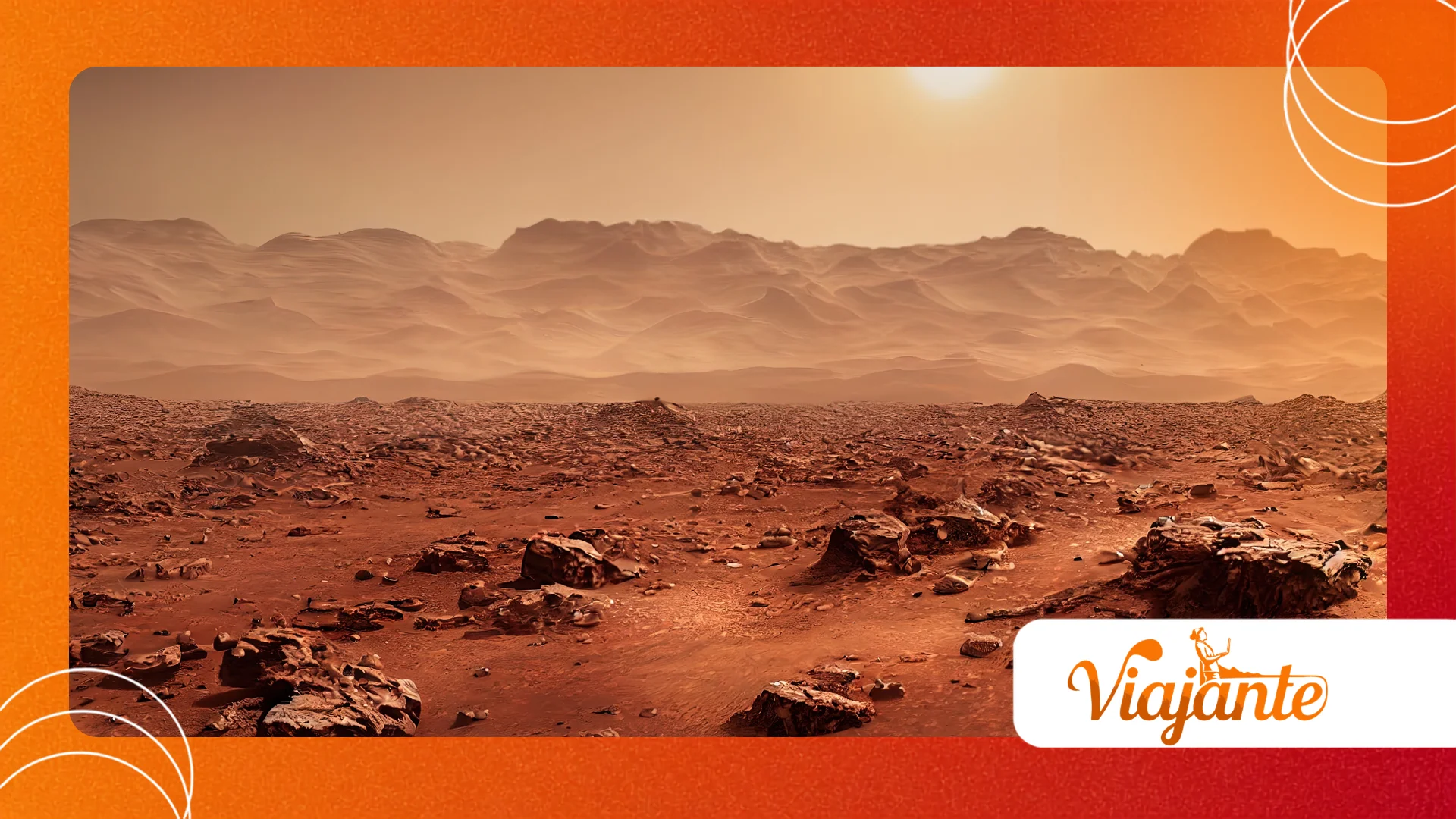
When NASA’s Perseverance rover drilled into the rock layers of Jezero Crater, it did not uncover bone fragments or petrified shells.
Instead, it highlighted delicate chemical structures, organic carbon signals, and mineral formations that point toward an ancient, water-rich past.
These micro-textures tell a quiet story about environmental conditions from billions of years ago. They mark the exact places where groundwater once interacted with mineral surfaces, leaving behind subtle fingerprints that demand careful examination.
Evaluating these sedimentary layers allows planetary geologists to piece together how liquid water persisted on Mars. More importantly, it gives us a real, physical baseline to evaluate whether microbial life ever found a foothold there.
How Does Robotic Exploration Identify Potential Martian Fossil Clues?
Uncovering chemical traces on an empty planet requires an extraordinary blend of patience and precision. Rovers use fine-tuned Raman spectroscopy, X-ray fluorescence, and high-resolution cameras to scan exposed rock faces for organic compounds.
Whenever onboard sensors pick up an anomaly, laser instruments vaporize tiny rock fragments to analyze their elemental signature. Teams back on Earth then spend days debating whether a specific feature warrants deeper drilling.
Selected cores are carefully cut and sealed inside titanium tubes, destined to wait for future retrieval missions. By tracking these subtle Martian fossil clues inside Jezero Crater, researchers build a meticulous spatial map of where ancient life had the best chance to endure.
Why Did Recent Planetary Discoveries Trigger Global Public Fascination?
Space exploration has a habit of cutting through daily noise. When reports surface that we might have detected signs of past extraterrestrial life, people naturally pause and pay attention regardless of their background.
High-resolution images transmitted from alien deserts fill our feeds instantly. They transform abstract astrophysics into something tangible, sparking debate among students, researchers, and curious professionals alike.
Beyond the immediate excitement, these milestones offer a subtle lesson in persistent effort. They show what happens when long-term scientific discipline and international collaboration align around a single, difficult question.
++ La ciencia detrás de por qué nos encantan las teorías de la conspiración
Which Mars Missions Are Actively Searching for Ancient Biosignatures?
A small fleet of orbiters and rovers currently examines the Martian surface, each deployed with distinct diagnostic tools to investigate past habitability and atmospheric history.
| Mission Name | Space Agency | Core Scientific Focus | Key Detection Technology |
| Perseverance Rover | NASA | Organic chemistry & biosignature caching | SHERLOC & PIXL spectrographs |
| Curiosity Rover | NASA | Environmental habitability & organic detection | Sample Analysis at Mars (SAM) |
| ExoMars Rosalind Franklin | ESA | Deep subsurface drilling for organic biosignatures | Subsurface drill & MOMA instrument |
| Tianwen-1 / Zhurong | CNSA | Surface geology & ground-penetrating radar | Multispectral cameras & radar |
Comparing data from across these missions provides a far clearer picture than any single probe could yield, balancing regional geological findings against broader global patterns.
++ Tecnologías predichas hace décadas que existen hoy en día.
How Do Scientists Differentiate Between Biological and Non-Biological Signatures?
Separating genuine biological remains from non-living chemistry is notoriously difficult. Nature frequently uses abiotic pathways, like volcanic activity or hydrothermal reactions, to form complex organic molecules without any living organism involved.
Because chemical presence alone proves very little, researchers rely on strict verification protocols. They look for specific isotopic ratios, structural patterns, and linked chemical evidence before entertaining a biological origin.
That level of skepticism is essential in modern planetary science. To dig deeper into the formal standards used to analyze these geological samples, review the technical frameworks published by the NASA Mars Exploration Program.
What Role Does Scientific Curiosity Play in Professional Skill Development?
Following complex space missions does something unexpected to our thinking habits. It trains us to sit with ambiguity, value verifiable evidence, and resist jumping to easy conclusions when faced with sparse information.
For remote professionals and independent creators, adopting that analytical mindset makes a noticeable difference. It encourages a structured approach to problem-solving, making it easier to navigate changing industries and unpredictable workflows.
Stepping back from routine tasks to contemplate complex planetary questions refreshes our cognitive energy. It keeps our thinking flexible, grounded, and open to continuous learning over long careers.
When Will Returned Samples Deliver Definitive Scientific Answers?
Robotic instruments on Mars are impressive, but they cannot replace the full diagnostic power of terrestrial laboratories. That is why space agencies are working on complex sample return concepts targeted for the early 2030s.
Bringing physical rock cores to Earth will allow scientists to use massive electron microscopes and synchrotron light sources. These instruments are far too heavy and power-hungry to ever fly on a rover.
Until those samples arrive, the scientific community remains cautiously optimistic. Researchers continue testing their models against the steady stream of environmental data coming back from the surface every day.
How Can Curiosity-Driven Mindsets Improve Work-Life Balance and Focus?
Burnout often stems from monochrome routines where every task feels identical. Infusing your day with genuine intellectual curiosity creates necessary mental breathing room, shifting attention toward topics that inspire wonder.
Taking short breaks to explore scientific breakthroughs or historical debates restores focus. It breaks up repetitive work blocks and returns you to your daily projects with clearer perspective.
Building a habit of lifelong curiosity helps establish healthy boundaries around your work.
As research into Martian fossil clues moves forward, staying engaged with the broader world keeps professional growth grounded and resilient.
++ La verdad detrás de los métodos de detección de planetas invisibles
Conclusión
The search for ancient biosignatures on Mars touches something fundamental about human nature. It blends incredible engineering with our oldest questions about existence, history, and where we might be headed.
As rovers continue gathering rock cores across Jezero Crater, scientists refine their analytical models to ensure every piece of data is judged with absolute objectivity.
Carrying that same spirit of inquiry into our professional lives sharpens critical thinking and keeps us adaptable. To check raw telemetry, inspect sample container status, or view mission updates directly, visit the official portal at the European Space Agency.
Preguntas frecuentes (FAQ)
What are the primary chemical indicators of potential ancient life on Mars?
Scientists look for organic carbon molecules, specific amino acid structures, distinct carbon isotope ratios, and micro-textures formed through microbial activity.
Has NASA definitively proven that life existed on Mars in the past?
No definitive proof exists yet. Scientists have detected intriguing organic compounds, but confirming their origins requires bringing those physical samples back to terrestrial labs.
Why is Jezero Crater considered an ideal location to hunt for biosignatures?
Jezero Crater once held a deep lake fed by river deltas billions of years ago. Its fine-grained mudstones are exceptionally good at trapping and preserving delicate organic material.
How does reading about space science benefit working professionals?
Engaging with detailed scientific topics builds cognitive flexibility, sharpens analytical reasoning, reduces routine fatigue, and fosters a healthy habit of continuous learning.3
\