
The Melodic Intelligence: Unlocking Historical Secrets
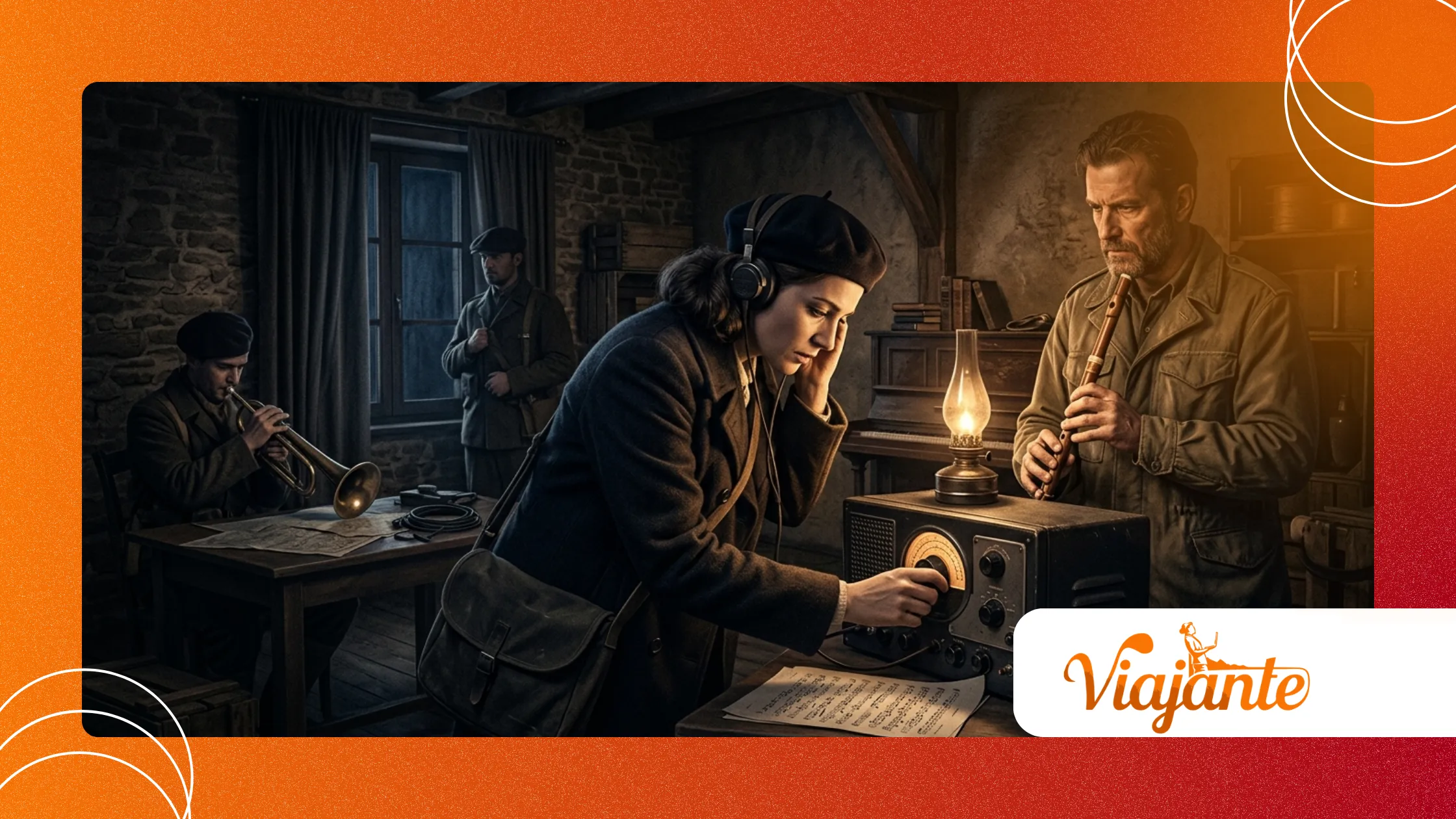
History reveals that rhythm and melody served as vital communication tools for military leaders throughout the ages, ensuring that critical messages bypassed enemy surveillance with surprising ease.
Anúncios
Modern digital professionals can learn much from these ancient techniques, as they demonstrate how creativity and unconventional thinking solve complex communication problems during high-stakes global conflicts.
This article explores various historical instances, technical methodologies, and the lasting legacy of sonic encryption, providing a comprehensive look at how music was used as a secret code in past wars.
Summary
- The strategic origins of acoustic signaling.
- Enslaved populations and the “Underground Railroad” rhythms.
- World War II: The BBC’s musical broadcasts.
- The science of melodic encryption and steganography.
- Lessons for modern remote professional security.
What is Melodic Steganography in Military History?
Communication in battle requires speed and absolute secrecy. Before digital encryption existed, soldiers relied on “steganography,” which is the practice of hiding a secret message within a non-secret medium.
Music offered the perfect camouflage because it felt natural to the human ear. A simple change in tempo or a specific flute flourish could signal an immediate retreat or ambush.
By embedding data into harmonic structures, commanders ensured that music was used as a secret code in past wars without alerting spies who were listening for spoken words.
How Did the Underground Railroad Use Spirituals?
In the United States, enslaved people developed one of the most sophisticated acoustic coding systems ever recorded. Songs like “Wade in the Water” were not just religious expressions of hope.
These melodies contained specific instructions for escape routes. The lyrics advised fugitives on how to avoid bloodhounds or where to meet “conductors” who would lead them toward northern freedom.
Map songs like “Follow the Drinking Gourd” acted as audible GPS systems. This era remains a primary example of how music was used as a secret code in past wars and internal rebellions.
Why Were Radio Broadcasts Vital During World War II?
During the 1940s, the BBC’s “Radio Londres” transmitted seemingly random musical snippets and personal messages to the French Resistance.
These “messages personnels” often sounded like nonsensical poetic verses or songs.
However, for the resistance fighters, a specific nursery rhyme or a bar of classical music indicated that a sabotage mission should begin or that an Allied drop was imminent.
The famous opening notes of Beethoven’s Fifth Symphony were used because the rhythm matched the Morse code for the letter “V,” symbolizing the “Victory” campaign across occupied Europe.
++ What Makes a Rainbow Circular?
Which Instruments Were Most Effective for Coding?
Drums and bugles were the standard tools for field communication for centuries. Their high decibel levels allowed orders to travel across loud, chaotic battlefields where human voices would fail.
In the Scottish Highlands, bagpipes served a similar purpose. The specific “pibroch” played could inform distant clans about the size of an approaching army or the status of a siege.
Even during the American Civil War, specific drum beats signaled “parley” or “charge.” Scholars agree that music was used as a secret code in past wars to maintain tactical discipline.
++ The Physics Behind the “Quietest Place on Earth”
Data Comparison: Sonic Coding Methods Through Time
| Conflict | Primary Instrument | Purpose of Code | Encryption Method |
| American Civil War | Bugle & Drum | Tactical Maneuvers | Rhythmic Patterns |
| Underground Railroad | Vocal Spirituals | Escape Routes | Lyrical Metaphors |
| World War II | Radio/Piano | Sabotage Orders | Steganographic Chords |
| Vietnam War | Folk Songs | Troop Locations | Subtle Pitch Shifts |
How Does Acoustic Coding Relate to Modern Freelancing?

You might wonder how ancient war tactics apply to a digital career. The core principle is “information security” and the ability to communicate clearly within a noisy, crowded environment.
Just as music was used as a secret code in past wars, modern professionals must use encryption and clear protocols to protect sensitive client data while working in public digital spaces.
Understanding the history of covert communication helps freelancers appreciate the value of nuance. Developing “private languages” or unique workflows with clients can significantly enhance productivity and operational security.
When Did Musical Encryption Become Obsolete?
The rise of digital radio and satellite communication shifted the focus from acoustic signals to electronic encryption. However, the psychological impact of musical cues remains highly relevant in modern psyops.
Even today, certain frequencies or repetitive sound patterns are used in psychological warfare to disorient enemies. The transition from melody to data packets was a gradual, fascinating technological evolution.
While we no longer use flutes to hide troop numbers, the fundamental concept that music was used as a secret code in past wars laid the groundwork for modern cryptography.
What Are the Most Famous “Code Songs” in History?
“Steal Away” is perhaps the most iconic example. When sung, it alerted others that a secret meeting was happening soon. It allowed for organized planning under the nose of captors.
In Europe, the song “Lilli Marlene” became a cross-border phenomenon. While not a direct code, its broadcast timing often signaled specific shifts in radio jamming patterns by various intelligence agencies.
These instances prove that music was used as a secret code in past wars because it bridged the gap between emotional expression and cold, hard military necessity for survival.
++ Why Do We Have Dimples? Genetic Quirks Explored
The Resonant Legacy
The history of musical warfare reminds us that creativity is a powerful weapon. From the battlefields of the 19th century to the radio waves of the 1940s, sound was strategic.
For the modern remote worker, these stories emphasize the importance of adaptability. Finding clever ways to transmit information securely is a skill that transcends time and evolving technology.
Looking back, it is clear that music was used as a secret code in past wars to save lives and change the course of history through the power of rhythm.
If you are interested in more historical insights regarding communication and technology, visit the Smithsonian Institution to explore their digital archives on wartime innovation and acoustic history.
FAQ: Frequently Asked Questions
Did the Nazis also use music for codes?
Yes, the German military used specific broadcasts to signal U-boat movements. They often utilized classical compositions to mask timing sequences for their naval maneuvers across the Atlantic.
Can music still be used for encryption today?
Digital steganography allows users to hide files within MP3 data. While not common for daily use, it remains a sophisticated method for hiding information in plain sight on the internet.
Were the musicians considered soldiers?
In many historical armies, drummers and pipers were active combatants. They held high-stakes roles because the entire unit’s movements depended on the accuracy of the musician’s rhythmic signals under heavy fire.
Why was music better than Morse code?
Music was less suspicious to the casual listener. While Morse code sounds like a transmission, a piano piece sounds like entertainment, allowing agents to hide messages in public radio broadcasts.
\