
What Makes a Rainbow Circular?
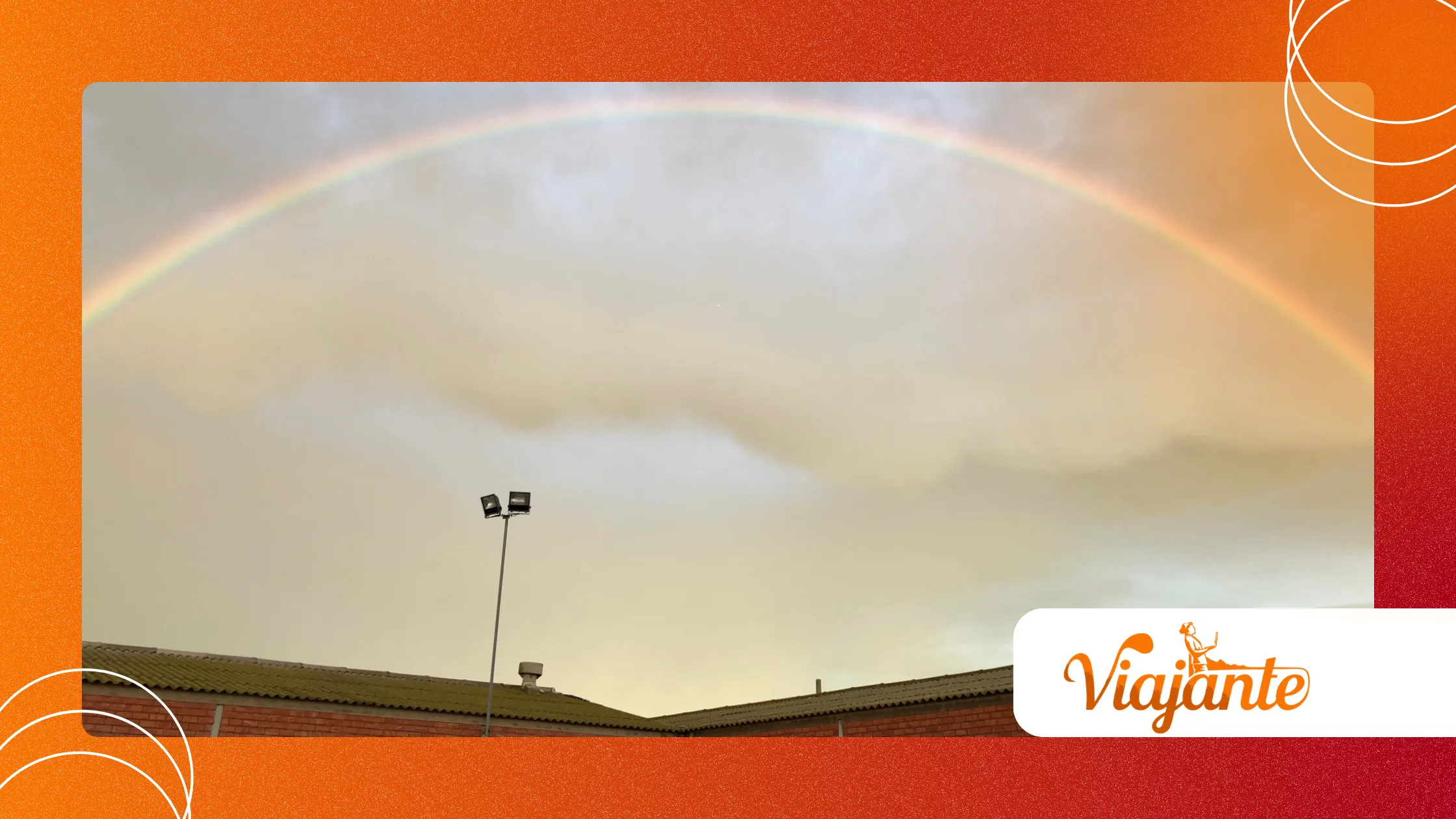
What Makes a Rainbow Circular is a question that bridges the gap between childhood wonder and the sophisticated laws of atmospheric physics.
Advertisements
While we typically perceive these colorful arcs as semi-circles touching the horizon, the underlying science reveals a much more complex and mathematically perfect phenomenon occurring in our sky.
Understanding the mechanics of light dispersion requires looking beyond the surface, exploring how water droplets act as tiny prisms to create a full 360-degree spectrum of light.
Here is a concise summary:
- Perfect Circles: All rainbows are actually full 360° circles, but the ground usually hides the bottom half.
- Geometric Angles: Light exits raindrops at a fixed 42-degree angle, naturally forming a circular cone of color.
- The Antisolar Point: The circle is always centered exactly opposite the sun, directly aligned with the observer’s eye.
- Spherical Drops: The round shape of water droplets is what keeps the arc smooth and symmetrical.
- High Altitudes: You can only see the full ring from high places, like airplanes, where the horizon doesn’t block the view.
Why Do We Only See an Arc Instead of a Full Circle?
Most observers view rainbows from the ground, where the earth physically obstructs the lower half of the light cone, creating that familiar, truncated semi-circle.
The geometric center of a rainbow is the antisolar point—a spot exactly opposite the sun from your perspective, usually buried well below the horizon during the day.
If you happen to be perched on a high mountain or peering through an airplane window, the horizon drops away, finally revealing the complete, breathtaking circular ring.
What Makes a Rainbow Circular According to Physics?
The core reason What Makes a Rainbow Circular involves the specific angle at which sunlight exits a water droplet after undergoing internal reflection and refraction.
Every raindrop acts as a spherical mirror, bending light at a constant angle of approximately 42 degrees relative to the path of the incoming solar rays.
Because this exit angle is symmetrical around the line connecting your eye and the sun, the resulting points of light form a perfect circular cone.
How Does the Antisolar Point Influence the Shape?
To visualize the process, imagine a straight line drawn from the sun, through your head, and extending toward the shadow of your head on the ground.
This imaginary marker is the antisolar point, and every rainbow you ever see will be perfectly centered on this specific, deeply personalized location in the atmosphere.
The circularity is a direct consequence of light maintaining a fixed angular distance from this point, ensuring that every observer sees their own unique version.
Which Role Does Refraction Play in Creating the Curve?
As sunlight enters a falling raindrop, it slows down and bends—a process known as refraction—which separates white light into its individual, vivid constituent wavelengths.
Red light bends the least, while violet light bends the most, but both colors follow the same circular geometry dictated by the spherical shape of droplets.
++ The Evolution of the Coffee Cup Handle
When Can You See a Full 360-Degree Rainbow?
Witnessing a full circle requires a perspective where no ground or terrain interrupts the line of sight between the observer and the moisture-laden air.
Pilots and skydivers frequently report seeing these “glories” or full-circle rainbows because they are positioned high above the clouds where the antisolar point is visible.
Modern drone photography has also captured stunning 2026 footage of circular rainbows over waterfalls, where mist is suspended in the air both above and below.
++ Why Do We Have Dimples? Genetic Quirks Explored
Optical Properties of Rainbow Formation
| Feature | Description | Value/Angle |
| Primary Angle | The exit angle for red light | 42.4° |
| Secondary Angle | The exit angle for violet light | 40.7° |
| Geometric Center | Location of the rainbow’s center | Antisolar Point |
| Shape | Theoretical geometry of the light | 360° Circle |
| Reflection Type | Internal bounce within the drop | Single (Primary) |
How Does Droplet Shape Affect the Final Image?
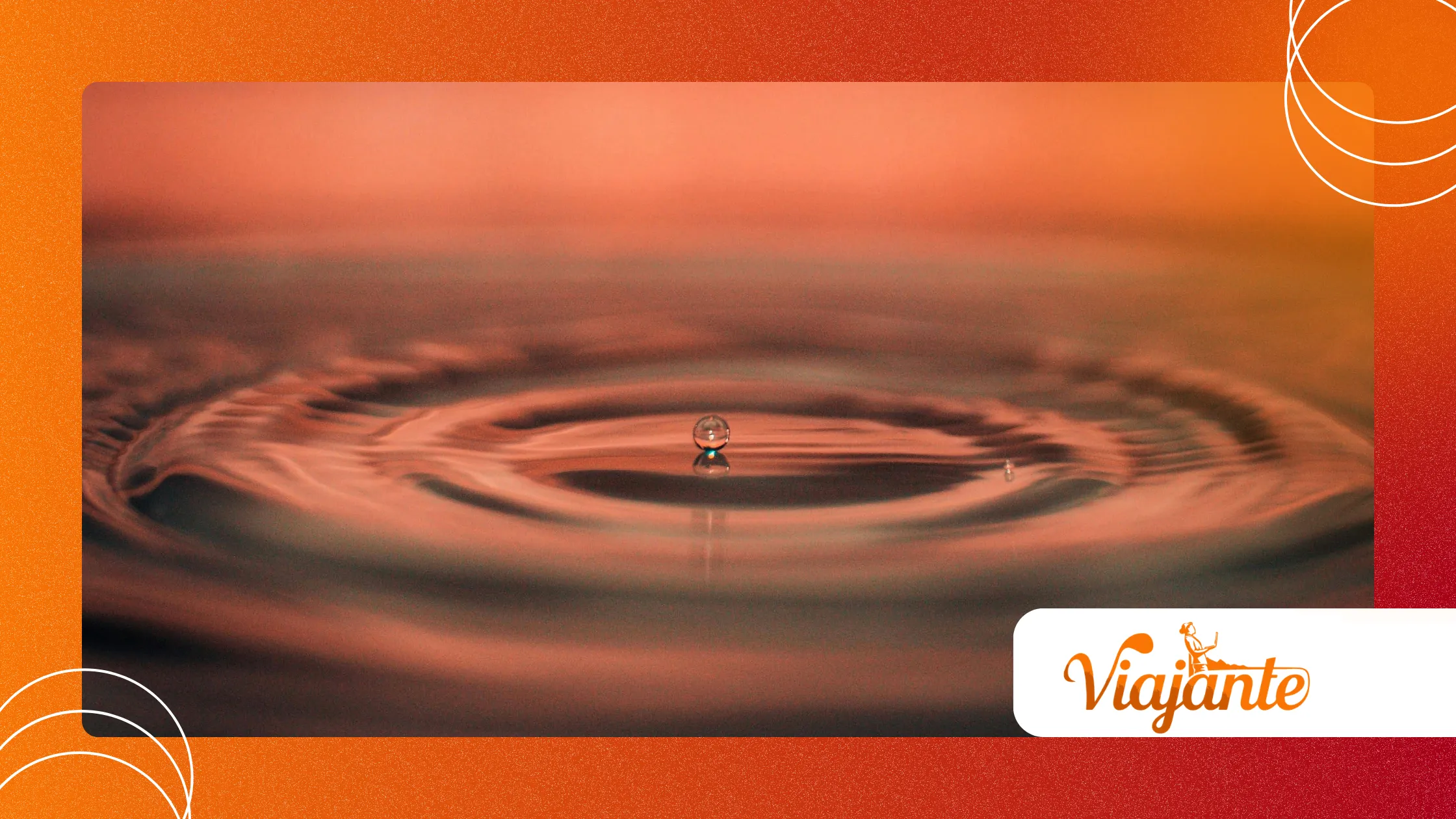
While we often imagine raindrops as “tear-shaped,” they are actually near-perfect spheres when small, which is crucial for maintaining the precise 42-degree angle required.
If raindrops were flat or jagged, the light would scatter in chaotic directions, making it impossible for a coherent, circular band of color to form.
Surface tension keeps these drops spherical, ensuring that the light behaves consistently, regardless of where the drop is positioned within the observer’s field.
What Is the Difference Between Primary and Secondary Circles?
Sometimes you might notice a second, fainter arc outside the main one, which is caused by light reflecting twice inside each individual water droplet.
This secondary rainbow is also circular but appears at an angle of roughly 51 degrees, with the color sequence reversed due to the extra internal reflection.
The space between these two circular bands is known as Alexander’s Band, appearing noticeably darker because light is rarely scattered into that specific angular region.
Why Do Rainbows Move When You Move?
Since the rainbow is an optical pattern rather than a physical object, it exists only at the intersection of sunlight, water, and your specific eyes.
As you walk, your antisolar point moves with you, meaning the entire circular geometry shifts, ensuring you are always at the center of your own arc.
This fluid nature confirms that What Makes a Rainbow Circular is not the rain itself, but the mathematical relationship between the observer and the light source.
Can Artificial Light Create a Circular Rainbow?
Using a garden hose on a sunny day is the easiest way to witness the full circularity of this phenomenon without needing a high-altitude aircraft.
By standing with your back to the sun and spraying a fine mist, you can create a small-scale circle that clearly demonstrates the 42-degree angular rule.
The same principles of physics apply whether the water comes from a summer storm, a waterfall, or a nozzle, proving the universality of these optical laws.
++ The Holiday That Never Moved: Fixed vs. Floating Dates
How Does Modern Science Track Atmospheric Optics?
In 2026, researchers use LIDAR and advanced spectral imaging to study how pollutants or different atmospheric densities might slightly distort the perfect circularity of rainbows.
These studies help meteorologists understand droplet size distribution within clouds, as the clarity and width of the circular bands vary based on the water’s purity.
High-resolution satellite data now allows us to observe these light patterns from space, providing a top-down view of the interaction between sunlight and Earth’s moisture.
The Symmetry of the Sky
The pursuit of understanding What Makes a Rainbow Circular leads us to the realization that nature is governed by precise, elegant geometric constraints.
From the internal reflection within a single drop to the position of the sun behind the observer, every element must align to produce the spectral ring.
While our feet may be planted on the ground, knowing that a full circle exists just beyond the horizon adds a layer of depth to every sighting.
Next time you see an arc, remember that you are viewing a fragment of a giant, invisible cone of light that stretches across the entire sky.
For further technical reading on light scattering and atmospheric physics, visit the National Oceanic and Atmospheric Administration (NOAA) for official meteorological data and educational resources.
FAQ: Frequently Asked Questions
Is a rainbow actually a physical object in the sky?
No, a rainbow is an optical phenomenon that exists only as a collection of light rays reaching your eyes from a specific angular direction.
Can two people see the exact same rainbow?
Actually, no; because each person has a unique antisolar point, they are receiving light from different sets of raindrops, creating a personalized experience.
Why does red always appear on the outside of the circle?
Red light has a longer wavelength and refracts at a slightly larger angle (42.4°) than violet light, placing it at the outer edge.
Are all rainbows perfectly circular in shape?
Yes, mathematically they are always circular, though factors like wind or non-spherical drops can sometimes blur the edges or distort the visual clarity.
What is the “glory” often seen from airplanes?
A glory is a related phenomenon involving diffraction rather than just reflection, often appearing as smaller, multiple concentric circles around the aircraft’s shadow.
\