
Why Ground Squirrels Hunting Behavior Surprised Experts
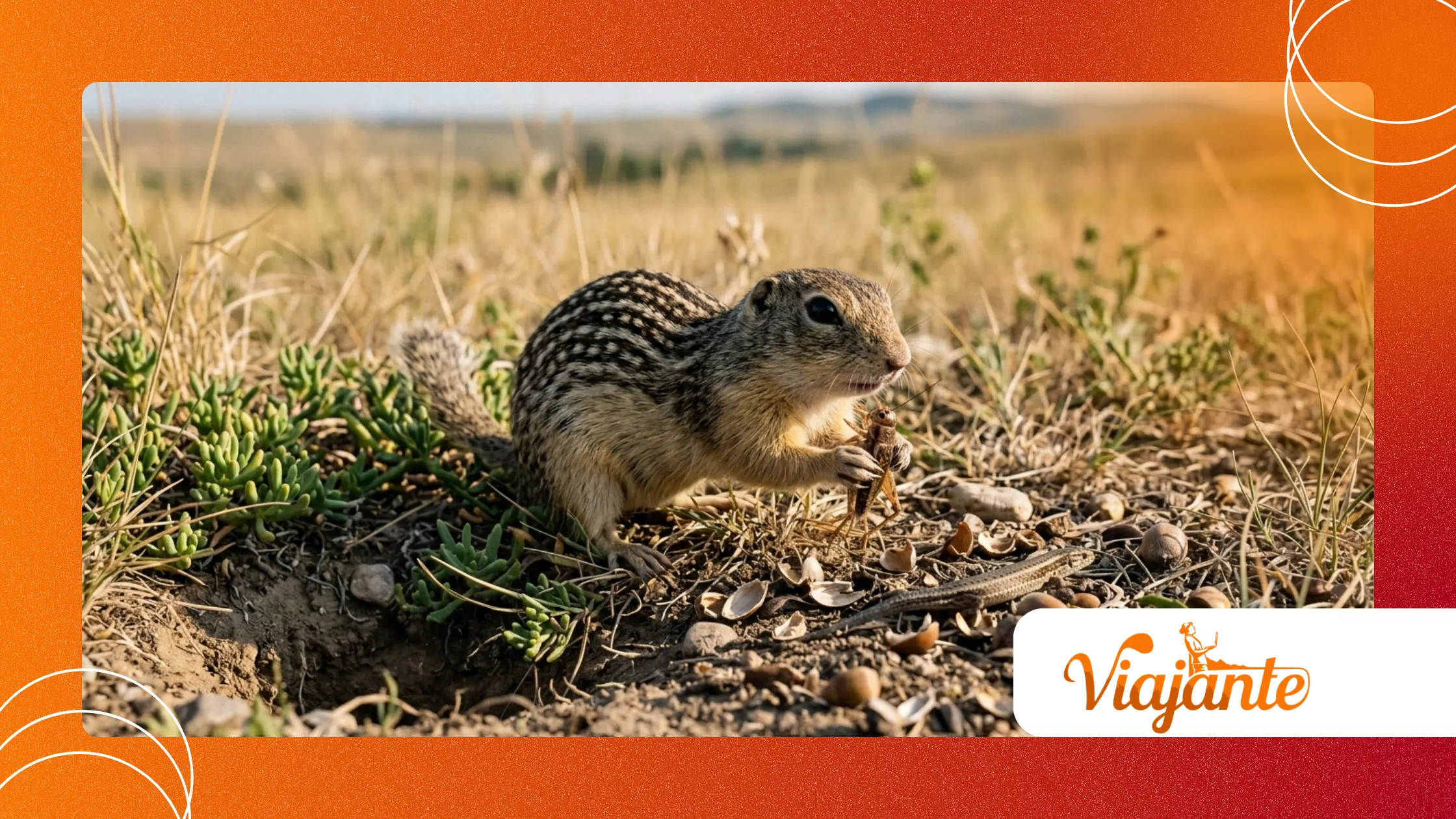
Wildlife biology often shatters the tidy boxes we use to categorize nature. We’ve long viewed small rodents as the quintessential “prey”—the nervous gatherers of the meadow—yet recent field data suggests a much darker, more calculated side to these animals.
Advertisements
This isn’t just about a squirrel finding a lucky snack. We are witnessing a fundamental shift in how we define opportunistic survival, where the line between the forager and the predator blurs under environmental pressure.
The following analysis dives into the mechanics of Ground Squirrels Hunting Behavior, the physiological triggers behind this transition, and what this tactical flexibility means for our understanding of ecology in 2026.
Article Summary
- Behavioral Shift: Ground squirrels are moving beyond their “prey” status, acting as calculated predators that hunt small vertebrates.
- Environmental Triggers: Resource scarcity and habitat changes in 2026 are forcing these rodents to supplement their diet with living protein.
- Cognitive Depth: Hunting requires high-level patience, timing, and social learning, challenging our understanding of rodent intelligence.
- Ecological Impact: This dietary flexibility alters local food webs, affecting the survival of insects and ground-nesting birds.
- Scientific Update: Modern tracking technology has proven that this opportunistic hunting is a widespread survival strategy, not a rare anomaly.
What defines the unexpected Ground Squirrels Hunting Behavior?
Classification systems often fail because nature doesn’t care about our labels. While textbooks still list these rodents as primary herbivores, high-definition tracking has caught them in the act of stalking vertebrate prey with chilling precision.
This isn’t mindless aggression; it is a sophisticated pivot. In high-stress corridors, squirrels have been observed bypassing traditional seed sources to target lizards and small birds, prioritizing immediate protein over fiber.
The surge in Ground Squirrels Hunting Behavior often mirrors the frantic energy of reproductive cycles. Nursing females, desperate for dense calories, seem to flip a biological switch from gatherer to tactical hunter.
Evolution favors the adaptable, and these squirrels are proving that dietary niches are remarkably porous. By expanding their menu, they bypass the death sentence that localized droughts usually impose on strict plant-eaters.
How does environmental stress trigger predatory actions?
When the landscape stops providing, instinct takes over. As seasonal rains become less predictable, the succulent greens that squirrels rely on for hydration vanish, turning living tissue into a necessary moisture source.
Researchers at the Smithsonian National Zoo & Conservation Biology Institute have tracked how habitat fragmentation forces these animals into closer, more competitive contact with other small species.
Urban sprawl creates artificial islands of heat and limited resources. In these pockets, squirrels adapt by hunting insects or trapped reptiles, displaying a cognitive plasticity that makes our old “herbivore” labels feel increasingly obsolete.
The execution of Ground Squirrels Hunting Behavior is surprisingly methodical. They don’t just scramble; they employ a low-profile approach and deliver a targeted strike to the prey’s head, minimizing the struggle.
This predatory streak doesn’t signal a total departure from their roots. It exists as a dormant toolkit, a secondary survival mode that stays tucked away until the cost of foraging outweighs the risk of the hunt.
++ Hedgehogs Rolling Into Spiny Balls: Survival Mechanics
Which species exhibit the most aggressive hunting traits?
Not every squirrel has the temperament for the kill. The Thirteen-lined and California varieties are the ones currently rewriting the rulebook, showing a consistent “hunter-gatherer” duality across North American grasslands.
++ Birds That 'Sow' the Forests: Role in Seed Dispersal
| Species Name | Primary Diet | Hunting Frequency | Common Prey |
| Thirteen-lined | Grasses/Seeds | Moderate-High | Grasshoppers, Mice |
| California Ground | Nuts/Fruits | Low-Moderate | Lizards, Nestlings |
| Arctic Ground | Tundra Plants | Occasional | Lemmings, Carrion |
| Richardson’s | Green Shoots | Rare | Insects, Dead Birds |
Why are researchers rethinking rodent cognitive abilities?

There is something unsettling about watching a squirrel wait. A successful hunt requires a grasp of timing and spatial geometry that we once thought was reserved for “higher” predators like foxes or raptors.
They demonstrate a surprising level of patience, often camping out near bird nests for twenty minutes or more. They wait for the precise moment of parental absence, showing a keen awareness of guardian patterns.
Modern studies of Ground Squirrels Hunting Behavior hint at a localized “culture” of hunting. Juveniles observed mimicking the specific strike patterns of successful adults suggest that this isn’t just raw instinct, but learned strategy.
This transfer of knowledge elevates the colony from a simple group of hiders to a strategic unit. It forces us to acknowledge a social complexity that simple burrowing behavior never fully explained.
What are the ecological consequences of this behavior?
When a “prey” species begins acting like a predator, the ripple effect is massive. Predatory squirrels can inadvertently suppress the populations of beneficial insects or small reptiles that haven’t evolved to fear them.
This shift can be a double-edged sword for the environment. While they might help control certain agricultural pests, they also pose a newfound threat to endangered ground-nesting birds in sensitive conservation zones.
Accounting for Ground Squirrels Hunting Behavior is now a requirement for habitat managers. It serves as a stark reminder that no species is static, and survival strategies shift as fast as the climate.
Integrating these rodents into higher trophic levels changes our entire energy flow model. They aren’t just passive consumers; they are active, occasionally ruthless regulators of the micro-wilds they inhabit.
When did scientists first document these lethal interactions?
The evidence was always there, hidden in the peripheral vision of naturalists. It took the ubiquity of high-speed trail cameras to transform “odd stories” into a documented scientific reality.
Early observations were often dismissed as desperate anomalies—flukes of nature that didn’t fit the peaceful rodent narrative. But the sheer volume of footage across different biomes eventually made the truth undeniable.
The rise of Ground Squirrels Hunting Behavior offers a window into the speed of animal evolution. It shows us exactly how quickly a species can retool its behavior when pushed to the edge.
Academic circles in 2026 are moving away from rigid binaries. We are learning that nature operates on a spectrum of opportunity, and the “peaceful” squirrel is just one side of a very complex coin.
++ Seahorses: Male Pregnancy and Parental Care
A New Perspective on Rodent Survival
The meadow is a far more violent place than our park benches suggest. Ground squirrels have proven that they are not just victims of the food chain, but active participants who can climb its rungs.
Their ability to pivot from seeds to meat highlights a biological resilience that explains their global success. It is a calculated, cold-blooded adaptation that ensures life continues when the greenery dies.
Seeing Ground Squirrels Hunting Behavior for what it is—a masterclass in opportunism—helps us appreciate the true grit of wildlife. It reminds us that every creature is a product of its necessity.
For those tracking the broader shifts in North American ecosystems and the survival tactics of native species, the National Wildlife Federation provides deep dives into how these animals are navigating our changing world.
FAQ: Understanding Squirrel Predation
Do all ground squirrels hunt other animals?
No, the majority remain focused on plant matter. Hunting is a specialized response to specific environmental stressors or extreme nutritional gaps that seeds alone cannot bridge in a given season.
Is this hunting behavior dangerous to humans?
Not at all. Their predatory instincts are scaled to their size. While they are efficient against insects and tiny vertebrates, they remain fundamentally wary of humans and larger domestic animals.
Does hunting behavior affect their lifespan?
Access to high-density animal protein can be a literal lifesaver during harsh winters. It provides the fats necessary for thermoregulation, though the act of hunting does expose them to defensive bites from prey.
Are these squirrels becoming carnivores?
They are firmly omnivorous. There is no evidence of a total dietary shift; rather, they have optimized a secondary survival skill that allows them to use animal protein as a high-octane supplement.
How can I identify a hunting ground squirrel?
A hunting squirrel loses its frantic, “twitchy” demeanor. It becomes still, focused, and low-slung, moving with a deliberate stealth that is distinct from the way they scan for hawks while foraging.
\