
Why Catfish Climbing Waterfalls Shocked Scientists in Brazil
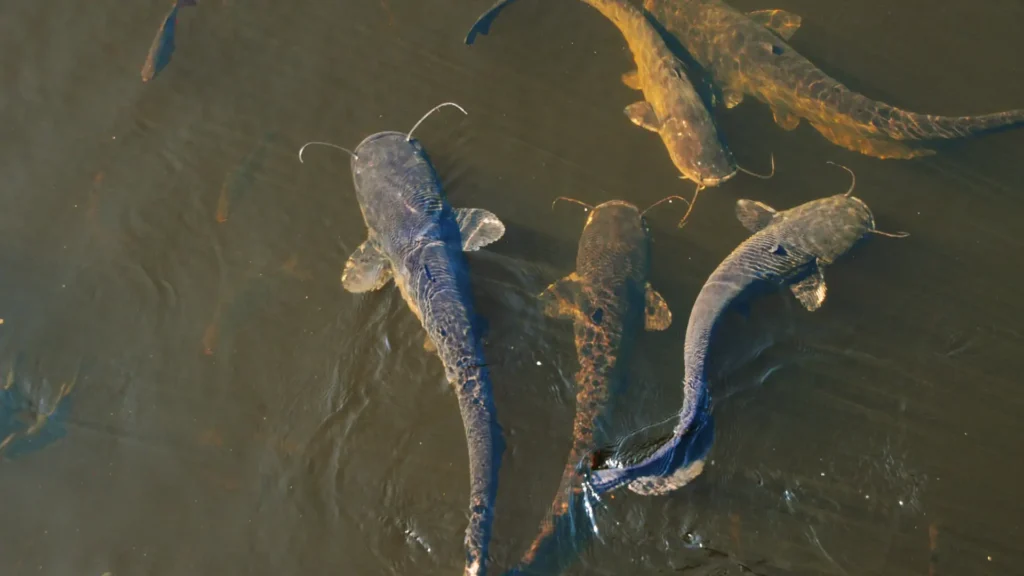
The catfish climbing waterfalls in the rugged heart of the Brazilian rainforest has fundamentally challenged our traditional understanding of aquatic locomotion and evolutionary adaptation.
Advertisements
This biological phenomenon suggests that the boundaries between water and land are far more porous than once believed, forcing a radical rethink of how vertebrates navigate extreme terrains.
Scientists now view these resilient creatures as a living testament to nature's refusal to be confined by gravity or conventional anatomy.
Summary of Extraordinary Ichthyological Findings
- The Discovery: Identification of Lithogenes Species defying gravity.
- The Mechanism: Use of specialized pelvic fins and mouthparts.
- Evolutionary Drive: Search for food and predator avoidance strategies.
- Scientific Impact: New insights into vertebrate transition and survival.
What is the catfish climbing waterfalls in Brazil?
Deep within the fast-flowing tributaries of the Amazon and Araguaia basins, have researchers documented a remarkable group of armored catfish that exhibit semi-terrestrial behaviors.
These are not your typical bottom-dwellers; they belong to the Loricariidae family, specifically species like Lithogenes villosus.
These fish possess a unique physiological makeup that allows them to leave the water's safety to scale vertical, damp rock faces.
This behavior isn't just a brief leap but a coordinated, slow-motion ascent that feels almost intentional.
For years, locals told stories of fish “walking” up rocks, but it wasn't until recent bio-mechanical studies that the international scientific community fully grasped the complexity of this feat.
These creatures utilize a combination of suction and grip that seems to bridge the gap between purely aquatic life and terrestrial exploration.
Evolution has equipped these specific catfish with a flattened body profile and extremely tough, bony plates.
This biological “armor” protects them from the intense water pressure found at the base of cascades.
Consequently, witnessing a catfish climbing waterfalls is a masterclass in seeing how extreme environments force nature to develop radical, highly specialized engineering solutions for survival.
+ What Makes a Rainbow Circular?
How does the catfish climb vertical rock faces?
The secret to this gravity-defying act lies in a specialized “dual-anchor” system involving the mouth and the pelvic girdle.
Unlike most fish, these catfish have a ventral, sucker-like mouth which they use to attach themselves firmly to slippery surfaces.
Once the mouth is anchored, the fish shifts its pelvic muscular fins forward to gain a new foothold further up the rock.
Researchers observing the catfish climbing waterfalls noted that their pelvic fins move independently of the pectoral fins.
This allows the fish to “step” upward while maintaining a constant suction seal with their mouths.
It is a slow, rhythmic process that requires immense muscular endurance, especially when battling the downward force of heavy tropical rainfall or rushing river currents.
Furthermore, their skin and specialized scales provide the necessary friction to prevent sliding backward between movements.
This complex coordination of anatomy and instinct allows them to navigate terrains that would be impossible for other aquatic species.
It is a biological innovation that mirrors the early steps of vertebrates moving from the oceans onto land millions of years ago.
+ How Urban Coyotes Behavior Is Changing Survival Tactics
Why did this behavior shock the scientific community?
Scientists were primarily stunned by the sheer verticality and the high-energy environment where these fish operate.
Traditional ichthyology suggests that fish are highly vulnerable outside of a submerged environment due to oxygen requirements and gravity.
However, the catfish climbing waterfalls manages to keep its gills moist through specialized chambers or by staying within the “spray zone” of the fall.
The discovery forced a re-evaluation of the Loricariidae family tree and their niche within the Brazilian ecosystem.
It was previously thought that such migrations were reserved for eels or certain species of gobies.
Finding a heavily armored catfish performing these stunts suggested that the drive to colonize new territories is much stronger than biological constraints.
Furthermore, the physiological stress involved in such a climb is enormous. Scientists are currently investigating how their metabolism handles the lactic acid buildup during these vertical treks.
The fact that a vertebrate can transition from a high-pressure aquatic floor to a vertical aerial rock face so efficiently remains a focal point of National Geographic's exploration of biodiversity and evolutionary biology.
Technical Data: Loricariidae Climbing Capabilities
| Feature | Description | Adaptation Benefit |
| Mouth Type | Ventral Suction Disk | Secure attachment to slick rocks |
| Pelvic Fins | Mobile/Independent Girdle | Allows “walking” motion upward |
| Body Armor | Dermal Scutes | Protection against debris and flow |
| Respiration | Auxiliary Air-Breathing | Survival in low-oxygen spray zones |
| Habitat | Fast-flowing Neotropical rivers | Access to nutrient-rich algae |
Which evolutionary advantages drive this risky behavior?
Survival in the Amazonian basin is a constant battle against predators and competition for limited resources.
By developing the ability to scale waterfalls, these fish access isolated pools that are completely unreachable for larger, predatory fish.
This provides a “safe haven” for spawning and for juveniles to grow without the constant threat of being eaten.
Additionally, the rock surfaces behind or beside waterfalls are often covered in thick films of algae and periphyton.
Since few other species can reach these heights, the catfish climbing waterfalls enjoys an exclusive buffet.
This nutritional advantage allows them to maintain higher energy levels despite the strenuous physical demands of their unique lifestyle and environment.
Another factor is the search for new habitats during the transition between the dry and rainy seasons.
In Brazil, water levels can fluctuate drastically, and being able to move “upriver” via land bridges ensures the species can find permanent water sources.
This adaptability makes them one of the most resilient groups of freshwater fish in the Southern Hemisphere today.
+ The Incredible Camouflage of the Cuttlefish
What are the implications for future biological research?
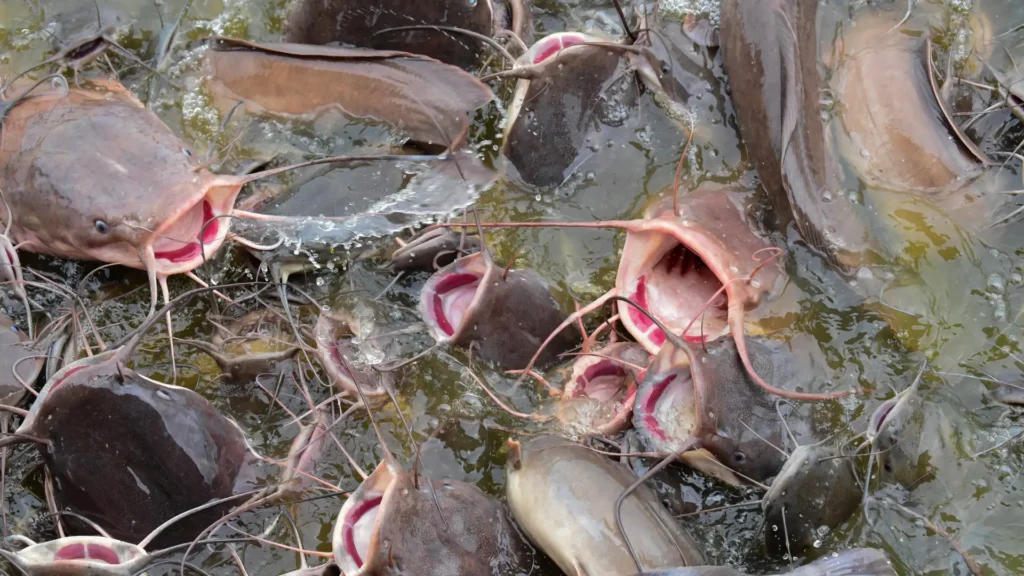
The study of these fish provides a living laboratory for understanding functional morphology and the limits of vertebrate movement.
Roboticists are currently looking at the catfish climbing waterfalls to design all-terrain drones that can navigate wet, vertical surfaces.
The efficiency of their “suction-and-step” method is far superior to many current mechanical designs.
Furthermore, environmental changes in Brazil, such as dam construction and deforestation, threaten these unique micro-habitats.
Understanding how these fish move helps conservationists identify critical corridors that must be protected.
If a waterfall is dry or blocked, these specialized climbers lose their evolutionary edge and their path to essential breeding grounds.
As we move deeper into 2026, genomic sequencing is revealing more about the specific genes responsible for these muscular adaptations.
Every time a researcher films a catfish climbing waterfalls, we gain a piece of the puzzle regarding how life on Earth adapts to the impossible.
It serves as a reminder that nature still holds many secrets in the wild.
Final Thoughts
The sight of a fish scaling a vertical cliff in the Brazilian jungle is a powerful testament to the ingenuity of evolution.
These armored climbers have turned a seemingly impassable barrier into a private highway for food and safety.
By combining ancient anatomical structures with specialized behaviors, they have carved out a niche that continues to baffle and inspire the world's leading biologists.
As we continue to explore the remote corners of our planet, species like these remind us of the importance of habitat preservation.
The delicate balance of the Brazilian river systems is essential for the survival of such extraordinary creatures.
Their story is not just about a fish; it is about the relentless drive of life to expand, ascend, and thrive against all odds.
To learn more about global conservation efforts for unique aquatic species, visit the World Wildlife Fund official website for updated reports.
FAQ: Frequently Asked Questions
Can all catfish climb waterfalls?
No, only a few specialized species within the Loricariidae and Astroblepidae families possess the necessary pelvic fin structure and suction mouths to perform vertical climbs in fast-moving water.
Do the fish breathe air while climbing?
While they are primarily gill-breathers, they can survive in the damp “spray zone” of a waterfall. Some species have modified stomachs or skin that allow for limited oxygen absorption from the atmosphere.
How high can these catfish actually climb?
Documented cases show these fish scaling heights of several meters. As long as the surface remains wet and provides enough oxygen, they can continue their slow ascent until they reach the top.
Are these climbing catfish endangered?
Many species are currently data-deficient, but habitat destruction and river pollution in South America pose a significant risk to their highly specialized and often localized environments.
Why do they only climb at night?
Many researchers believe they climb during the night or in heavy mist to avoid desiccation from the sun and to hide from terrestrial predators like birds or small mammals.
\