
Intermittierendes Hypoxietraining: Sind Höhenmasken den Hype wert?

The pursuit of peak performance often leads remote professionals down a rabbit hole of niche fitness gadgets.
Anzeigen
Lately, the sight of people sprinting in local parks wearing what looks like a tactical respirator has become strangely common.
These altitude masks promise to replicate the physiological grit of high-elevation training within the comfort of a sea-level gym.
It’s an alluring pitch for any time-strapped freelancer looking to squeeze every drop of efficiency out of a twenty-minute lunch break.
But behind the aggressive marketing lies a complex reality regarding how our bodies actually process oxygen. Let’s dissect whether Intermittent Hypoxic Training (IHT) is a legitimate biohack or just an uncomfortable exercise in restricted breathing.
What is Intermittent Hypoxic Training?
In its purest form, Intermittent Hypoxic Training involves breathing air with a reduced oxygen concentration to trigger systemic adaptations.
Traditionally, this meant expensive trips to the Rockies or sleeping in pressurized nitrogen tents that cost a small fortune.
The modern market has distilled this concept into portable masks that claim to offer the “mountain effect” via simple rubber valves.
They function by limiting the volume of air you can pull in, forcing your lungs into a frantic, uphill battle.
There is a subtle but vital distinction here: true hypoxia is about the partial pressure of oxygen, not just struggling to inhale. Most retail masks are actually tools for inspiratory muscle training, which is a different beast altogether.
How Does Oxygen Restriction Affect Performance?
When the body senses a genuine drop in oxygen, it enters a mild survival mode, stimulating the production of erythropoietin.
This hormone acts as a messenger, telling your bone marrow to ramp up red blood cell production for better transport.
This metabolic shift is what athletes crave, as it allows muscles to sustain high intensity without hitting the wall. For those of us staring at monitors all day, better cardiovascular efficiency usually translates to sharper cognitive endurance.
Studies on Intermittent Hypoxic Training suggest it may optimize how mitochondria—our cellular power plants—utilize fuel. It’s a fascinating internal recalibration that makes your biological engine run leaner and much more effectively under stress.
To understand the gritty details of how blood chemistry adapts to these stressors, you can explore the latest research archives at the National Center for Biotechnology Information.
Why Use Training Masks in a Home Office?
Remote workers rarely have the luxury of relocating to a high-altitude base camp for a fitness cycle. The mask serves as a practical, if slightly intense, proxy that fits into a chaotic digital schedule.
Think of these devices as resistance bands for your diaphragm and intercostal muscles. While they won’t magically change your blood chemistry like a trip to La Paz, they turn every breath into a deliberate, strengthening rep.
This respiratory conditioning pays off in unexpected ways, such as maintaining better posture during long Zoom calls. Integrating Intermittent Hypoxic Training gear into a home setup is less about the “hype” and more about building core resilience.
When Should You Avoid Hypoxic Exercises?
Manipulating your primary life source—oxygen—is not something to approach with a “no pain, no gain” ego. If you have a history of blood pressure issues or asthma, this isn’t a DIY project for your health.
Overdoing it can lead to hypercapnia, a disorienting buildup of carbon dioxide that leaves you dizzy rather than fit. Beginners often make the mistake of cranking the resistance too high, which usually ends in a premature and unproductive workout.
Safety shouldn’t be an afterthought; never use these devices during solo swims or high-risk activities. Treat Intermittent Hypoxic Training as a specialized tool that requires respect, focus, and a gradual, disciplined progression.
+ Neurofeedback bei ADHS: Neue Erkenntnisse
Comparative Analysis of Training Methods
| Verfahren | Mechanismus | Hauptvorteil | Zugänglichkeit |
| Altitude Mask | Airflow Resistance | Lung Muscle Strength | High / Portable |
| Hypoxic Tents | Nitrogen Injection | Increased Hemoglobin | Low / Expensive |
| Live High, Train Low | Natural Hypoxia | Systemic Adaptation | Very Low |
| IHT (Device Based) | Controlled O2 reduction | Metabolic Efficiency | Mäßig |
Which Altitude Mask Features Actually Matter?
The fitness market in 2026 is flooded with cheap plastic mimics that offer more frustration than functional benefit. A worthwhile mask must feature precise, multi-level resistance valves that grow with your lung capacity over time.
Comfort is the silent dealbreaker; look for medical-grade silicone that creates a seal without bruising your face. If air is leaking through the edges, you’re just wearing an expensive, sweaty chin strap that does nothing.
Given that Intermittent Hypoxic Training involves a lot of heavy breathing and moisture, ease of cleaning is paramount. A mask that doesn’t disassemble for a thorough scrub will quickly become a breeding ground for bacteria you don’t want.
What Are the Real Benefits for Freelancers?
High-level output in a freelance career is intimately tied to your heart’s ability to deliver oxygen to a taxed brain. Improving your “breathing economy” can help you stay remarkably calm and focused during high-stakes client negotiations.
These sessions are perfect for the “productivity-first” mindset because they increase the metabolic cost of a workout. You can reach a high state of exertion in half the time, leaving more room for your deep-work blocks.
There is also a psychological edge to Intermittent Hypoxic Training that is rarely discussed in brochures. Learning to stay composed when your breath feels restricted translates directly to staying cool under the heat of a looming deadline.
+ Digitale Pillen: Überwachung der Einhaltung von Vorschriften oder Verletzung der Privatsphäre?
How to Start Your Hypoxic Journey
Don’t jump into a sprint on day one; start by wearing the mask during basic mobility drills or light yoga. You need to teach your nervous system that the slight air restriction isn’t a life-threatening emergency.
Slowly introduce short bursts of movement, like a brisk walk or a light cycle on a stationary bike. Keep a close eye on your recovery metrics to see how your body handles the added load of Intermittent Hypoxic Training protocols.
Tracking your resting heart rate over a month will likely reveal an interesting trend toward efficiency. As your lungs get stronger, your body doesn’t have to work as hard to maintain its baseline state of being.
Common Misconceptions About Mask Training
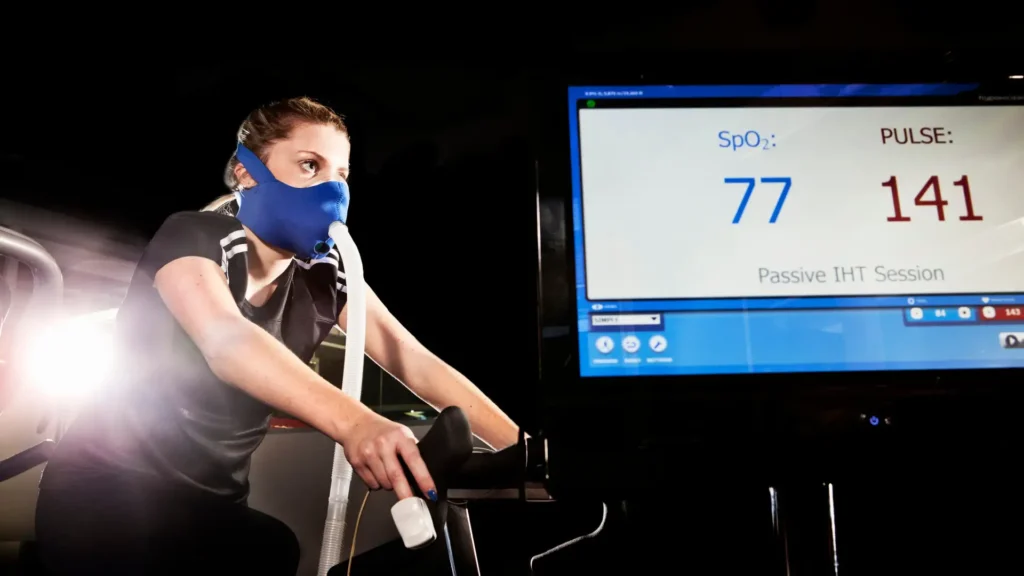
There is a lingering myth that wearing a mask for twenty minutes will instantly transform your blood into that of a Sherpa. Genuine hematological change requires hours of exposure, not just a quick blast of restricted breathing.
The real value lies in the mechanical strengthening of the muscles that move your ribcage. You are essentially upgrading the “bellows” of your body, which indirectly supports every other physical activity you perform.
Even without the systemic changes of high altitude, Intermittent Hypoxic Training remains a brutal and effective way to challenge your aerobic threshold. It’s an honest way to make an easy workout feel significantly more demanding and rewarding.
The Future of Performance Training in 2026
We have moved past simple rubber valves into the era of smart, sensor-integrated respiratory gear. Modern masks now sync with your watch to provide a live feed of your oxygen saturation and breathing rhythm.
This level of feedback turns a blunt instrument into a precision tool for personalized health. It allows you to tailor your Intermittent Hypoxic Training to your specific recovery needs on any given day.
For digital professionals, staying ahead of these trends isn’t about vanity; it’s about tactical longevity. Using data to optimize your health ensures that your physical “hardware” can always support your professional “software.”
+ Darm-Hirn-Achse und Angstzustände: Was sagt die aktuelle Wissenschaft?
Schlussbetrachtung
Altitude masks aren’t a shortcut to elite status, but they are far more than just a gym accessory for show. They offer a unique, challenging way to build respiratory power and mental toughness in a world that demands both.
For the freelancer, the true benefit is the forced focus and the compression of training time. While it might not be a perfect mountain simulation, the discipline it builds is undeniably real and highly transferable.
Experimenting with Intermittent Hypoxic Training could be the missing piece in your wellness routine. It’s about more than just oxygen; it’s about training yourself to thrive when things get a little uncomfortable.
For those seeking authoritative guidance on balancing high-intensity tools with long-term health, the Mayo Clinic Health System offers invaluable perspectives on sustainable fitness.
Häufig gestellte Fragen
Does an altitude mask really simulate high altitude?
Not exactly; it restricts the volume of air rather than changing the oxygen concentration. It’s more of a strength trainer for your lungs than a true substitute for mountain air.
Is Intermittent Hypoxic Training safe for everyone?
It’s generally fine for the healthy, but anyone with cardiac or respiratory issues should stay away. The added strain on the heart is significant and requires a solid health baseline.
How often should I train with a mask?
Twice a week is a solid starting point for most people. Like any resistance training, your breathing muscles need time to recover and knit back stronger between sessions.
Can I use the mask while working at my desk?
You could, but it’s mostly a distraction that might lead to a headache. Save the mask for active sessions where the increased demand for air actually serves a purpose.
Do masks help with weight loss?
They can increase the calorie burn of a session by making your body work harder for every breath. However, it’s a supplement to a good diet, not a replacement for one.
\