Verschwörungstheorien, die sich als wahr herausstellten (mit Beweisen)
What Are Conspiracy Theories That Turned Out to Be True?
When discussing conspiracy theories that turned out to be true, we mean verified events. These were not myths, but actual covert operations executed by powerful institutions.
Anzeigen
The transition from wild rumor to undeniable fact relies entirely on the release of declassified files and congressional hearings.
For remote experts, these deep cover-ups prove that truth requires public pressure.
The concept itself has evolved from a dismissive label into a legitimate field of historical evaluation.
When deep research uncovers signed memos and official directives, the speculative element vanishes entirely.
What remains is a hard historical record that forces societies to reassess what they consider possible.
For freelance researchers, this specific cross-section of history demands maximum attention.
Which Historical Cover-Ups Have Been Formally Declassified?
Project MKUltra: The CIA’s Secret Mind Control Program
During the Cold War, rumors claimed the government experimented covertly on citizens. This sounded like sci-fi until the Church Committee Investigations exposed the program.
The CIA had administered mind-altering drugs and torture to completely unwitting subjects. This dark chapter proved that severe institutional overreach occurs under security guises.
The sheer scale of the program spanned across multiple universities, hospitals, and prisons nationwide. Millions of dollars poured into covert psychological research aimed at cracking human consciousness wide open.
When the details leaked, the public realized that academic institutions had actively participated in state-sponsored psychological abuse.
The Tuskegee Syphilis Study: A Betrayal of Public Trust
For decades, whispers persisted that officials withheld treatment from black men in Alabama. The horrific truth emerged in 1972, revealing a 40-year study run by public health.
Researchers actively misled poor sharecroppers, denying them standard lifesaving penicillin. This devastating breach of ethics created long-lasting distrust in public health.
The victims were told they were being treated for “bad blood,” a generic term used to mask the experiment. Even when penicillin became widely available as a proven cure, doctors blocked access to it.
This structural cruelty demonstrated how easily human rights could be stripped away by bureaucratic entities.
Operation Northwoods: Proposed Terror on American Soil
In the 1960s, a rumor suggested military leaders proposed fake attacks on domestic soil. Decades later, records confirmed the Joint Chiefs of Staff signed off on that plan.
The plot involved bombing cities and hijacking planes to blame the Cuban government. Fortunately, Kennedy rejected it, preventing a manufactured pretext for invasion.
The declassified documents revealed detailed strategies for blowing up American ships and fabricating astronaut casualties.
It remains a terrifying example of military planners viewing civilian lives as mere chips. The paper trail exists today as an unshakeable proof of high-level institutional engineering.
How Do Documented Institutional Cover-Ups Compare?
The following table provides a clear, data-driven overview of three major historical operations that transitioned from public rumors to verified facts through official government disclosures.
| Operation Name | Discovered Year | Primary Institution Involved | Key Declassified Evidence |
|---|---|---|---|
| Projekt MKUltra | 1975 | Central Intelligence Agency (CIA) | Church Committee transcripts and surviving financial documents. |
| Tuskegee Study | 1972 | US Public Health Service (PHS) | Congressional hearings and internal PHS medical files. |
| Operation Northwoods | 1997 | Joint Chiefs of Staff (US Military) | Declassified John F. Kennedy assassination records review board files. |
When Did Public Skepticism Turn Into Verified Historical Record?
The transformation of public suspicion into history accelerates during political reforms. Investigative journalists risk careers to unearth the initial evidence of abuse.
The Freedom of Information Act remains an indispensable tool for bringing truths to light. Without this legal framework, many dark secrets would stay buried in state archives.
The timeline between initial leak and total public acceptance can often take several decades to resolve.
This delay happens because entrenched organizations use immense public relations machinery to discredit valid critics.
Recognizing this delay helps modern analysts stay patient when tracking down complex corporate or state anomalies.
Why Are Declassified State Files Critical for Modern Data Verification?
Accessing authentic government registries allows digital analysts to bypass biased commentary. Relying heavily on raw data rather than secondary narratives preserves pure objective truth.
When tracking conspiracy theories that turned out to be true, raw files provide the ultimate shielding against corporate gaslighting.
Studying unedited records trains the professional eye to spot bureaucratic patterns and intentional linguistic obfuscation.
Often, the darkest truths are buried under boring technical descriptions designed to deflect casual readers.
True verification means scanning thousands of pages of boring spreadsheets to locate a single anomalous transaction.
How Does Public Apathy Protect Corrupt Institutional Systems from Exposure?
When society stops questioning official announcements, unethical operations can expand freely. Maintaining active civic curiosity forces powerful leadership to remain highly accountable.
Apathetic populations allow institutional bad actors to operate with complete legal and ethical impunity over decades.
For online professionals, dynamic awareness is an active barrier against systemic digital manipulation across modern platforms.
When people simply absorb information without tracing its origins, they become passive participants in their own deception.
Breaking this cycle requires a continuous, deliberate effort to question standard narratives.
Which Regulatory Frameworks Force the Disclosure of Highly Classified Materials?
Statutory mandates like the Freedom of Information Act compel agencies to surrender files. These legal triggers systematically dismantle decades of institutional non-disclosure.
Without these structural pressure valves, the general populace would never glimpse the inner machinery of power.
International transparency laws function similarly, forcing corporations to reveal environmental impacts or financial fraud metrics.
Digital experts must master these legal frameworks to extract the critical data sets needed for accurate tracking.
Knowing how to legally demand information is a superpower in the modern information economy.
What Strategic Metrics Define a Validated Cover-up Versus a Fringe Myth?
Verifiable operations present clear financial trails, signed memos, and forensic proof. Conversely, groundless myths fall apart under strict chronological or logical inspection.
The presence of authenticable physical documentation is the single dividing line between sanity and absolute delusion.
When evaluating conspiracy theories that turned out to be true, researchers isolate reproducible evidence from emotional speculation.
If a theory relies on invisible forces or untraceable actors, it fails basic professional standards.
True investigative work focuses entirely on finding the physical receipts left by institutional actors.
++ Wie sich die Theorie der globalen Elitekontrolle bis 2026 entwickelt
When Do Major News Outlets Transition From Dismissal to Deep Investigation?
Mainstream platforms pivot when whistleblowers provide undeniable internal source data. Until physical proof surfaces, corporate media usually echoes the official state narrative.
This cautious behavior stems from a structural reliance on institutional access and corporate advertising revenue.
Once a threshold of undeniable proof is crossed, media networks rush to claim credit for the discovery.
Understanding this dynamic helps independent researchers realize why alternative verification channels are so vital today.
Waiting for mainstream confirmation often means receiving the truth twenty years too late.
Where Can Researchers Access Untampered Historical Intelligence Records Digitally?
Public virtual repositories and academic libraries store unaltered diplomatic correspondence. Exploring these open databases offers remote workers direct contact with historical facts.
Navigating these digital basements requires technical patience but yields pristine, unmanipulated insight.
Platforms managed by educational coalitions often preserve documents that commercial search engines push down the rankings.
Learning to utilize specialized databases keeps your research sharp, unique, and deeply authoritative. True data power resides in knowing exactly where the raw text is archived.
++ Warum die Verschwörungstheorie der Quantentechnologie immer mehr an Bedeutung gewinnt
How Can Independent Content Creators Maintain Impeccable Journalistic Standards?
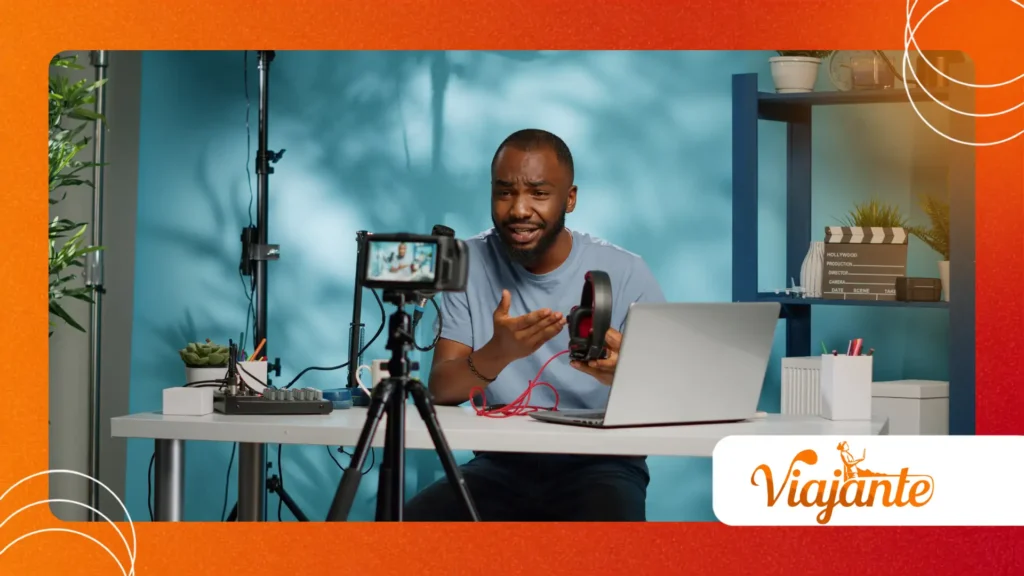
Digital publishers must cross-reference claims with original judicial or state records. Avoiding sensational headlines builds long-term professional authority and reader trust.
True integrity involves admitting the limits of what your current data can actually prove.
By grounding every assertion in footnoted realities, independent creators shield themselves against defamation and platform censorship.
In a chaotic digital ecosystem, unshakeable accuracy becomes a creator’s most valuable asset. Delivering clear, verifiable facts is the highest service you can provide your audience.
Which Declassified Scandals Have Most Drastically Reshaped Medical Ethics Laws?
The sudden exposure of unconsented state trials forced immediate global legal reforms. These mandatory policy shifts now legally protect citizens from weaponized clinical research.
The revelation of experiments conducted on vulnerable populations completely altered human rights jurisprudence.
Today, strict institutional review boards exist solely because organizations proved they could not be trusted to police themselves.
For professionals tracking corporate governance, these historical regulations highlight the ongoing necessity of external legal oversight. True safety requires permanent, independent monitoring of scientific progress.
What Cognitive Biases Prevent the Public From Accepting Verified Historical Cover-ups?
People naturally reject unsettling truths to maintain a comforting sense of safety. Overcoming this internal bias requires a strict focus on data rather than emotional comfort.
It is deeply terrifying to admit that protective systems can actively harm their own constituents.
This psychological barrier explains why initial whistleblowers are often met with fierce public hostility and disbelief.
Recognizing your own desire for comfort helps you remain completely objective when reviewing disturbing historical evidence.
Analytical excellence requires the courage to face reality exactly as it is documented.
++ Der Aufstieg der Epstein-Akten: Verschwörungstheorien und Suchanfragen
When Are Corporate Cover-ups Legally Treated With the Same Weight as State Secrets?
Private conspiracies face federal scrutiny when corporate greed actively harms public safety. Industrial whistleblowers use the same legal protections to unearth hidden data.
The historical dumping of toxic waste or suppression of climate data mimics state-level espionage tactics.
When corporate entities manipulate public policy through dark money, their actions threaten democratic transparency.
Digital professionals must learn to track corporate filing anomalies just as tightly as declassified military budgets.
Power is fluid, and corporate structures often hold more global influence than sovereign nations.
Where Should Modern Researchers Draw the Line Between Skepticism and Paranoia?
Healthy skepticism demands empirical documentation before arriving at any firm conclusion. True paranoia builds complex connections where no verifiable evidence actually exists.
Keeping your analysis grounded in physical reality prevents you from spiraling into unhelpful digital rabbit holes.
The professional researcher treats every hypothesis as a question to be disproven by hard data. If the evidence does not support the initial suspicion, the theory must be discarded instantly.
This dedication to cold truth separates elite analysts from online conspiracy hobbyists.
Abschluss
History proves that while many fringe theories are false, some cover-ups were real. For digital workers, these validated events underscore the value of data analysis.
By studying the past objectively, we learn to navigate misinformation with confidence. To explore more, you can review records at the National Security Archive.
Maintaining a clear head amidst modern media noise is a hallmark of elite digital professionals.
As we move forward into increasingly complex digital landscapes, the lessons of history remain our best compass.
Demand transparency, follow the paper trails, and let verifiable documentation dictate your ultimate view of reality.
FAQ (Häufig gestellte Fragen)
What differentiates a baseless rumor from a verified historical conspiracy?
A verified historical conspiracy is backed by physical evidence or official documents, whereas a baseless rumor relies on speculation and zero empirical proof.
How can digital professionals protect themselves from spreading false misinformation online?
Digital professionals can avoid spreading misinformation by cross-referencing claims with primary sources and demanding verifiable evidence before accepting data.
Why does the government declassify secrets that harm its own public reputation?
The government declassifies sensitive documents due to legally mandated timelines, Freedom of Information Act requests, and public pressure for accountability.
Has the internet made it easier or harder to uncover actual covert operations?
The internet makes it easier to access declassified databases, but it simultaneously makes it harder by flooding digital spaces with overwhelming fake news.
\