
How Cassowaries Became the World’s Most Dangerous Birds
Deep within the damp rainforests of Queensland and New Guinea lives an ancient creature that reshapes how we think about modern birds.
Anúncios
Standing over five feet tall with striking blue skin and a sharp casque crowning its head, this living dinosaur demands immediate respect.
Behind that exotic silhouette lies a creature built for raw survival. Understanding why these modern archosaurs carry such a terrifying reputation isn’t about feeding mythologies—it comes down to evolutionary physical traits, sharp territorial instincts, and an absolute intolerance for human carelessness in their native habitats.
Below is an overview covering physical weaponry, defensive mechanics, real-world attack triggers, statistical risks, and crucial safety protocols required when navigating territories where these rainforest giants roam.
What Physical Features Make Cassowaries So Extremely Dangerous?
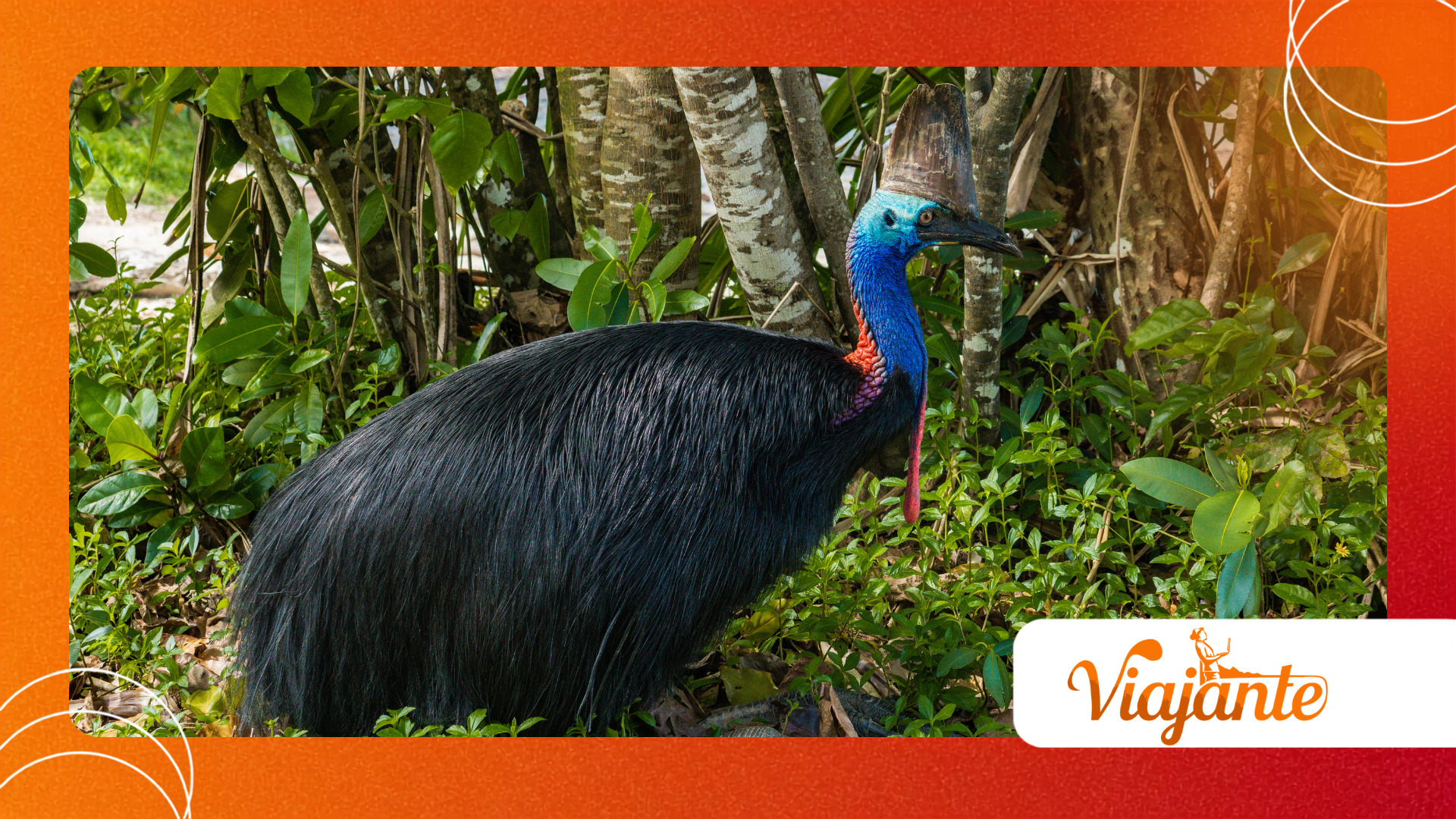
Lethal defensive capabilities originate primarily from an extraordinary leg architecture designed for pure power. Each foot features three heavily padded toes, with the innermost toe bearing a razor-sharp claw that can easily stretch past four inches in length.
Unlike typical avian species, these heavy ratites possess immense muscular density across their lower limbs. They deliver sudden forward kicks that pack enough kinetic energy to snap thick underbrush or inflict deep, life-threatening punctures in seconds.
A dense helmet-like casque protects their skull during high-speed sprints through thick canopy foliage. Paired with sharp beaks and razor-sharp sensory alertness, their physical architecture makes unexpected close encounters genuinely hazardous.
Why Do Cassowaries Attack Humans in the Wild?
Territorial instincts spark almost every documented aggressive encounter in rainforest environments.
Male individuals fiercely guard their nests and newly hatched chicks against any perceived threat, turning usually elusive birds into relentless defenders during peak breeding seasons.
Habituation caused by human feeding dramatically distorts these natural boundaries along resort borders and hiking trails.
Once these animals learn to associate people with easy calories, they routinely approach visitors and display aggressive impatience when food isn’t handed over.
Cornering a wild bird in dense brush almost guarantees an immediate defensive response. Most historic injuries occurred not during calculated strikes, but when panicked people fell backward while trying to sprint away from a startled bird.
| Feature / Trait | Southern Specimen (Casuarius casuarius) | Human Interaction Impact Level |
| Average Adult Height | 1.5 to 1.8 meters (5 to 6 feet) | Dominant visual presence and elevated strike zone |
| Adult Body Weight | 45 to 75 kilograms (99 to 165 lbs) | Significant kinetic force behind forward kicks |
| Inner Claw Length | Up to 10 centimeters (4 inches) | Severe laceration and deep puncture potential |
| Running Speed | Up to 50 km/h (31 mph) | Easily overtakes humans in dense undergrowth |
| Vertical Jump Height | Up to 1.5 meters (5 feet) | Clears ground obstacles to strike chest-high targets |
How Do Wildlife Authorities Classify Cassowaries’ Threat Level?
stress that public risk stems from human behavior rather than inherent animal malice.
Researchers analyzing decades of field encounters point out that fewer than one percent of recorded interactions resulted in critical trauma.
The handful of tragic cases almost always involved unleashed dogs, trapped handlers, or deliberate harassment near active nests.
Ecologists constantly remind visitors that these birds act defensively rather than hunting larger mammals. Their dangerous status reflects what happens when a powerful creature gets cornered, not an appetite for unprovoked confrontation.
++ The Hidden Skills of Secretary Birds Hunting Venomous Snakes
What Unique Nesting Habits Define the Life Cycle of Cassowaries?

Brooding responsibilities among cassowaries fall entirely upon the males, who single-handedly incubate large green eggs on rainforest floor nests for roughly fifty days straight.
During this intensive incubation period and the subsequent nine months of chick rearing, male birds become exceptionally protective, aggressively defending their young from any potential intruders or predatory threats that enter their territory.
Which Behavioral Signals Indicate an Impending Defensive Strike?
Spotting subtle warning signs gives travelers time to back away before physical instinct takes over. Tension usually begins with a deep, sub-audible rumble—a low-frequency vibration felt in your chest before you even spot the bird in the underbrush.
Visual posture escalates quickly if you ignore that acoustic warning. The bird lowers its head, swells its neck feathers to double its visual size, and begins a rhythmic, menacing hiss while trembling its entire body.
Backing away steadily while maintaining eye contact remains the single safest exit strategy. Turning your back or running triggers chase responses in large ratites, giving them a clear target while you navigate uneven rainforest terrain.
How Can Travelers and Researchers Prevent Dangerous Encounters?
Staying firmly on designated walking tracks eliminates most accidental surprises in dense tropical growth. Keeping a respectful distance allows wildlife to move freely through their feeding corridors without feeling trapped or forced to defend themselves.
Carrying everyday items like heavy backpacks, wide umbrellas, or sturdy trekking poles provides effective visual shields.
Holding these items outward breaks the bird’s line of sight and deters incoming strikes if an animal approaches too closely.
Securing food supplies inside airtight containers keeps rich scents from drawing hungry wildlife toward campsites. Refraining from feeding wild fauna preserves their natural foraging behaviors and prevents aggressive habituation along popular public trails.
++ How Pangolins Became the World’s Most Trafficked Mammals
Where Can You Observe Cassowaries Safely in Their Natural Habitat?
Encountering cassowaries in the wild requires visiting protected tropical rainforest corridors, such as Daintree National Park or the coastal reserves around Mission Beach in Far North Queensland.
Local conservation guidelines advise keeping a respectful distance, using telephoto lenses for photography, and observing quietly from marked boardwalks to enjoy watching these extraordinary birds without disturbing their natural foraging routines or triggering defensive behaviors.
++ How Humboldt Squid Hunt Together in Deep Waters
What Ecosystem Role Prevents Eradicating Dangerous Wild Birds?
Keystone status makes these large frugivores utterly irreplaceable within tropical ecosystems. They consume over two hundred species of native fruits, swallowing seeds whole and dispersing them across massive rainforest territories that other animals simply cannot cover.
Without their specialized digestive tract breaking down tough seed coats, dozens of rainforest trees would fail to germinate altogether.
Removing these giant birds triggers a domino effect that degrades the structural diversity of ancient tropical forests over time.
Conservation strategies focus heavily on habitat corridors, traffic management, and community awareness rather than removal.
Protecting a formidable species ensures entire rainforest ecosystems stay vibrant, resilient, and structurally intact for generations to come.
Conclusion
Respecting dangerous wildlife requires moving past sensation and understanding an animal’s functional role in the natural world.
These prehistoric birds aren’t monsters lurking in the brush; they are vital rainforest guardians equipped with ancient defenses meant to secure their survival. Checking detailed threat profiles published by the IUCN Red List of Threatened Species
highlights how coexisting with powerful species relies far more on human discipline and habitat protection than on fear.
Frequently Asked Questions (FAQ)
Can a cassowary kick kill an adult human?
A direct kick carries enough force for the inner claw to puncture vital organs or cut major arteries, though documented fatalities remain exceedingly rare worldwide.
How fast can these birds run through dense jungle?
Adults sprint up to 31 miles per hour (50 km/h) through tangled rainforest undergrowth and can jump over five feet vertically to clear fallen timber.
Are these birds related directly to prehistoric dinosaurs?
All modern ratites represent surviving avian theropod lines, retaining ancient morphological traits like heavy bone casques, primitive feathers, and claw structures reminiscent of extinct raptors.
What should you do if an aggressive bird approaches you?
Stand tall, hold a backpack or large object in front of your body as a shield, keep eyes on the bird, and step back slowly without running.
\